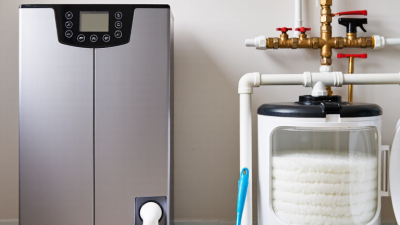
Choosing a water softener in 2026 is not simply a matter of comparing prices. It is a practical decision about mineral levels, household size, water use, and long-term maintenance. Hard water can leave white scale on faucets, stiffen towels, dull glassware, and reduce the efficiency of water heaters. The right system should address those problems without wasting unnecessary salt or water.
Water-quality expert Dr. Joseph Cotruvo has emphasized, “Water quality is not a single issue; it depends on the contaminant, the source, and the treatment.” That principle matters when selecting a water softener. A laboratory water test can reveal hardness, iron, manganese, acidity, and other conditions that affect performance. Guessing may work. It may also lead to an undersized unit, excessive regeneration, or disappointing results.
This guide examines the details that are easy to overlook. It compares salt-based and salt-free systems, explains grain capacity and flow rate, and considers regeneration settings, installation space, warranties, and operating costs. Household habits matter, too. A family of six with frequent laundry needs a different solution than a couple in a small apartment. Some recommendations may feel less convenient, especially when testing costs or professional installation are included. Yet ignoring those steps can become more expensive later. The best water softener is not always the largest or cheapest model. It is the system that fits your water chemistry, daily demand, and willingness to maintain it.
Water hardness comes mainly from dissolved calcium and magnesium. These minerals are not usually health threats, but they can quietly damage household routines. A glass may show cloudy spots after drying. Soap may leave a sticky film on skin and shower walls. Inside a kettle, rough white scale can build into a crust. Hard water can also reduce heating efficiency when scale coats internal surfaces.
I recommend testing water before choosing a softener. A certified laboratory provides stronger evidence than appearance alone. Home test strips can offer a useful estimate, but results may vary with storage and technique. Hardness is commonly reported as milligrams per liter of calcium carbonate or grains per gallon. Check the local report, then compare it with your own test.
The softener’s capacity should match household water use and hardness levels. A unit that is too small may regenerate too often. One that is too large can waste water and salt. I once focused too much on rated capacity and overlooked maintenance access. That was a practical mistake. Look for clear regeneration controls, a bypass valve, and easy access for inspection. Ask how the system handles iron, manganese, or sediment, because hardness is not the only water issue. Water conditions can change. Test again after installation.
How to Choose a Water Softener in 2026?
Choosing a water softener starts with household water demand, not tank size. Count regular users, bathrooms, and daily water habits. A typical person uses about 50 to 60 gallons daily, but long showers and frequent laundry can raise that figure quickly. Multiply daily gallons by water hardness, measured in grains per gallon. If your report lists hardness in parts per million, divide it by 17.1. Add capacity for iron, because iron also consumes softening capacity.
My first estimate was wrong. I ignored guests and a teenager’s long showers. A safer calculation includes peak usage, but avoid buying an oversized system. Very large units may regenerate less often, yet they can waste salt and water during each cycle. A practical target is regeneration about every five to ten days. Your installer should verify the settings with a recent water test and household usage record.
Tips: Record your water meter for seven days. Test hardness at the kitchen tap. Add four grains per gallon for each one ppm of iron. Choose a unit with demand-initiated regeneration, so it responds to actual consumption. Keep a small margin, around 15 to 25 percent, for visitors and seasonal changes. Check the brine tank after installation. If salt disappears quickly, the settings may be inefficient. If water feels slippery but scale remains, the test or programming may be inaccurate. Small details matter.
Matching Softener Capacity to Household Water Demand
Estimated demand uses 60 gallons per person per day and water hardness of 15 grains per gallon, a moderately hard-water planning value. The recommended softener capacity includes approximately 20% reserve capacity. Actual sizing should be adjusted for measured hardness, household water use, regeneration settings, and peak demand.
How to Choose a Water Softener in 2026?
Salt-based, salt-free, and alternative systems solve different problems. Start with a certified hardness test, not a guess from cloudy glassware. The USGS classifies water above 180 milligrams per liter as very hard, measured as calcium carbonate. At that level, scale may appear on showerheads, kettles, and heating elements.
Salt-based softeners use ion exchange. They remove calcium and magnesium, then regenerate with salt and water. This is the strongest choice for genuinely hard water. However, regeneration increases water use and creates brine discharge. Salt-free conditioners usually use template-assisted crystallization or similar media. They do not remove hardness minerals. Instead, they may reduce how firmly scale sticks to surfaces. Performance can vary with temperature, flow, and incoming chemistry. Be careful here. “Salt-free softening” is an imperfect term.
Reverse osmosis is an alternative for drinking water, not usually the whole house. The World Health Organization’s Guidelines for Drinking-water Quality report no health-based limit for hardness, but taste and appliance protection still matter. The U.S. EPA’s WaterSense program also emphasizes efficient water use when selecting treatment equipment. My practical mistake was focusing only on purchase price. Maintenance, drain access, electricity, and replacement media can cost more over time.
Tips: Test hardness and iron first. Compare certified efficiency data. Check regeneration water per cycle. Choose point-of-use filtration when only drinking water needs treatment. Recheck performance after installation.
How to Choose a Water Softener in 2026?
Installation requirements should guide your choice before capacity or appearance. Check the incoming pipe size, drain location, electrical outlet, and available floor space. A softener may need a bypass valve and an air gap for safe drainage. In older homes, copper pipes or narrow utility rooms can complicate the work. Ask a qualified plumber to inspect the site and confirm local plumbing requirements. Do not assume a nearby drain is suitable.
Maintenance affects performance and long-term reliability. Salt-based systems usually need regular salt refills, occasional brine tank cleaning, and yearly checks of the control valve. Keep the tank dry on the outside. A sticky bridge of salt can make the system appear full while producing hard water. Test the water every few months with a hardness strip or laboratory service. I have found that simple records reveal problems earlier, although testing schedules are easy to neglect.
Operating cost includes more than the purchase price. Compare salt use, water consumption during regeneration, electricity, replacement parts, and professional servicing. A larger unit may regenerate less often, but oversized equipment can waste water. Demand-initiated controls usually respond better to household usage than fixed timers. Review the warranty terms carefully. Cheap installation can become expensive when leaks, poor drainage, or incorrect settings appear later. Allow room for imperfect estimates, especially when water hardness changes seasonally.
In 2026, choose a water softener through evidence, not a polished control panel. Start with a certified hardness test, preferably reported in milligrams per liter as calcium carbonate. The USGS classifies water above 120 mg/L as hard and above 180 mg/L as very hard. WHO’s Hardness in Drinking-water report notes that hardness has no health-based guideline value. The practical concern is scale, soap waste, and appliance maintenance. Look for certification to NSF/ANSI 44 for residential softener performance and materials. For drinking-water contact components, check NSF/ANSI/CAN 61. Ask for a current certificate, not only a printed logo.
Features should match household demand. Require metered regeneration, adjustable hardness settings, and a clear salt-level indicator. Review salt and water use per regeneration. A larger tank is not automatically better. The USGS estimated average domestic water use at 82 gallons per person daily in 2015, but real homes vary sharply. Warranty terms deserve careful reading. A ten-year tank warranty may exclude valves, electronics, labor, or damage from poor installation. Check service availability and replacement-part pricing before purchase. One uncomfortable detail: savings estimates are rarely precise. I would calculate three scenarios using local water hardness, household size, salt price, and electricity cost. A cheaper unit can become expensive when regeneration is frequent. That calculation may still be imperfect.
| Evaluation Dimension | What to Verify | Useful 2026 Benchmark or Data Point | Why It Matters | Priority |
|---|---|---|---|---|
| Core Certification | Look for independent certification to NSF/ANSI 44 for residential cation-exchange water softeners. | NSF/ANSI 44 evaluates capacity, pressure loss, structural integrity, brine-system performance, and reduction of hardness under defined test conditions. | Certification provides a standardized performance reference instead of relying only on advertising claims. | High |
| Material Safety | Check whether wetted components are certified for drinking-water contact. | NSF/ANSI/CAN 61 addresses health effects of drinking-water system components; NSF/ANSI/CAN 372 addresses lead content compliance. | Water-contact materials can affect household water quality over the equipment’s service life. | High |
| Hardness Measurement | Obtain a current water test showing hardness, iron, manganese, pH, and total dissolved solids where relevant. | 1 grain per gallon (gpg) equals approximately 17.1 mg/L as calcium carbonate (CaCO₃). | Correct sizing depends on actual water chemistry rather than household size alone. | High |
| Required Capacity | Compare usable or working capacity with daily household demand and regeneration frequency. | A practical design target is commonly about 2–3 days between regenerations, subject to local water conditions and installer calculations. | Undersizing may cause hardness leakage; substantial oversizing can increase purchase cost and salt usage. | High |
| Salt Efficiency | Review the rated capacity delivered per kilogram or pound of salt, not only the maximum capacity. | Higher efficiency is generally indicated by more treated capacity per unit of salt at the selected operating setting; compare products using the same test basis. | Salt efficiency directly influences operating cost and the amount of chloride discharged during regeneration. | High |
| Regeneration Water Use | Check the water consumed per regeneration and whether the figure includes rinse and refill stages. | Use the manufacturer’s complete-cycle figure and compare it with local water and wastewater charges. | Two units with similar capacity can have different water-use costs over many years. | High |
| Metered Demand Initiation | Prefer demand-initiated regeneration based on measured water consumption rather than a fixed calendar schedule. | A meter-controlled system regenerates when calculated capacity is used, while a time-clock system regenerates on preset days. | Metered control can reduce unnecessary regeneration when occupancy or water use changes. | High |
| Iron and Manganese Handling | Confirm whether the published capacity includes dissolved iron or manganese and what pretreatment is required. | Iron and manganese can reduce softening capacity and may require separate filtration or oxidation treatment. | A softener selected only for hardness may not solve staining, metallic taste, or fouling problems. | High |
| Flow Rate and Pressure Loss | Compare service flow rate with the home’s peak simultaneous demand and available inlet pressure. | Use the certified service-flow data at an acceptable pressure drop; peak demand may occur when showers, appliances, and faucets operate together. | Insufficient flow capacity can cause noticeable pressure reduction throughout the home. | High |
| Control Features | Evaluate reserve-capacity logic, vacation mode, adjustable regeneration time, battery backup, and outage recovery. | A control should retain settings after a power interruption and allow regeneration during low-demand hours. | Useful controls improve convenience and can reduce salt and water waste. | Medium |
| Leak Protection | Check for an automatic bypass, overflow protection, leak sensor compatibility, and accessible shutoff valves. | A leak detector should be installed according to local plumbing conditions and should not replace a manual main-water shutoff. | Water damage can cost more than the equipment itself, especially when the unit is installed near finished floors. | Medium |
| Electrical Requirements | Confirm voltage, outlet location, transformer requirements, and protection from moisture. | Many residential control valves use low-voltage power supplied by a dedicated plug-in transformer; verify the exact installation manual. | Incorrect power or an unsuitable outlet can cause installation and safety problems. | Medium |
| Warranty Structure | Separate coverage for the control valve, electronics, resin or mineral tank, brine tank, labor, and shipping. | Market warranties commonly provide shorter coverage for parts and labor and longer limited coverage for tanks or resin; terms vary substantially. | A long tank warranty does not necessarily mean that electronics or labor are covered for the same period. | High |
| Warranty Conditions | Read exclusions involving water pressure, freezing, incorrect salt, untreated well water, installation, and maintenance. | Verify required installation practices, registration deadlines, proof of purchase, and whether labor is included. | Warranty value depends on the conditions that must be met to make a successful claim. | High |
| Maintenance Requirements | Review salt replenishment, brine-tank cleaning, injector inspection, resin replacement, and service access. | Maintenance intervals depend on water chemistry, salt quality, iron loading, and household consumption; follow the equipment manual. | Low-maintenance equipment can reduce service calls and improve performance consistency. | Medium |
| Installation Compatibility | Confirm pipe size, drain connection, air gap, bypass arrangement, floor drainage, and available installation space. | A regeneration drain must be installed according to local plumbing requirements, typically with backflow protection or an air gap where required. | Installation limitations can add cost or prevent safe operation. | High |
| Salt Type and Supply | Check compatible salt form, local availability, storage conditions, and whether potassium chloride is supported. | Evaporated, solar, and rock salt differ in purity and residue; follow the control-valve manufacturer’s recommendations. | Improper or low-quality salt can increase brine-bridging, sediment, and maintenance problems. | Medium |
| Five-to-Ten-Year Cost | Estimate purchase, installation, salt, water, wastewater, electricity, filter replacement, servicing, and likely repairs. | Total cost of ownership should be calculated from actual local utility prices and the household’s measured water use. | The lowest purchase price may not deliver the lowest long-term value. | High |
| Environmental Considerations | Compare salt efficiency, regeneration water use, local discharge restrictions, and alternatives where appropriate. | Some regions restrict or regulate brine discharge; local wastewater rules should be checked before installation. | Environmental requirements may determine which system types are permitted or practical. | Medium |
| Independent Documentation | Request a performance data sheet, certification listing, installation manual, warranty document, and replacement-part information. | Prefer published test conditions, rated capacity, salt dose, water use per regeneration, service flow, and pressure-drop data. | Complete documentation makes products easier to compare and service over time. | High |

Comparison note: Ratings and operating figures should be compared only when they use the same test standard, salt setting, water chemistry, and capacity definition. Local plumbing, wastewater, and discharge requirements may be stricter than general product specifications.