Kinetico Water

China Top 10 Water Filter System Manufacturers

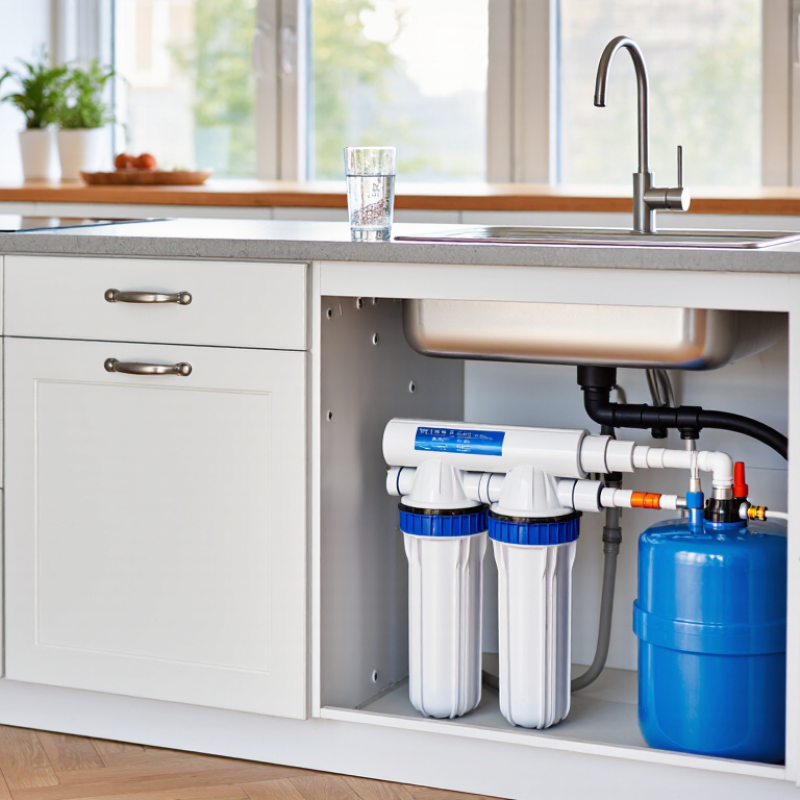
Choosing a water filter system is not a simple matter of comparing price tags. Buyers also need to examine filtration technology, tested performance, replacement-filter availability, and after-sales support. These details matter in a kitchen under a sink, where a compact reverse-osmosis unit must fit beside pipes and remain easy to maintain. They matter even more in commercial settings, where downtime can disrupt daily operations.

The WHO/UNICEF Joint Monitoring Programme reported that 2.2 billion people lacked safely managed drinking-water services in 2022. Its 2023 report, Progress on Household Drinking Water, Sanitation and Hygiene 2000–2022, shows why dependable treatment remains a serious global concern. Water scholar Peter Gleick is often associated with the observation, “The water crisis is a crisis of governance, not scarcity.” The point is relevant here: equipment alone cannot guarantee safe, reliable water. Testing, installation, and routine maintenance count too.

China’s manufacturers serve varied markets, from household dispensers to industrial filtration equipment. Yet a polished catalogue does not prove real-world performance. That distinction deserves scrutiny. This guide introduces ten manufacturers and considers their product focus, manufacturing capabilities, quality evidence, and service reach. Where specifications or certifications are not independently verifiable, buyers should ask for current documentation rather than assume. No ranking can replace a site assessment or a review of local water conditions. A careful shortlist can, however, make supplier conversations more useful—and help buyers choose a system suited to the water they actually need to treat.
China Top 10 Water Filter System Manufacturers

Overview of China's Water Filter System Manufacturing Industry

China’s water filter system manufacturing industry combines component production, engineering, and final assembly. Factories may make housings, cartridges, pumps, valves, or control units, while others focus on complete systems. This division supports varied product designs and production volumes. Details matter.

Manufacturing capability differs from one supplier to another. Some facilities operate their own testing areas; others rely on outside laboratories for particular evaluations. Common checks can include flow rate, pressure resistance, leakage, and filter performance under defined conditions. Buyers should review test methods and reports, not just product descriptions. Materials and replacement-part availability also affect long-term reliability.

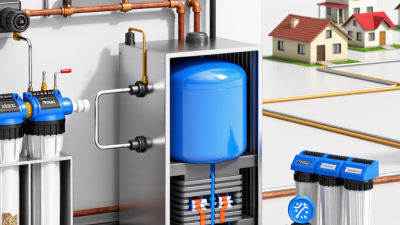
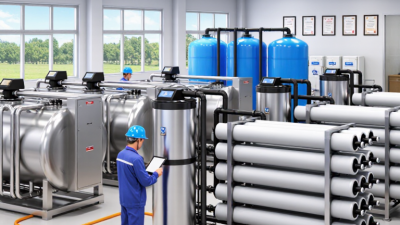
The industry serves household, commercial, and industrial applications, where water quality and operating conditions can vary considerably. A system designed for a kitchen may not suit a busy workshop or a high-demand building. Clear specifications help: expected flow, inlet pressure, water temperature, and maintenance intervals. A polished catalog is not proof of consistent production. Not always. Factory audits, sample testing, and traceable quality records can offer a more grounded view, though even these checks have limits. Manufacturers still need to explain how they handle design changes and production defects.
Key Product Types and Filtration Technologies

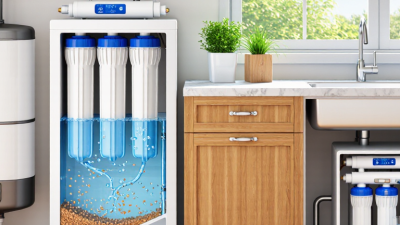
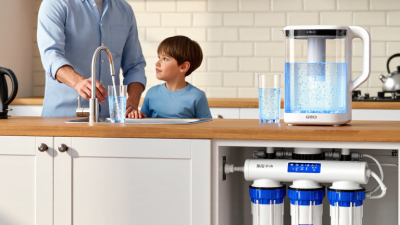
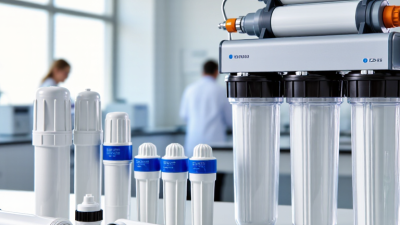
A household water filter is not one technology in a different-sized casing. Under-sink and countertop systems usually treat drinking water at one tap, while whole-house units handle water entering the building. Sediment cartridges catch visible particles such as sand and rust flakes. Activated carbon can reduce chlorine taste, odor, and some organic compounds, depending on its design and certification. Small details matter.

Reverse osmosis membranes reduce many dissolved substances, but they also produce wastewater and need timely replacement. Ultrafiltration membranes can block fine particles and some microorganisms, yet they generally do not remove dissolved salts. Ultraviolet treatment can inactivate susceptible microbes, but it does not remove sediment or chemicals. Ion-exchange media can soften water or target selected ions; performance depends on the resin and incoming water. No single stage handles every concern. A common mistake is choosing by flow rate alone. A slow faucet may frustrate a busy kitchen, while a high-capacity unit may be unnecessary for one drinking-water tap. Check the source water, replacement schedule, and independent performance data before comparing systems. Even a clear glass can hide a problem.

China Top 10 Water Filter System Manufacturers — Key Product Types and Filtration Technologies

Representative pore-size ranges for common membrane filtration technologies. The ranges are indicative and vary by membrane and application; reverse osmosis is not shown because its separation mechanism is not defined by a simple pore-size rating.

Microfiltration generally targets larger particles, while ultrafiltration and nanofiltration operate at progressively smaller scales. A smaller pore size does not by itself indicate overall system performance, which also depends on water conditions and system design.

Criteria for Comparing Leading Chinese Manufacturers

When comparing Chinese water filter system manufacturers, look beyond catalog claims. Ask for test reports covering flow rate, pressure limits, leakage, and contaminant reduction. Check whether samples match production units, including housing thickness, seals, and cartridge media. Small differences matter. A filter may perform well on a bench but lose flow after repeated use. Request dated records and clear test conditions, not just a logo on a PDF. This detail is easy to overlook.

Review factory controls as carefully as product design. Can staff trace a cartridge batch to its material lot? Are incoming checks documented, and how are rejected parts handled? A video call can show assembly benches, labels, and final inspection, though it cannot replace an audit. Ask about capacity, lead times, spare parts, and technical support in writing. Compare warranty terms and replacement procedures; vague answers deserve follow-up. Not every supplier will have polished English documents. That is worth noting, but not an automatic rejection. Consistency, evidence, and honest limits are stronger signals than impressive promises.

China Top 10 Water Filter System Manufacturers - Criteria for Comparing Leading Chinese Manufacturers

Use this evidence-based scorecard to compare ten shortlisted manufacturers. The weights below are suggested evaluation weights, not verified rankings or claims about individual suppliers. Confirm certificates and test reports with the issuing bodies or laboratories.

Evaluation criterion Suggested weight What to compare Evidence to request
Product performance and testing 18% Contaminant-reduction claims, rated capacity, flow rate, operating pressure, and test conditions for each system. Current, model-specific performance data and complete laboratory reports. Check that the tested model and claims match the product offered.
Applicable product standards 15% Whether independently certified products meet standards relevant to their claims and markets. NSF/ANSI 42 addresses aesthetic effects; 53 addresses specified health effects; 58 covers reverse-osmosis systems; and 401 covers specified emerging compounds. Certificate number, exact model listing, scope, issuing organization, and current listing status. A standard applies only to the claims and products within its certified scope.
Manufacturing quality management 12% Documented quality controls for incoming materials, production, inspection, and corrective actions. Valid ISO 9001 certificate, where claimed, with the certified site and scope confirmed; sample inspection records and quality procedures.
Product range and engineering capability 10% Ability to supply the required system types, such as sediment or carbon filtration, ultrafiltration, and reverse osmosis, and to support documented design changes. Product specifications, engineering change controls, component drawings, and examples of completed custom projects relevant to the requested application.
Materials and drinking-water contact safety 10% Traceability and suitability of wetted materials, including housings, tubing, seals, and filter media, for the intended market and use. Material declarations, applicable migration or extraction test reports, and component-level certifications where relevant. Verify scope and model coverage.
Production capacity and delivery control 10% Capacity for the requested order volume, production planning, lead-time consistency, and the ability to manage peak demand. Capacity statements supported by production records, a sample production schedule, and documented on-time delivery data for comparable orders.
After-sales support and spare parts 8% Warranty terms, technical response process, replacement-part availability, and support for installation and maintenance. Written warranty policy, service contact process, spare-part catalogue, and stated parts-support period.
Customization and OEM/ODM readiness 7% Support for requested specifications, packaging, labeling, and private-label production, subject to regulatory and certification requirements. Written scope of customization, tooling responsibilities, approval workflow, minimum order quantities, and confirmation of how changes affect certification.
Export and regulatory documentation 5% Readiness to provide documentation required for the destination market and shipment, without assuming that one certificate satisfies every market's rules. Relevant test reports, declarations, labels, manuals, and export documents; confirm requirements with the destination-market regulator or importer.
Environmental and resource management 5% Documented practices for waste, energy, and environmental management relevant to manufacturing operations. Valid ISO 14001 certificate, where claimed, verified for the relevant site and scope; otherwise, request documented environmental procedures and records.
Total suggested weight 100% Score each shortlisted manufacturer against the same requirements and evidence standard before creating a ranking.

Comparison note: This table is a selection framework, not a verified “top 10” list. Do not treat a certificate, factory audit, or supplier statement as proof of performance beyond its documented scope.

Profiles of 10 Major Water Filter System Manufacturers

China’s water-filter system manufacturers serve homes, offices, factories, and municipal projects. Their products range from countertop units to multi-stage commercial systems. The WHO/UNICEF Joint Monitoring Programme reported that 2.2 billion people lacked safely managed drinking water in 2022. This figure describes a global need, not a sales forecast for China. Still, it helps explain why buyers scrutinize filtration performance, replacement parts, and service support.

Profiles of ten major manufacturers should compare what they actually build: reverse-osmosis units, ultrafiltration systems, carbon filters, and customized treatment equipment. Useful details include production capacity, testing procedures, membrane sourcing, and after-sales coverage. Look for evidence behind claims, such as documented flow rates and contaminant-removal results. A small detail matters: how quickly can a household obtain a replacement cartridge? Not glamorous, but practical. A polished catalogue can conceal gaps in long-term service or independent testing. These profiles should note such limits rather than treat every product claim as proven. Manufacturer scale alone is not enough. For buyers, matching system design to source-water conditions may matter more than a broad product list.

Applications, Certifications, and Export Markets of Chinese Manufacturers

Chinese water filter system manufacturers supply equipment for homes, hotels, factories, and community water projects. Typical applications include sediment removal, carbon taste improvement, and membrane-based treatment. A workshop may need high flow and durable housings; a kitchen unit may prioritize compact size and easy cartridge changes. Requirements differ, so one system rarely fits every site.

Certifications and export readiness need careful checking. ISO 9001 concerns a company’s quality-management processes; it does not, by itself, prove a filter’s performance. Buyers should confirm product-specific test reports, materials, and applicable standards for the destination market. Export shipments may serve regions across Asia, the Middle East, Africa, Europe, and the Americas, but documentation and testing expectations vary. A polished catalog is not proof. I would also ask how the supplier handles replacement parts and batch traceability; these details are easy to overlook.

Tips: Match flow rate and water conditions before comparing prices. Request recent test documents for the exact model, not a similar product. Check that certificates can be verified with the issuing organization. Small details matter. A sample test can reveal leaks or slow output, though one sample cannot guarantee consistent production.