Kinetico Water

China Best Water Filtration Manufacturers for Global Buyers

China Best Water Filtration Manufacturers for Global Buyers explores a market shaped by urgent water challenges and stricter quality expectations. According to the WHO/UNICEF Joint Monitoring Programme’s 2023 report, 2.2 billion people lacked safely managed drinking water in 2022. That figure gives every filtration purchase a human purpose, not merely a commercial one. The 2024 United Nations World Water Development Report also highlights water quality, resilience, and responsible management as global priorities.

China has become a major sourcing base for water filtration equipment, including reverse osmosis systems, ultrafiltration membranes, cartridge filters, and industrial treatment units. Experienced buyers examine more than factory price. They review membrane performance, flow rates, material traceability, laboratory testing, and after-sales support. Certifications such as NSF/ANSI, CE, ISO 9001, and local compliance documents can support supplier evaluation. However, certification names alone prove little. Testing scope matters.

A reliable manufacturer should provide clear technical data, sample results, installation guidance, and replacement schedules. Some factories offer impressive catalogs but weak documentation. That assumption needs testing. Buyers should request factory audits, batch records, independent reports, and performance evidence under realistic water conditions. A filter tested with clean laboratory water may behave differently in a coastal plant or a dusty workshop. Water filtration is therefore both an engineering decision and a risk-management process. This guide compares leading Chinese manufacturers through product capability, quality control, customization, certifications, export experience, and long-term service reliability. No supplier is perfect. The best choice is the one that explains limitations honestly and supports measurable results.
China Best Water Filtration Manufacturers for Global Buyers

Global Water-Filtration Demand: 2.2 Billion People Lack Safely Managed Water

China Best Water Filtration Manufacturers for Global Buyers

Global water demand is not a distant statistic. The WHO/UNICEF Joint Monitoring Programme reported in 2023 that 2.2 billion people lacked safely managed drinking water in 2022. Many households still collect water from distant sources, then store it in open containers. Contamination can return after treatment. The gap is enormous. For global buyers, Chinese filtration manufacturers can support large-scale production, customized systems, and replacement-part supply. Yet capacity alone does not prove reliability.

Procurement teams should examine factory testing records, material traceability, and field performance. WHO drinking-water guidance recommends no detectable E. coli in a 100-millilitre sample. Relevant products may also require testing against NSF/ANSI, ISO, or local regulatory standards. Independent laboratory reports matter more than attractive catalog claims. In practice, a low quote can hide weak membranes, inconsistent seals, or limited technical support. That risk is easy to underestimate.

Experienced buyers should request pilot testing under local water conditions. High turbidity, iron, salt, or seasonal contamination can change results quickly. Ask for flow-rate data after repeated use, not only factory measurements. A supplier should explain maintenance intervals and disposal requirements clearly. Some specifications remain incomplete, and buyers may need to challenge them. No audit removes every uncertainty. Careful verification still reduces avoidable failures.
China’s Filtration Technology Landscape: RO, UF, UV, MF, and Carbon Systems

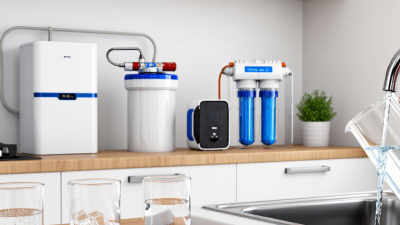
China’s filtration technology landscape serves homes, factories, hotels, and municipal projects. RO systems remove dissolved salts, metals, and many microscopic contaminants. UF membranes retain suspended solids, bacteria, and larger organic particles. MF handles clearer, lower-pressure separation for pretreatment. Carbon systems reduce chlorine, odors, and selected organic compounds. UV treatment adds microbial control without changing water chemistry.

In practical manufacturer evaluations, I examine test records, membrane origin, assembly quality, and after-sales support. Pilot data matters more than polished brochures. Buyers should request feed-water analysis, recovery rates, rejection data, UV dosage, and replacement intervals. A strong supplier explains limitations clearly. For example, RO cannot remove every dissolved gas, while UV does not eliminate particles or salts. Carbon also becomes ineffective when its media is exhausted.

Real installations often reveal details that factory samples miss. Hard water can create scale inside RO vessels. Poor pretreatment may shorten membrane life within months. That risk is easy to underestimate. Some manufacturers offer compact systems, but smaller footprints may restrict maintenance access. Reliable suppliers provide flow diagrams, operating instructions, spare-parts lists, and documented quality checks. They should also adapt pumps, controls, and filtration stages to local water conditions, rather than forcing one standard design.

Manufacturer Qualification: NSF/ANSI 42, 53, 58, and ISO 9001 Standards

China Best Water Filtration Manufacturers for Global Buyers

Manufacturer qualification should begin with verifiable standards, not attractive catalogs. The WHO/UNICEF Joint Monitoring Programme reported that 2.2 billion people lacked safely managed drinking water in 2022. This strengthens demand for dependable filtration systems. NSF/ANSI 42 covers aesthetic claims, including chlorine, taste, and odor reduction. NSF/ANSI 53 addresses specific health-related contaminants, such as lead, when tested and certified for those claims. NSF/ANSI 58 evaluates reverse osmosis systems, including contaminant reduction and structural performance. ISO 9001 supports consistent production through documented processes, corrective actions, and traceable records.

Ask each manufacturer for current certificates, scope pages, laboratory reports, and factory audit evidence. Check whether the certificate covers the exact model, cartridge, and claimed contaminant. A product may use certified materials without being certified as a complete system. That distinction matters. Request batch codes, incoming-material inspection records, pressure-test results, and membrane rejection data. Independent testing should match the buyer’s source-water conditions. A factory can look highly capable, yet its documentation may remain incomplete.

Tips: Compare test methods, not only percentages. Confirm testing laboratories and certificate expiry dates. Ask for a sample production record. Visit the plant when possible, and inspect calibration labels on testing equipment. Do not treat ISO 9001 as proof of filtration performance. It shows quality-system control, not automatic contaminant removal. The process can still fail. Regular review is necessary.

China Best Water Filtration Manufacturers for Global Buyers - Manufacturer Qualification: NSF/ANSI 42, 53, 58, and ISO 9001 Standards

Qualification reference table for evaluating water filtration manufacturers and product documentation

Qualification Area Standard Primary Scope Typical Performance or System Claims Evidence Global Buyers Should Request Buyer Evaluation Notes
Aesthetic Filtration NSF/ANSI 42 Water treatment units designed to reduce aesthetic impurities and improve taste, odor, or appearance. Depending on the certified product, claims may include reduction of chlorine, taste and odor, particulate matter, or nominal sediment-related impurities. Valid certification listing, exact model number, reduction claims, rated capacity, replacement interval, and installation requirements. Confirm that the certification applies to the complete product configuration, not only to an individual filter medium or component.
Health-Related Contaminant Reduction NSF/ANSI 53 Water treatment units with specific health-related contaminant reduction claims. May cover selected contaminants such as lead, cysts, volatile organic compounds, or other substances, but only where the exact claim is certified. Certification scope, contaminant-specific performance sheet, test conditions, rated capacity, flow rate, and replacement instructions. Do not treat NSF/ANSI 53 as a blanket claim for all health contaminants; verify every required contaminant individually.
Reverse Osmosis Systems NSF/ANSI 58 Point-of-use reverse osmosis drinking water treatment systems and their relevant performance requirements. Common parameters include total dissolved solids reduction, recovery, production rate, structural integrity, and specified contaminant reduction claims. Complete system certification, membrane and component configuration, rated product water capacity, recovery ratio, operating pressure, and waste-water ratio. Performance depends on feed-water quality, pressure, temperature, membrane condition, and maintenance. Confirm local installation compatibility.
Quality Management System ISO 9001 Quality management processes covering areas such as customer requirements, production control, corrective action, and continual improvement. Demonstrates that a defined quality management system has been assessed against ISO 9001 requirements; it does not certify a specific filtration performance claim. Current certificate, certified legal entity and manufacturing site, certificate scope, issuing certification body, and validity dates. Check that the certificate covers the actual production facility and relevant activities rather than an unrelated office or trading entity.
Product Traceability Supporting Control Ability to identify materials, production batches, inspection records, and shipped units. Batch or lot coding, incoming material inspection, in-process checks, final inspection, and documented nonconformity handling. Sample batch records, inspection plans, lot-number format, certificate of analysis where applicable, and recall or complaint-handling procedure. Traceability is especially important for replacement cartridges, membranes, activated carbon, housings, and food-contact components.
Material and Component Compliance Market-Dependent Safety and regulatory requirements applicable to materials, electrical parts, packaging, and the destination market. May include food-contact suitability, electrical safety, chemical restrictions, technical documentation, and local import requirements. Declaration of conformity where required, material specifications, safety test reports, technical files, and destination-market compliance documents. Requirements vary by country and product type. Review the complete finished product rather than relying only on component documents.
Commercial and Technical Capability Supplier Due Diligence Capability to manufacture consistently, support customization, maintain supply continuity, and provide after-sales technical assistance. Documented production capacity, quality-control personnel, testing equipment, engineering support, spare-parts planning, and service response procedures. Factory audit report, production-flow diagram, equipment list, sample inspection report, lead-time data, warranty terms, and service-level commitments. Use independent verification where possible and compare documented capability with the requested annual volume and target markets.

Important qualification note: NSF/ANSI certifications apply to specific products, models, configurations, and claims. ISO 9001 applies to a quality management system and is not a product-performance certification. Buyers should verify certificate validity, scope, manufacturing site, model number, rated capacity, and contaminant-specific claims before purchasing.

Factory Performance Metrics: Rejection Rate, Recovery Rate, Flux, and Capacity

China Best Water Filtration Manufacturers for Global Buyers

Factory performance should be judged by measured data, not catalog promises. AWWA Manual M46 reports typical reverse osmosis salt rejection between 95% and 99.5%. Actual results depend on temperature, pressure, feed chemistry, and membrane age. Factory tests should record conductivity before and after treatment. A low rejection rate can expose weak sealing or unstable operation.

Recovery rate shows how much feedwater becomes product water. Brackish-water systems commonly operate around 60% to 85% recovery, while seawater systems often remain near 35% to 50%, according to industry design guidance. Higher recovery sounds attractive. However, it may increase scaling risk and cleaning frequency. Flux also matters. Many commercial RO designs operate near 10 to 25 liters per square meter per hour. Excessive flux may indicate aggressive testing. It can also shorten membrane life.

Capacity claims need a clear basis. Is the figure daily flow, hourly flow, or peak flow? Request a factory acceptance test with feed temperature, pressure, conductivity, recovery, and operating hours stated. For example, a 500-cubic-meter-per-day unit should demonstrate stable output across repeated runs, not one brief trial. ISO 9001 certification supports process control, but it does not prove filtration performance. That distinction is often missed. Portable meters and inconsistent water samples can distort results. Buyers should verify readings independently when possible. The most reliable manufacturers provide raw test records, calibration dates, and corrective actions after failed trials.

The chart presents representative engineering benchmarks for common water-treatment system categories. Salt rejection and recovery are shown as percentages, flux is measured in LMH (liters per square meter per hour), and capacity represents a reference system throughput in cubic meters per day. Actual factory performance varies with feedwater quality, temperature, membrane selection, pretreatment, operating pressure, and system design.

Global Buyer Evaluation: MOQ, Lead Time, Certifications, Incoterms, and TCO

Global buyers should assess water filtration manufacturers beyond unit price. The WHO/UNICEF JMP 2023 report states that 2.2 billion people lacked safely managed drinking water in 2022, increasing pressure for dependable equipment. Request a pilot order before committing to a large MOQ. A practical evaluation checks cartridge dimensions, membrane performance, packaging strength, and replacement availability. Lead times should include production, inspection, and port handling. “Ready in 15 days” may exclude testing.

Certifications require careful reading. ISO 9001 supports process control, but it does not prove filtration performance. Match product claims with applicable NSF/ANSI standards, laboratory reports, and valid certificates. Check the exact model, test method, and certificate scope. The WHO Guidelines for Drinking-water Quality also stress risk management across the supply chain. A document can look impressive and still be irrelevant. This is where buyers often move too quickly.

Incoterms 2020 should be written clearly in the quotation. FOB, CIF, and DDP shift freight, customs, insurance, and delivery responsibilities differently. Compare total cost of ownership, not only the factory price. Include freight, duties, electricity, labor, filter replacement, wastewater handling, and downtime. UN-Water’s 2024 World Water Development Report emphasizes the economic importance of reliable water systems. My own purchasing experience suggests that a cheaper filter often becomes expensive after six months. However, local energy prices and maintenance skills can change the calculation, so every TCO sheet needs a site-specific review.