Choosing the best whole home water filtration system begins with a simple question: what is actually in your water? A clear glass can still contain dissolved minerals or disinfectants, while rusty-looking water may point to sediment or plumbing concerns. Appearance alone is not a reliable test. Review your utility’s water quality report or arrange appropriate testing before comparing equipment.
The right system should address identified contaminants without restricting household water flow. A cartridge designed to reduce chlorine, for example, may not soften hard water or remove every other substance. Check the product’s specific performance claims and relevant NSF/ANSI certifications, rather than relying on broad labels such as “whole house protection.” Details matter. Consider installation space, pipe size, replacement-filter availability, and the cost of maintenance over time. A filter that is neglected can perform poorly, even when it was a sensible choice at purchase.
There is no single best system for every home. Well water, municipal supplies, older plumbing, and different household needs call for different decisions. A qualified water professional can help interpret test results and check whether a proposed unit suits your plumbing. Still, professional advice is not a substitute for clear evidence about what a system does and does not remove. Comparisons can be imperfect; product claims and local water conditions deserve a second look. This guide explains how to weigh filtration type, verified performance, upkeep, and budget before choosing a system.
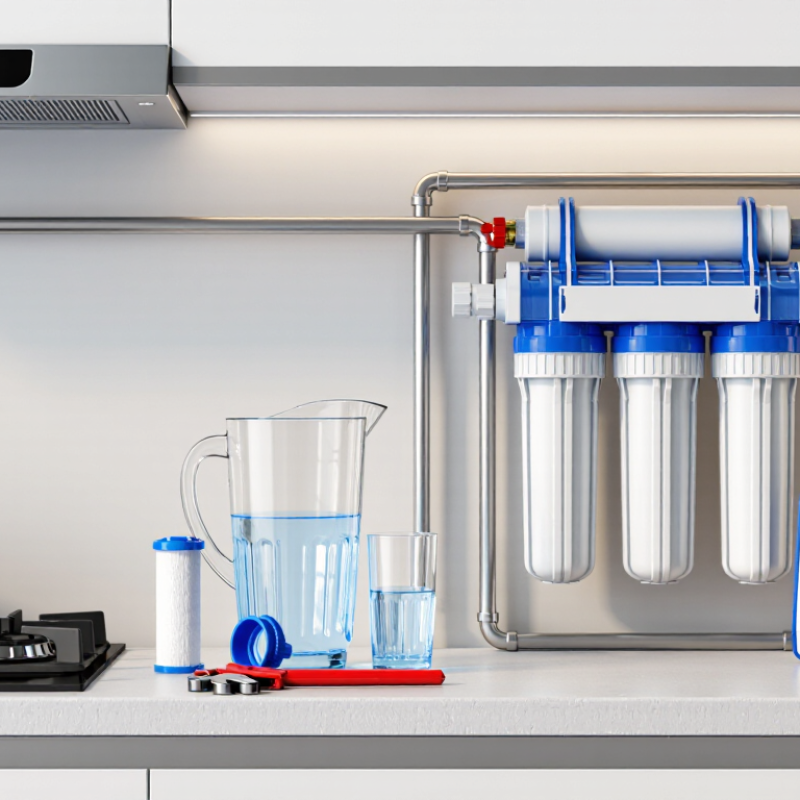
A whole-home point-of-entry (POE) system is installed where water enters a house, before pipes branch to sinks, showers, and appliances. Unlike a point-of-use filter under one kitchen sink, it treats water throughout the home. In practice, that can mean less chlorine smell at the shower and fewer visible particles in a laundry tub. NSF/ANSI 42 covers aesthetic effects, including claims for chlorine taste and odor reduction or particulate reduction. It does not mean every system removes every contaminant. Check the specific certified performance claim, not just the standard number.
That distinction matters. The U.S. Geological Survey’s 2023 national study estimated that at least one PFAS compound may be present in about 45% of U.S. tap water. That finding is not proof that a particular home has PFAS, and an NSF/ANSI 42 claim alone does not establish PFAS reduction. For that concern, look for a separate, contaminant-specific certification or verified test data. I would also check flow rate and replacement schedules: a clogged cartridge can reduce pressure, while neglected maintenance may undermine performance. A certification label is useful, but easy to overread. Testing the incoming water helps match the treatment claim to the actual problem.
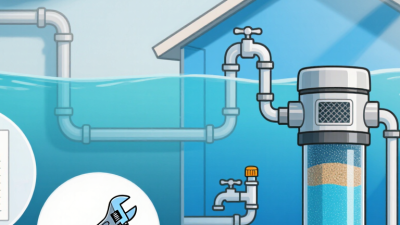
A whole-home filtration choice should begin with a water test, not a product list. Ask an accredited or state-certified laboratory to compare your source water with EPA limits for the 90 regulated contaminants. Specify the contaminants and methods; “comprehensive” panels do not always test all 90. Some require separate bottles or handling. Your source matters.
For municipal water, review the latest Consumer Confidence Report, then consider tap testing if household plumbing may add lead. For a private well, sample untreated water before choosing equipment. Follow the laboratory’s instructions for flushing, filling bottles, and delivery. A careless sample can distort the result. Compare findings with the relevant EPA maximum contaminant levels. These limits do not cover every taste or odor concern. MCLs are not taste standards.
Match treatment performance data to each contaminant and the home’s peak flow needs. A whole-home unit treats water at showers and sinks, but drinking water may warrant a separate point-of-use stage. Testing is not perfectly tidy: concentrations can change with the season, plumbing work, or source conditions. Retesting after installation helps check whether treatment is working. It adds cost.
A whole-home filter treats water as it enters the house. Reverse osmosis is more commonly installed at one drinking-water tap, such as beneath the kitchen sink. They solve different problems. For health-related reduction claims, look for NSF/ANSI 53 certification. Standard 53 covers specific health-effect claims, not every contaminant a filter might encounter. Check the certification listing for the exact model and the exact contaminant. A familiar standard number alone is not proof that a system reduces lead, for example. The claim must be listed.
NSF/ANSI 58 applies to reverse-osmosis drinking-water systems. It includes requirements such as total dissolved solids reduction, but individual contaminant claims still need checking. Read the performance data sheet, and note any stated flow rate, operating pressure, and filter-change interval. Those details matter at home. A system that reduces a contaminant in a test may perform differently if its cartridges are overdue or water conditions vary. I would not assume an under-sink RO unit can supply every household tap; its capacity and installation are designed for a particular setup. When comparing options, match the treatment location to your need, then verify the certified reduction claim rather than relying on broad “clean water” wording. Slightly inconvenient, but worth doing.
A whole-home system treats water where it enters the house, so its claims deserve close inspection. NSF/ANSI 401 evaluates reduction of up to 15 emerging or incidental contaminants, including certain pharmaceuticals and chemicals. That does not mean every certified system reduces all 15. Check the product’s certification listing for the specific contaminants tested, the reduction claims, and any stated flow limits.
The EPA’s Third Unregulated Contaminant Monitoring Rule tracked 30 unregulated contaminants at about 5,700 public water systems. Monitoring helps identify what may be present; it does not, by itself, show that a contaminant poses a health risk or that a particular filter removes it. Compare the system’s test results with your local water quality report. A kitchen tap and a shower may also have different needs, while whole-home treatment can affect water pressure if the system is undersized. Small print matters.
Tips: Look for independent NSF/ANSI 401 certification, not just wording such as “tested to.” Confirm which contaminants are covered, then check filter replacement intervals and rated flow. If a claim feels broad, pause and verify it against the certification record.
Check the exact NSF/ANSI 401 reduction claims for the specific system and model.
NSF/ANSI 401 covers reduction claims for up to 15 emerging contaminant types. This is the standard’s scope—not a guarantee that every certified system reduces all 15. Check the system’s certification listing for the specific contaminants tested and claimed.
What Is the Best Whole Home Water Filtration System?
Rated flow, filter capacity, and replacement timing should match how water is used at home. A flow rating, often shown in gallons per minute, indicates how much water the system can treat while several taps are running. Picture a shower, washing machine, and kitchen faucet operating together. If demand exceeds the rating, water pressure may fall. Peak use matters.
Filter capacity is different. It estimates how much water a cartridge can treat before replacement, but the actual lifespan depends on incoming water quality and household use. A family of five may reach the stated gallon limit sooner than a couple. Sediment, chlorine, and other concerns also call for different filter media, so compare the system’s tested reduction claims with a water test or utility report. Numbers help, but they are not a perfect prediction.
Tips: Estimate simultaneous use, then compare it with the rated flow. Check capacity in gallons and the maker’s replacement interval. Set a calendar reminder, and watch for reduced pressure or changes in taste. Those signs can help, but they do not replace scheduled maintenance. A neat estimate may still miss seasonal changes in source water; that is worth checking.
The best option depends on the water problem, peak household flow, and maintenance preferences. Figures below are representative planning ranges; actual performance and service life vary by model, water quality, plumbing, and usage.
| System type | Typical rated flow | Capacity / service basis | Typical replacement or service schedule | Household demand fit | Best suited for |
|---|---|---|---|---|---|
| Sediment cartridge filter | About 5–15 GPM | Capacity is highly dependent on sediment load; cartridges are commonly selected by micron rating and size rather than a universal gallon rating. | Inspect regularly; often replace every 3–6 months, or sooner if pressure drops. | Small to medium homes when sized for peak simultaneous use. | Sand, silt, rust, and other suspended particles; often used as a prefilter. |
| Whole-house carbon tank | About 5–12 GPM | Common tank sizes hold roughly 1–2 cubic feet of media; gallon capacity varies substantially with contaminant levels and contact time. | Media commonly lasts about 3–5 years; follow the system’s rated capacity and water-test results. | Many small and medium households; choose a higher-flow tank for multiple bathrooms. | Chlorine taste and odor and certain organic compounds; verify the specific reduction claims. |
| High-flow catalytic carbon tank | About 8–15 GPM | Typically uses a larger media bed; effective capacity depends on the target contaminant, water chemistry, and required contact time. | Often about 3–5 years between media changes, with periodic inspection and backwashing where specified. | Medium to large homes if the rated service flow meets peak demand. | Chloramine and other reduction needs when the selected system is specifically tested for them. |
| Salt-based water softener with prefilter | About 7–15 GPM, depending on resin tank size | Capacity is rated in grains of hardness removed per regeneration; common residential units range roughly from 24,000 to 64,000 grains. | Regenerates as needed; replenish salt typically every 4–8 weeks. Replace the prefilter about every 3–6 months if used. | Households with hard water; size for water hardness, daily use, and simultaneous fixtures. | Hardness minerals that cause scale; it is not a general-purpose contaminant filter. |
| Salt-free scale conditioner | About 5–12 GPM | Usually rated by media volume or service life rather than hardness-removal grains; it does not remove hardness minerals. | Media commonly lasts about 3–6 years, depending on water quality and usage. | Small to medium homes seeking scale management without salt or routine regeneration. | Reducing scale buildup; not a substitute for softening when lower hardness is required. |
| Whole-house UV disinfection unit | About 6–12 GPM at the specified UV dose | Rated by flow at a specified UV dose, not by gallons of filter capacity; pretreatment may be needed for clear water. | Replace the UV lamp about once a year; clean the quartz sleeve as directed. | Homes using private wells, when sized for peak flow and supported by appropriate testing. | Microbial inactivation; it does not remove sediment, chemicals, or dissolved minerals. |
Selection tip: Match the system’s service flow—not just its maximum flow—to the home’s likely peak demand. A qualified water test can identify what needs treatment; check independent certification and the exact reduction claims for any system under consideration.