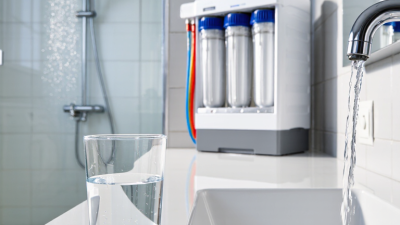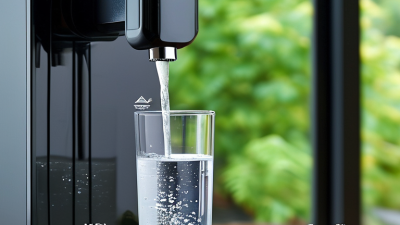

Choosing a whole house water filter from China starts with understanding the water entering your home. A clear glass can look clean while containing sediment, chlorine, or minerals that affect taste and plumbing. Get a recent water test before comparing products. Then match the filter media to the contaminants identified, rather than buying the largest-looking system.
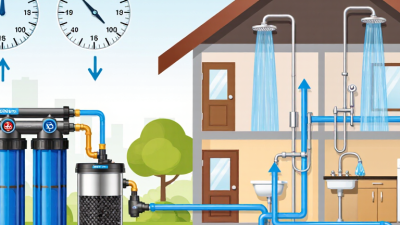
Capacity matters. A unit must support your household’s peak flow without causing a noticeable pressure drop when several taps run. Check the rated flow, replacement cartridge life, housing material, and connection size. Ask suppliers for current test reports and confirm which product model each report covers. A document alone is not proof that every unit performs the same way. Request sample specifications, installation instructions, and a clear list of included parts. Small details count.
Look beyond the product page. Ask how the manufacturer checks incoming materials, tests finished units, and handles replacement cartridges. If possible, compare answers with an independent inspection or third-party testing. Confirm shipping terms, technical support, and access to spare parts before placing a large order. This can take time. It is still useful.
There is no perfect filter for every home, and supplier information may be incomplete or difficult to compare. Treat that as a reason to ask better questions, not to guess. The best choice balances verified performance, practical maintenance, compatible plumbing, and dependable support. A careful comparison helps you choose a system that fits your water, budget, and daily use.
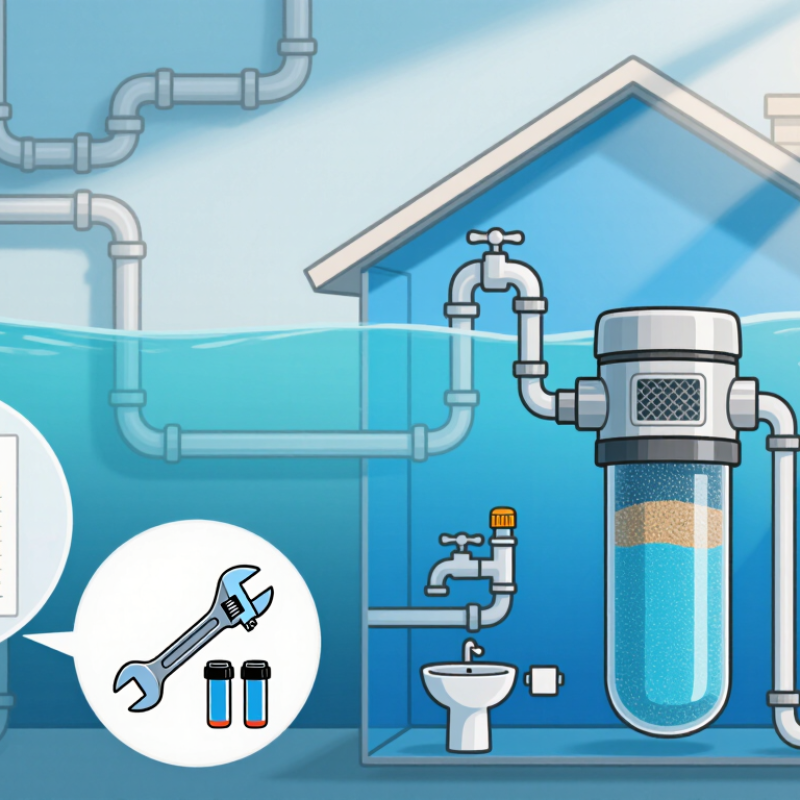
Before choosing a whole-house filter from China, find out what is actually in your water. Ask your supplier for a recent municipal water report, or use an accredited laboratory for a private-well sample. Test for bacteria, lead, arsenic, nitrate, hardness, iron, and chlorine where relevant. The WHO/UNICEF Joint Monitoring Programme reported that 2.2 billion people lacked safely managed drinking water in 2022; this global figure is context, not proof that a particular home’s supply is unsafe. Test before buying. A cloudy glass or metallic taste can raise questions, but neither identifies a contaminant.
Match the system to measured results and household use. Hard water may call for a softener, while sediment can quickly clog fine filters. A carbon stage can improve chlorine taste, but it will not address every dissolved contaminant. Check test data against the filter’s independently verified reduction claims and rated flow rate. Then compare those figures with simultaneous use, such as a shower and washing machine. Ask the supplier for replacement intervals, cartridge availability, pressure-loss data, and installation dimensions. Some details are easy to miss. A test is only a snapshot, too, so seasonal well changes may require retesting.
| Household Water Need | What to Check First | Treatment Option to Consider | Selection and Sizing Guidance | Important Limitation |
|---|---|---|---|---|
| Sediment, sand, or rust particles | Check for visible particles, clogged fixtures, and a water test for turbidity or suspended solids. | A washable sediment pre-filter or replaceable sediment cartridge; select the micron rating to suit the measured particle load. | Compare rated flow, pressure drop, filter capacity, and cleaning or replacement requirements. A larger housing may be needed for higher household flow. | Sediment filtration does not remove dissolved salts, hardness, or most dissolved chemicals. |
| Chlorine taste or odor in municipal water | Review the local water-quality report and, if needed, test chlorine or chloramine at the home’s incoming water line. | Activated carbon; catalytic carbon may be appropriate for chloramine when the system is specifically designed and validated for it. | Check the media type and quantity, rated service flow, contact time, and the manufacturer’s documented reduction capacity. | Performance depends on the specific disinfectant, flow, and media condition. Do not assume a chlorine claim also applies to chloramine. |
| Lead or other health-related contaminants | Use a qualified laboratory or an appropriate certified test. Lead can enter water from plumbing even when the source water meets standards. | Choose a treatment unit with an independently verified reduction claim for the exact contaminant; a certified point-of-use filter may be suitable for drinking and cooking water. | Check the exact model, contaminant claim, rated capacity, and replacement interval in the certification listing—not just the general standard number. | A whole-house filter without a specific verified claim should not be assumed to reduce lead or other health-related contaminants. |
| Hard water and scale | Measure hardness, commonly reported as mg/L (ppm) as calcium carbonate or grains per gallon; check for scale on fixtures and appliances. | A water softener using ion exchange is commonly used for hardness. A sediment or carbon filter alone will not soften water. | Size a softener using measured hardness, household water use, peak flow, and regeneration requirements. | Softening changes mineral content but does not disinfect water. Consider sodium or potassium contributions and local requirements. |
| Iron, manganese, or staining | Test iron and manganese and identify whether they are dissolved or particulate; also check pH and other relevant water chemistry. | Use a treatment process selected for the test results, such as oxidation followed by filtration, where appropriate. | Ask for performance data at the measured concentrations and pH, as well as backwash flow, drainage needs, and media service life. | A standard sediment cartridge may capture particles but is not a dependable solution for dissolved iron or manganese. |
| Well water with possible microbial contamination | Test for total coliform and E. coli through a qualified laboratory, and inspect the well and plumbing. Retest after repairs or flooding. | Use a treatment method designed and validated for the identified risk, such as UV disinfection with suitable pre-treatment, where appropriate. | Verify the treatment unit’s validated flow rate, UV dose or disinfection performance, alarms, and maintenance requirements. | UV does not remove chemicals or particles, and it requires electricity and clear water. A whole-house filter alone should not be treated as disinfection. |
| Nitrate, arsenic, fluoride, or elevated dissolved solids | Obtain a laboratory test for the specific contaminant; results can vary by location and well. | Depending on the contaminant, options may include reverse osmosis or another treatment process with a verified reduction claim. | Confirm contaminant-specific test data, reject-water needs, operating pressure, water-use requirements, and servicing arrangements. | Many whole-house carbon and sediment filters do not remove dissolved contaminants. A point-of-use system may be more practical for drinking water. |
| Choosing a supplier in China | Request the exact product model, materials list, test reports, certification records, and intended water conditions. | Evaluate the complete system and replacement elements, not just the filter media or product photographs. | Verify that certificates or test reports apply to the exact model and contaminant claim; check production quality controls, spare-part availability, warranty terms, and export documentation. | Standards and certification marks are not interchangeable. Independently verify listings and the scope of each claim before purchase. |
Standards reference: NSF/ANSI 42 covers specified aesthetic effects; NSF/ANSI 53 covers specified health effects; NSF/ANSI 58 applies to reverse osmosis systems; NSF/ANSI 55 applies to ultraviolet microbiological water treatment systems. A standard number alone does not prove reduction of every contaminant—verify the exact model and listed claim.