Why Choose an EV Power Station for Your Business?
An Ev Power Station can turn a business car park into a useful service point. It can support fleet charging, serve visiting drivers, and create a new customer amenity. The value depends on more than the charger’s advertised output. Site capacity, daily vehicle patterns, installation costs, and maintenance plans all matter. A busy depot may need dependable overnight charging. A hotel may value visible, easy-to-use charging beside its entrance. Different sites need different designs.
As an illustrative expert perspective, EV infrastructure adviser Maya Chen puts it this way: “A charging station earns its place when its power, location, and operating plan fit the people who use it.” This is an editorial example, not a verified quotation from a real expert. Treat it as a framing principle, not a sourced endorsement. Look closely at connector options, power management, monitoring tools, and service support. Ask how the system will handle peak demand, and who responds when a unit stops working. Small details count. A cable that reaches the parking bay matters. So does clear pricing.
The business case is not automatic. Installation can require electrical upgrades, and utilization may grow slowly. That deserves scrutiny. Compare projected demand with realistic traffic, energy costs, and ongoing service needs before committing. A well-planned Ev Power Station can support a stronger customer experience and more predictable fleet operations. But the right choice starts with a clear site assessment, not a bold promise.
What Is an EV Power Station and How Does It Work?
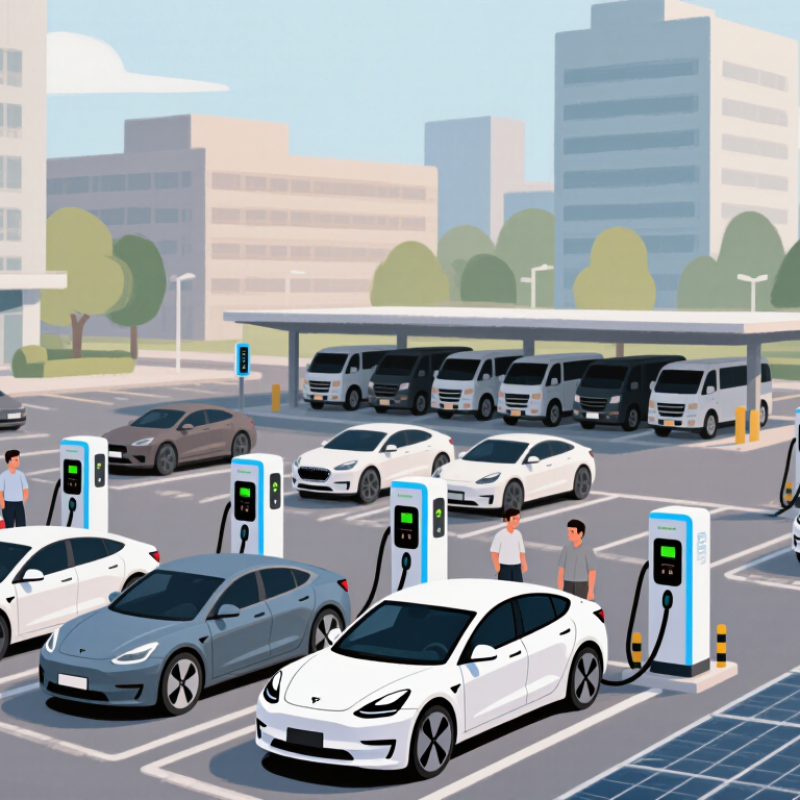
An EV power station is a site that supplies electricity to parked electric vehicles through coordinated charging equipment. It may include AC chargers, faster DC chargers, switchgear, payment systems, and energy-management controls. The grid supplies power, while the station’s chargers communicate with each vehicle to manage safe, suitable charging. That distinction matters: AC equipment sends alternating current to the vehicle, where its onboard charger converts it; DC fast chargers perform the conversion at the station.
Some sites also use batteries or rooftop solar. A battery can store electricity when demand is lower and release it during busy periods, helping manage peak loads. The International Energy Agency’s Global EV Outlook 2024 reported more than four million public charging points worldwide at the end of 2023, roughly 40% more than a year earlier. For a business, that growth makes charging infrastructure a practical service to plan for—not a plug-and-forget purchase. Actual capacity depends on the site’s grid connection, vehicle turnover, and parking patterns. A row of cars arriving at 5 p.m. can create a very different load from steady daytime use. The layout is rarely perfect on paper. Monitoring real charging sessions can reveal where the original assumptions missed.
Why Choose an EV Power Station for Your Business?
What Is an EV Power Station and How Does It Work?
An EV power station supplies electricity to charge electric vehicles. AC charging equipment delivers power that the vehicle converts to DC; DC fast chargers convert grid power to DC before it reaches the vehicle. The vehicle and charger communicate to manage charging safely.
These are representative rated-power examples, not guaranteed charging speeds. Actual power depends on the charger, vehicle, electrical supply, and battery conditions.
Which Business Needs Can an EV Power Station Meet?
An EV power station can serve businesses with vehicles that return to a shared site each day. Delivery vans, service cars, and company fleets may need predictable charging between shifts. A depot with several chargers can reduce reliance on scattered public charging, though the right setup depends on parking patterns and available electrical capacity. Small details matter: a vehicle arriving at 6 p.m. may need to be ready before the morning route.
Workplaces, hotels, and retail sites can also meet customer or employee charging needs. A hotel might offer overnight charging, while a shop could give visitors a reason to stay longer. Not every location needs many chargers. A few well-placed units may be more useful than equipment that sits unused. That estimate can be wrong, so businesses should review actual dwell times and demand before expanding.
An EV power station may also help manage charging across multiple vehicles, depending on its controls and the site’s electrical design. Businesses with limited grid capacity should assess peak loads with a qualified electrical professional. Charging during quieter hours can help, but operating schedules are not always tidy. Staff may plug in late, vehicles may arrive unexpectedly, and maintenance still takes time. Planning for those ordinary disruptions is part of choosing a system that fits.
What Operational and Financial Benefits Can It Offer?
Why Choose an EV Power Station for Your Business?
An EV power station can turn parking spaces into a practical service for employees, visitors, or fleet vehicles. The International Energy Agency reported nearly 14 million electric car sales worldwide in 2023, equal to about 18% of new car sales. That expanding driver base may make on-site charging useful for attracting customers and supporting staff. A charger beside the entrance can also give visitors a clear reason to stay longer. Longer visits do not guarantee higher sales, though.
For fleet operations, charging on site can reduce detours to public chargers and make vehicle schedules easier to manage. The U.S. Department of Energy’s Alternative Fuels Data Center reports that electric vehicles convert over 77% of grid energy into power at the wheels, compared with roughly 12%–30% for gasoline vehicles. That efficiency can support lower energy costs per mile, depending on local electricity rates and charging patterns. It can also make daily energy use easier to track. Still, charger utilization is the awkward part. An underused station may not repay its installation and maintenance costs quickly. A site assessment, realistic usage forecast, and review of electrical capacity help businesses weigh the likely savings against upfront spending. The numbers deserve a second look.
How Does It Support Sustainability and Energy Resilience?
An EV power station can support sustainability when it draws power from onsite solar or other lower-carbon sources. A canopy of panels might charge vehicles through the day, while a battery stores excess energy for evening demand. That can reduce reliance on grid electricity during peak periods. Less strain, sometimes. The actual emissions benefit depends on the local energy mix and how the system is operated.
Energy resilience is more specific than simply owning a battery. During a brief grid outage, stored power may keep selected chargers or essential site equipment running, if the system includes suitable backup controls. A manager might prioritize fleet vehicles, security lighting, or payment equipment. Not every installation can power an entire site. Capacity, inverter limits, and available stored energy all matter, so businesses should confirm what stays operational during an outage.
The setup also needs regular monitoring. Operators can review charging demand, battery condition, and solar output, then adjust charging schedules around busy hours. A battery cannot fix every weak point, and replacing equipment has an environmental cost too. Those trade-offs deserve attention. Track actual energy use and outages, not just projected savings, before deciding whether the system meets the site’s needs.
What Should Businesses Assess Before Installation?
Why Choose an EV Power Station for Your Business?
What Should Businesses Assess Before Installation?
Before installing an EV power station, map how vehicles actually use your site. Count daily arrivals, parking duration, fleet schedules, and peak occupancy. A delivery van parked overnight needs a different charging plan from customer cars that stay for 40 minutes. Check electrical capacity with a qualified electrical professional; nearby transformers and switchgear may limit expansion. Include trenching, accessible parking, drainage, lighting, and clear cable routes in the site review. These details are easy to miss on a floor plan.
Demand is growing, but local forecasts matter more than global headlines. The International Energy Agency’s Global EV Outlook 2024 reports that public charging points worldwide exceeded four million in 2023, after rising by about 40% that year. That trend signals momentum, not guaranteed demand at your address. Compare utility tariffs, connection costs, expected charging sessions, and maintenance needs. Model both a modest start and later expansion. Forecasts can be wrong; revisit them against actual vehicle and visitor data.
Tips: Photograph the parking area at busy times, then mark proposed charger locations and cable paths. Ask your utility about capacity, upgrade lead times, and demand charges before ordering equipment. Keep spare electrical capacity where practical. A neat installation today can still need revision tomorrow.