Why Choose a Hybrid Solar Charge Controller?
A Hybrid Solar Charge Controller can help coordinate solar panels, battery storage, and another power source in one system. That matters when sunlight shifts quickly, such as when clouds cross a rooftop array in the afternoon. Instead of treating each power source as a separate puzzle, a hybrid setup can manage charging and energy use according to its design. The details vary. Check them.
Photovoltaic safety educator John Wiles’s published guidance can be paraphrased as a practical rule: match every component to the system it serves. That principle applies here. Confirm the controller’s solar input limits, battery compatibility, charging profile, and support for grid or generator connections. A controller that looks suitable on paper may still be a poor fit for a particular battery bank. Small specification differences matter.
Why choose one? For homes, cabins, or backup systems, a Hybrid Solar Charge Controller may simplify power management and make stored energy more useful when production falls. It can also reduce the need to coordinate separate charging devices, depending on the model. Look closely at monitoring features, conversion efficiency, installation requirements, and how the unit behaves during a power outage. Ask for clear documentation. And check warranty support. Hybrid does not automatically mean better; the right choice depends on the loads, local sunlight, battery chemistry, and the owner’s plans. Sometimes the plainest setup is enough. That is worth considering.
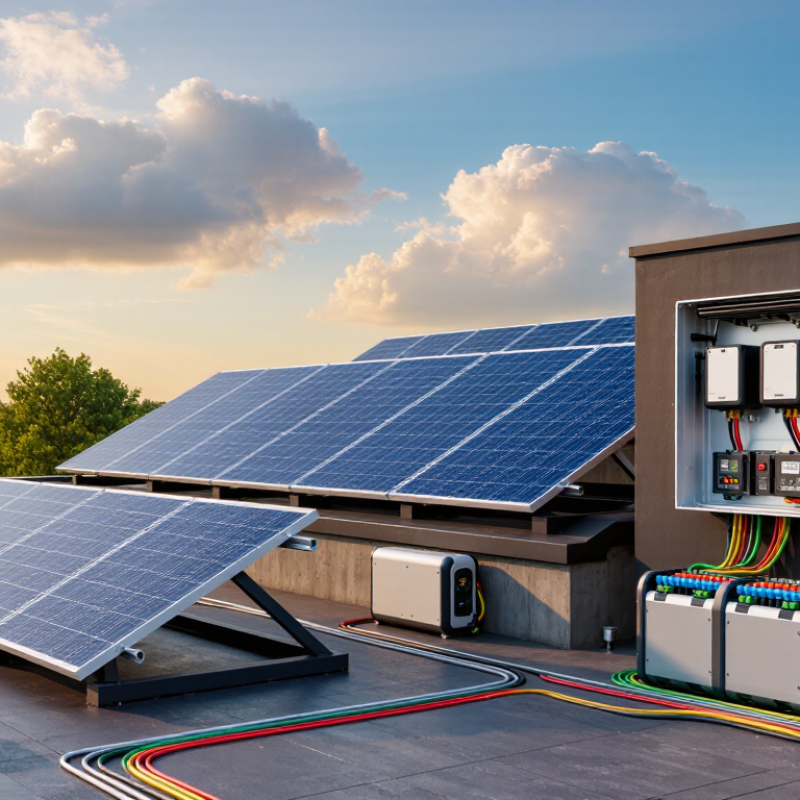
What a Hybrid Solar Charge Controller Is and How It Works
Why Choose a Hybrid Solar Charge Controller?
What a Hybrid Solar Charge Controller Is and How It Works
A hybrid solar charge controller manages charging from solar panels and another power source, such as a generator or utility supply, when the system supports it. “Hybrid” can mean different things across equipment designs, so check the wiring diagram and specifications rather than relying on the label. The controller monitors panel output, battery voltage, and charging limits, then regulates how much current reaches the battery.
In daylight, panel output changes with cloud cover, temperature, and shade. Many controllers use maximum power point tracking to adjust the panel’s operating voltage and draw useful power as conditions shift. The controller then converts that power to suit the battery. No magic here. If solar output falls, a compatible hybrid system may draw from its secondary source or preserve a chosen battery reserve. Its options depend on the connected equipment and its settings.
Correct setup matters. Battery chemistry, voltage, current limits, and cable sizing must match the equipment instructions. A mismatch can reduce battery life or trigger faults, even when the display looks normal. During commissioning, observe the readings under real loads: a kettle switching on or a passing cloud can reveal behavior that a tidy diagram misses. I would not assume every “hybrid” unit can charge from the grid; some cannot. Check the manual before choosing a controller.
How It Combines Solar, Battery, and Backup Power Sources
Why Choose a Hybrid Solar Charge Controller?
How It Combines Solar, Battery, and Backup Power Sources
A hybrid solar charge controller coordinates energy from solar panels, a battery bank, and a compatible backup source. During sunny hours, it can direct panel output toward charging the battery or supporting connected loads. When sunlight fades, stored battery energy can help maintain power. If the system includes a suitable grid or generator connection, backup power may cover a shortfall or recharge the battery. The exact behavior depends on the controller and system design. It is not magic.
Tips: Check the manual for supported input types and charging settings. Confirm battery voltage and chemistry match the controller. Keep wiring protected, and have a qualified installer review the setup if you are unsure.
This combined approach can reduce interruptions for a cabin, workshop, or home with changing energy needs. For example, a battery might run lights after sunset, while a backup source handles several cloudy days. A properly configured controller helps manage charging and can prevent unsuitable charge settings from reaching the battery. Still, adding more power sources also adds wiring, configuration, and maintenance. A hybrid setup may feel reassuring, but it is worth checking how it behaves when one source fails. Test the system under realistic loads, not just on a bright afternoon.
Key Benefits for Energy Efficiency and System Reliability
A hybrid solar charge controller can coordinate solar panels with another supported charging source while managing battery charging. Its value depends on the system design. Some models include MPPT, which adjusts the panels’ operating point as sunlight changes. This can capture more energy than a basic controller in suitable conditions, such as on a cool, bright morning. Not every hybrid unit offers the same functions.
Better energy use starts with matching controller settings to battery chemistry, panel voltage, and daily loads. A display showing charge current and battery voltage makes performance easier to check. For example, a shaded panel array may produce less power at noon, while a compatible second source can help maintain essential loads. Less guesswork. Proper cable sizing and ventilation matter too; a controller cannot correct poor wiring.
Reliability comes from controlled charging and clear protection limits. Many units can reduce charging when a battery is full or disconnect loads if voltage falls too low. Temperature compensation may help when battery temperatures vary, but it must suit the battery type. More features are not automatically better. Extra modes can complicate setup, and a mismatched controller may waste energy or strain the battery. Check the manual’s limits, then compare logged readings with battery behavior over several days.
Features to Compare When Choosing a Controller
When comparing a hybrid solar charge controller, start with the system it must serve. Check the maximum solar input voltage and charging current against your panel array, including cold-weather voltage rises. A controller that is undersized may limit output; one that is oversized can waste money. Small details matter.
Next, verify battery compatibility. Look for selectable charging profiles for your battery chemistry, adjustable voltage settings, and temperature sensing where appropriate. Confirm that the controller can handle your battery bank’s voltage and capacity. A clear display helps you check charging status at a glance, but remote monitoring is useful only if it works reliably where the equipment is installed.
Compare protection and installation features, too. Over-temperature, reverse-polarity, and over-current protection can reduce risks, though they do not replace correct wiring or fuses. Check terminal size, ventilation clearance, and the stated operating temperature range. If the controller coordinates with an inverter or another charging source, confirm that the devices communicate as your system requires. Read the manual carefully. Specifications can seem straightforward, yet charging settings are easy to misread, and not every feature improves a particular setup.
Why Choose a Hybrid Solar Charge Controller?
Compare common capabilities when choosing a controller. A score of 1 means the capability is commonly included in that controller type; 0 means it is not intrinsic. Actual features vary by model.
Hybrid controllers can combine solar charging with an auxiliary source such as grid or generator power, helping coordinate charging inputs. Check the product specifications for MPPT support, compatible battery voltages, input limits, and source-priority settings.
Where Hybrid Solar Charge Controllers Work Best
Why Choose a Hybrid Solar Charge Controller?
Where Hybrid Solar Charge Controllers Work Best
Hybrid solar charge controllers suit sites where sunlight is useful but not dependable every day. Think of a remote cabin with cloudy afternoons, a farm pump, or a small monitoring station far from the grid. Depending on the design, one controller may manage solar charging alongside another source, such as wind power. Some systems instead need separate charging equipment. The term “hybrid” varies, so check the wiring and input specifications carefully.
Off-grid settings make this flexibility especially valuable. Tracking SDG 7: The Energy Progress Report 2023 estimated that 675 million people lacked electricity in 2021, highlighting the continuing need for practical energy access. At a rural site, a controller that can coordinate compatible charging sources may help keep batteries supplied through changing weather. Not everywhere. A simple, sunny installation may need no hybrid functions at all. Extra inputs can add cost and setup complexity, and incorrect voltage or battery settings can cause problems. I would verify source compatibility, rated current, and battery chemistry before choosing a unit. A hybrid controller is useful when the site’s real conditions justify it—not merely because the feature list looks impressive.

