Top Tips for Choosing the Best Drinking Water Filtration System?
Choosing the right drinking water filtration system is crucial for health. Many times, people overlook the importance of clean water. According to Dr. Emily Robinson, an expert in water quality, "Investing in a good filtration system is investing in your health."
No two households are alike. Each has unique needs when it comes to water purification. Factors like water source, contaminants, and household size all matter. Many consumers may feel overwhelmed by options.
A tailored solution can ensure safe drinking water. It’s vital to understand the right system for you. Mistakes in choice may lead to inadequate filtration and health risks. Reflecting on these choices can lead to better health outcomes.
Understanding the Importance of Drinking Water Filtration Systems
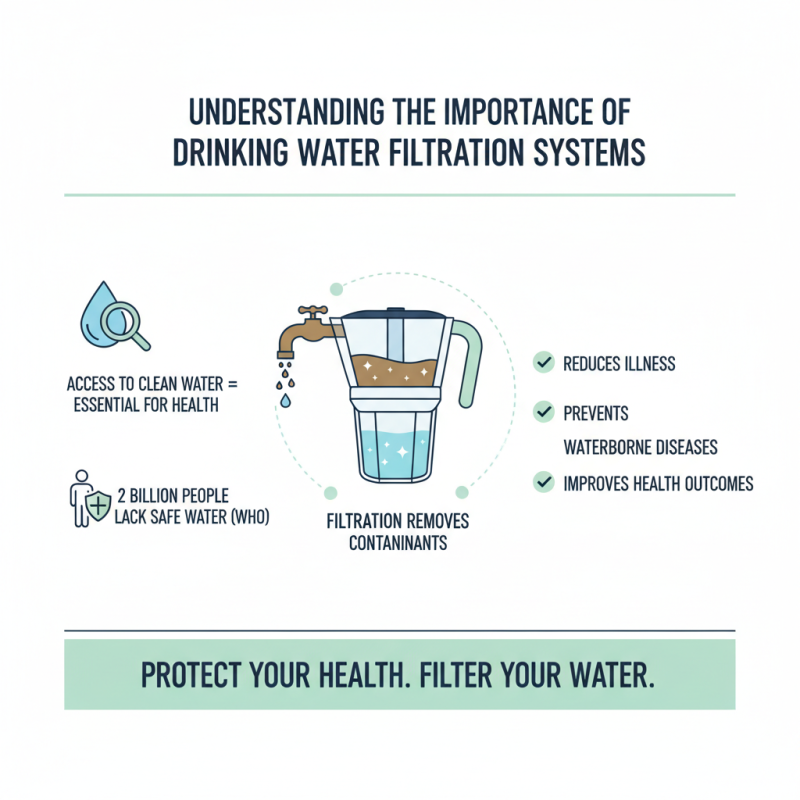
Access to clean drinking water is essential for health. According to the World Health Organization (WHO), about two billion people lack safe drinking water at home. This makes understanding water filtration systems crucial. Filtering water helps remove contaminants. It reduces the risk of waterborne diseases, improving overall health outcomes.
Research indicates that filtration systems can reduce lead levels by up to 99%. Lead contamination often occurs from old pipes, which may pose severe health risks, especially for children. Removing heavy metals and chlorine also enhances the taste and smell of water. Consumers often overlook these benefits, focusing only on initial costs, which can lead to poor choices.
A study by the Environmental Protection Agency (EPA) highlighted that many home filtration systems fail to meet safety standards. This underscores the need for thorough research when choosing a filtration system. Regular maintenance and testing of these systems are often neglected. Those factors can significantly impact their effectiveness. Without proper upkeep, even the best systems can perform poorly over time.
Types of Drinking Water Filtration Systems Available on the Market
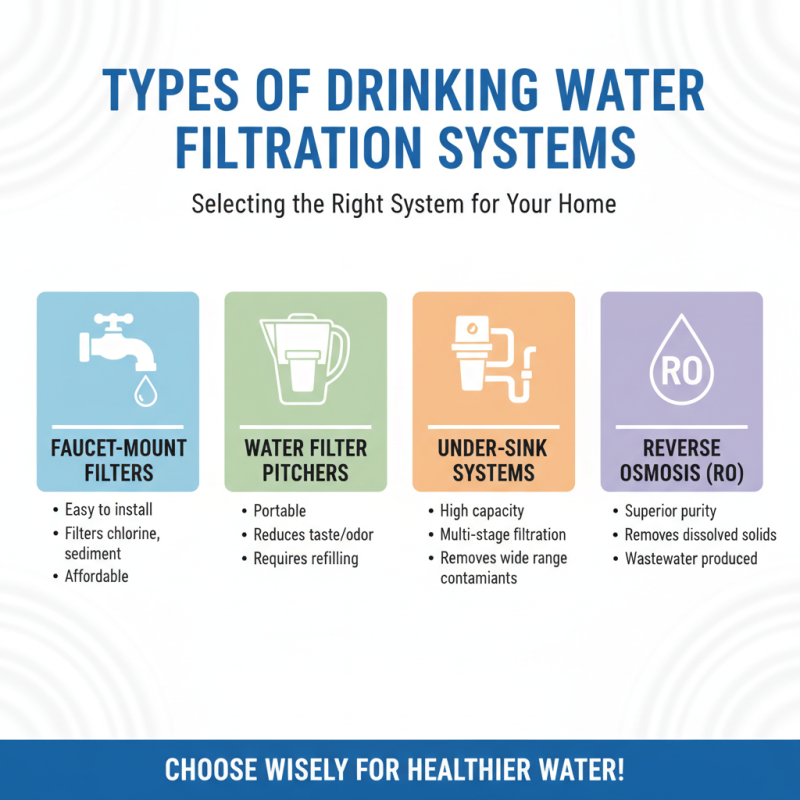
When selecting a drinking water filtration system, it’s essential to understand the types available. There are several popular options on the market today, each with unique features that cater to varying needs.
Activated carbon filters are widely favored. They effectively remove chlorine, sediment, and volatile organic compounds (VOCs). However, they may not eliminate all heavy metals. Reverse osmosis systems are another option, removing a broad range of contaminants. But these systems often waste a significant amount of water during filtration. Ceramic filters utilize a different approach. They effectively remove bacteria and sediment but can be slower and may require regular cleaning.
Tips for making the right choice include assessing your water quality. Testing your water can reveal specific contaminants. This knowledge helps in choosing a suitable system. Also, consider your household size. Larger families may need larger-capacity systems to ensure sufficient supply. Lastly, think about your budget. While higher-end options often provide more thorough filtration, some affordable systems can meet basic needs effectively.
Key Features to Consider When Choosing a Filtration System
When selecting a drinking water filtration system, several key features warrant your attention. One of the most critical aspects is the filtration method. Options include activated carbon, reverse osmosis, and UV treatment. Each method has its strengths and weaknesses. For example, activated carbon is excellent for taste and odor removal but may not effectively eliminate certain contaminants. Meanwhile, reverse osmosis can remove a wide range of impurities but tends to waste water in the process.
Another aspect to consider is the filtration capacity. If you have a large household, a system with a higher capacity will help ensure a consistent supply of clean water. Look for systems that provide a good balance between efficiency and output. Additionally, check the longevity of the filters. Some need frequent replacements, which can lead to unexpected costs.
It's also crucial to understand your specific water quality needs. Test your water to identify contaminants present. This helps you choose a filtration system tailored to your unique situation. Researching local water quality reports can offer valuable insights too. Understanding potential impurities will enable you to make an informed decision. Sometimes, the best choice isn’t the most expensive one. Prioritize functionality over brand loyalty. Balancing cost and quality is key.
Top Tips for Choosing the Best Drinking Water Filtration System
This chart illustrates the importance rating for various key features to consider when choosing a drinking water filtration system. Filter efficiency is rated the highest, while installation ease is rated the lowest among the factors considered.
Evaluating the Cost and Maintenance of Water Filtration Systems
When selecting a drinking water filtration system, cost and maintenance are crucial factors to consider. A report by the Water Quality Association (WQA) indicates that the average cost for a residential system ranges from $150 to $1,500, depending on the technology used and filtration capacity. Reverse osmosis systems often come at a higher initial cost but may provide better filtration efficiency. However, installation fees can increase the total expenditure, sometimes adding several hundred dollars.
Maintenance is another aspect that can affect overall spending. Regular filter replacements are essential for ensuring water quality. On average, activated carbon filters need replacement every 6-12 months, while reverse osmosis membranes may last 2-3 years. This means homeowners should anticipate ongoing costs for replacements, which can accumulate over time. Studies show that 30% of users overlook maintenance schedules, leading to diminished filtration effectiveness. It’s important to balance initial costs with these recurring expenses to make an informed choice.
Water testing is advisable before installation. This step can identify specific contaminants in your water supply, guiding you to the right filtration option. Neglecting this may result in purchasing an expensive system that fails to address pressing water quality issues. Understanding both immediate and long-term financial commitments will lead to a better-informed decision regarding water filtration systems.
Assessing the Quality and Safety of Filtered Drinking Water
Filtered drinking water must meet quality and safety standards. Start by testing your water source. Use a reliable kit to check for contaminants. Heavy metals, bacteria, and chemicals can sneak into tap water. This information will guide your decision on which filtration system to select.
Not all filters remove the same impurities. Some may excel at eliminating chlorine but not lead. Research different filtration technologies such as reverse osmosis or activated carbon. Think about what specific pollutants are common in your area. Local water quality reports can provide valuable data. Quality filters should have certifications. Look for those validated by credible organizations.
Maintenance is key too. Regularly replace filter cartridges to ensure effectiveness. A neglected system can lead to water quality issues. It’s important to take these steps seriously. The health of your family relies on safe drinking water. Be proactive and informed, as this makes a significant difference.
Top Tips for Choosing the Best Drinking Water Filtration System
| Filtration Method |
Contaminants Removed |
Maintenance Requirement |
Estimated Lifespan |
Cost Range (USD) |
| Activated Carbon |
Chlorine, Sediment, Volatile Organic Compounds (VOCs) |
Low |
3-6 months |
$20 - $100 |
| Reverse Osmosis |
Lead, Nitrates, Fluoride, Arsenic |
Moderate |
2-3 years |
$150 - $600 |
| Ultraviolet (UV) Light |
Bacteria, Viruses |
Low |
1 year (bulb replacement) |
$75 - $300 |
| Ceramic Filtration |
Bacteria, Sediment, Larger Particles |
Low |
Up to 5 years |
$50 - $200 |
| Ion Exchange |
Hardness (calcium, magnesium), Some heavy metals |
Moderate |
1-2 years (resin replacement) |
$150 - $500 |