
Solar power is scaling quickly, and the Solar Combiner sits quietly at the center of that expansion. The International Energy Agency reported nearly 420 gigawatts of new solar PV capacity worldwide in 2023. IRENA recorded more than 1.4 terawatts of global solar capacity by year-end. These figures increase pressure on every junction, fuse, enclosure, and monitoring connection.
A combiner box may look like a compact gray cabinet beside a tracker row. Its role is less simple. It combines string outputs, limits fault energy, supports overcurrent protection, and helps operators identify underperforming circuits. John Berdner, a longtime PV power-electronics specialist, describes the principle clearly: “Reliability starts with the details engineers can measure.” That idea guides this Top 10 Solar Combiner Manufacturers Worldwide overview.
The ranking considers product engineering, certification practices, thermal design, surge protection, monitoring functions, installation experience, and global support. Reference points include IEC 61439, IEC 60947, UL 1741, and relevant project specifications. Market visibility alone is not enough. A familiar brand can still perform poorly in a harsh desert enclosure or a humid coastal plant.
There is an unavoidable limitation. Manufacturers publish different levels of technical and shipment data. Some figures are independently verified, while others rely on company disclosures. Therefore, this list should support procurement research, not replace site-specific engineering. Buyers should compare voltage ratings, fuse coordination, ingress protection, cable routing, spare-part access, and documented test results. Small omissions can become expensive downtime. Reliability is built inside the box.
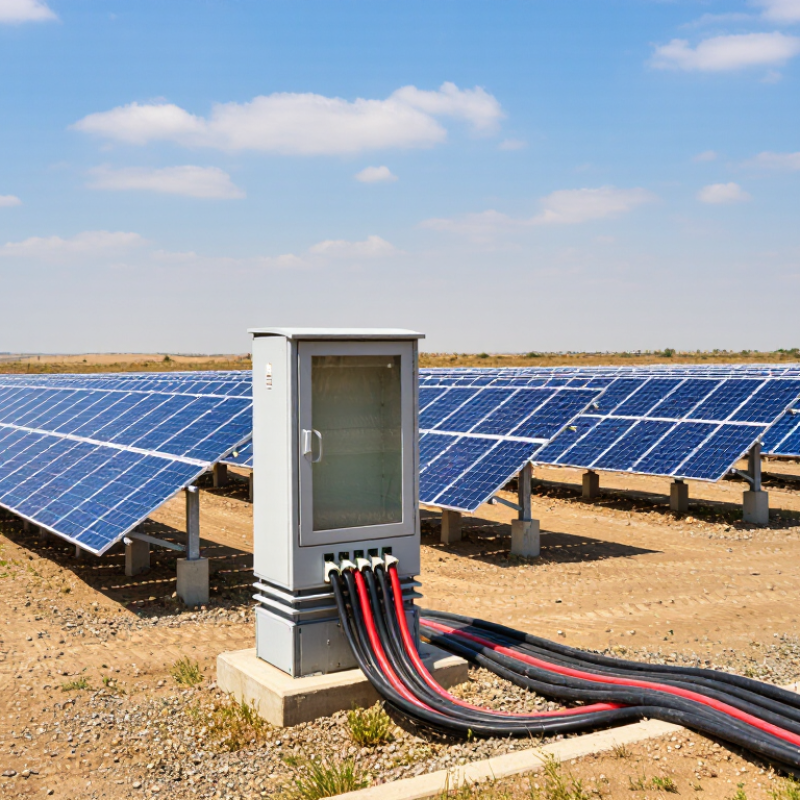
A solar combiner box is an enclosure that joins multiple photovoltaic string circuits into fewer output circuits. It sits between solar panels and the inverter. Inside, fuses, circuit breakers, surge protection devices, and monitoring components manage incoming DC power. The arrangement looks simple, but every connection matters. A loose terminal can create heat, energy loss, or equipment damage.
Its main function is organized protection. The box isolates faulty strings, limits overcurrent, and helps technicians test circuits safely. Many models also monitor voltage, current, temperature, and insulation status. These features support faster maintenance and clearer fault diagnosis. However, a combiner box is not a magic safety device. Incorrect fuse ratings or poor cable selection can still cause serious failures. Field conditions often expose design weaknesses that drawings miss.
Solar combiner boxes are used in rooftop systems, utility-scale solar farms, commercial buildings, agricultural installations, and remote power projects. Outdoor units need weather-resistant housings, UV-stable seals, and suitable corrosion protection. Indoor systems may require different enclosure ratings. Local electrical codes and project conditions should guide final selection.
Tips: Count strings carefully before choosing inputs. Check maximum system voltage, short-circuit current, and ambient temperature. Leave space for inspection. Labels fade. Use durable ones. Document every cable route, even when the system seems small. A second review can reveal mistakes that experience alone may overlook.
Solar combiner boxes consolidate multiple photovoltaic string outputs into a single DC circuit and commonly integrate string fuses, surge protection devices, disconnects, monitoring, and overcurrent protection. The chart shows widely used maximum DC system-voltage classes associated with modern PV installations. Actual combiner-box ratings depend on the module configuration, inverter, electrical code, and project design.
Top 10 Solar Combiner Box Manufacturers Worldwide
How the Top 10 Global Manufacturers Were Selected
The ranking uses evidence, not advertising claims. We reviewed manufacturing capacity, product certifications, field experience, and documented delivery performance. Solar combiner boxes must manage high DC voltage, thermal stress, and fault conditions. Therefore, compliance with IEC 61439-2, IEC 62548, and relevant regional safety requirements carried significant weight.
Market scale also matters. The IEA PVPS Trends 2024 report recorded about 447 GW of new photovoltaic capacity worldwide in 2023. This expansion increases demand for reliable protection and monitoring equipment. We compared enclosure ratings, surge protection options, fuse coordination, monitoring functions, and operating temperature ranges. Installation records from utility, commercial, and industrial projects provided additional evidence. Product warranties were considered, but warranty length alone did not determine the ranking.
No ranking is perfectly neutral. Public data can lag behind factory changes. We reduced this weakness by cross-checking company disclosures with Wood Mackenzie’s 2024 solar supply-chain analysis and SolarPower Europe’s Global Market Outlook 2024–2028. Manufacturers received stronger scores when technical documents were clear, test reports were traceable, and service networks supported long-term projects. Field feedback mattered too. A well-designed box can still disappoint when terminals loosen or maintenance instructions are vague. Those details are easy to overlook. That is why the final selection balances measurable scale with practical reliability, while acknowledging that regional performance may differ.
The top ten solar combiner box manufacturers worldwide represent different engineering strengths. A German manufacturer focuses on precise enclosure sealing for wet, cold sites. An American producer emphasizes rapid installation and clear circuit labeling. A Chinese manufacturer offers high-volume production with competitive pricing and flexible input layouts. A Japanese specialist prioritizes compact designs for rooftops with limited space. An Italian supplier develops heat-resistant boxes for Mediterranean climates. An Indian manufacturer adapts products for dust, high temperatures, and uneven grid conditions. A South Korean producer integrates monitoring modules for faster fault detection. A Swiss company highlights strict testing, neat wiring, and long service intervals. A Brazilian manufacturer designs robust cabinets for humid, remote solar farms. An Australian supplier builds lightweight units for harsh sunlight and difficult transport routes.
Their profiles reveal more than output capacity. Experienced manufacturers test insulation, surge protection, temperature rise, and connector compatibility before shipment. Some use UV-resistant materials that remain stable beside exposed panels. Others provide labeled terminals, spare fuses, and practical installation diagrams. These details reduce mistakes during field work. However, no enclosure solves poor cable routing or careless torque control. That weakness deserves attention. Buyers should review certification records, factory inspection methods, warranty terms, and local technical support. A low price can hide limited documentation or delayed replacement parts. In my field experience, the strongest suppliers explain failure limits honestly, rather than promising perfect performance. Their value appears in clean maintenance, stable protection, and fewer surprises after installation.
Comparative profile of leading global supplier categories, product capabilities, compliance coverage, and typical photovoltaic project applications.
| Rank | Anonymous Profile | Primary Market Coverage | Typical Product Configuration | Common Electrical Ratings | Protection and Monitoring Features | Compliance References | Typical Project Applications |
|---|---|---|---|---|---|---|---|
| 1 | Profile A Global utility-scale specialist | Asia-Pacific, Europe, North America, Middle East, and Latin America | Large outdoor DC combiner cabinets with multiple string inputs, touch-safe fuse holders, and integrated output disconnects | 1,000–1,500 V DC Multiple string circuits; current ratings selected according to array design | String fuses, surge protection, DC isolation, optional string-current monitoring, and enclosure temperature monitoring | IEC 61439IEC 61643-31IP54–IP65 | Utility-scale solar farms, central-inverter plants, and high-capacity ground-mounted systems |
| 2 | Profile B Integrated inverter-system supplier | Worldwide through inverter, EPC, and distributor networks | Combiner units designed as part of a coordinated inverter and plant-control platform | 1,000–1,500 V DC Configuration commonly matched to inverter input architecture | Fuse monitoring, DC surge protection, remote communications, alarm contacts, and thermal supervision | IEC 60269IEC 61643-31CE | Large commercial rooftops, utility plants, battery-coupled PV systems, and hybrid power projects |
| 3 | Profile C Modular commercial-PV specialist | Europe, North America, Australia, and selected emerging markets | Compact modular boxes supporting several input configurations and flexible cable-entry arrangements | 600–1,500 V DC Typical current capacity varies by input count and fuse selection | DC fuses, Type II surge protection, load-break isolation, status indication, and optional monitoring modules | IEC 61439-2IEC 60529UL 1741 | Commercial rooftops, industrial facilities, agricultural buildings, and medium-sized ground arrays |
| 4 | Profile D High-voltage utility integrator | North America, Latin America, Europe, and large international EPC projects | Heavy-duty combiner cabinets engineered for long string runs, high fault-current environments, and outdoor installation | 1,500 V DC High short-circuit withstand capability subject to project design | High-performance surge protection, visible isolation, fuse supervision, environmental sensors, and SCADA interfaces | UL 1741UL 50ENEMA 3R/4X | Large-scale solar farms, desert installations, tracker projects, and high-temperature environments |
| 5 | Profile E Distributed-energy specialist | Europe, Southeast Asia, Africa, and distributed-generation markets | Small and medium string combiner boxes for rooftop, carport, and distributed solar applications | 600–1,000 V DC Usually configured for low-to-medium string counts | String fuses, DC isolators, surge protection, polarity identification, and simple visual status indicators | IEC 60947-3IEC 61643-31IP65 | Residential portfolios, commercial rooftops, solar carports, schools, and small industrial systems |
| 6 | Profile F Custom-engineered enclosure provider | North America, Europe, and project-based international markets | Application-specific cabinets with customized input counts, busbars, disconnects, cable glands, and control wiring | 600–1,500 V DC Ratings engineered around module, inverter, and site requirements | Fuse protection, surge arresters, isolation, auxiliary power, remote I/O, and custom data acquisition | IEC 61439UL 508ANEMA 4 | Complex EPC projects, brownfield upgrades, microgrids, and sites requiring non-standard layouts |
| 7 | Profile G Cost-optimized mass-production supplier | Asia-Pacific, Africa, the Middle East, and price-sensitive international markets | Standardized multi-string enclosures with configurable fuse ratings and common cable-entry options | 600–1,500 V DC Common configurations available for low, medium, and high string counts | DC fuses, surge protection, isolation switch, ventilation provisions, and optional current monitoring | IEC 60269IEC 60529CE | Standard ground-mounted plants, commercial rooftops, agricultural PV, and distributor-led projects |
| 8 | Profile H Smart-monitoring combiner specialist | Europe, North America, Australia, and digitally managed PV markets | Intelligent combiner boxes with embedded measurement hardware and communications gateways | 1,000–1,500 V DC String-level measurement generally available for selected configurations | Current and voltage monitoring, fuse status, surge protection, temperature sensors, RS-485, and Ethernet options | IEC 61643-31IEC 60529IP65 | Operations-intensive utility plants, predictive-maintenance programs, and remote solar assets |
| 9 | Profile I Harsh-environment enclosure manufacturer | Middle East, Australia, coastal regions, Africa, and high-dust locations | Robust outdoor boxes using corrosion-resistant materials, sealed cable entries, and reinforced mounting structures | 1,000–1,500 V DC Site-specific derating may apply in high-temperature conditions | Surge protection, DC isolation, filtered ventilation or pressure equalization, thermal management, and anti-condensation options | IEC 60529NEMA 4XIEC 61439 | Desert solar farms, coastal installations, remote sites, and high-humidity or high-salinity environments |
| 10 | Profile J Regional EPC-oriented manufacturer | Strong regional coverage with export capability through EPC contractors and electrical distributors | Standard and semi-custom combiner boxes tailored to local grid codes, installation practices, and procurement requirements | 600–1,500 V DC Input count, fuse size, and enclosure rating selected by project specification | String protection, surge protection, isolation, terminal blocks, alarm contacts, and optional remote monitoring | IEC 61439IEC 61643-31CE/UL options | Commercial and industrial PV, municipal projects, regional utility plants, and retrofit installations |
Note: Electrical ratings, enclosure classes, and monitoring options are typical market configurations. Final selection should be verified against the applicable local code, module string design, inverter requirements, fault-current calculations, environmental conditions, and project specifications.
Top 10 Solar Combiner Box Manufacturers Worldwide: Technology, Safety Features, and Product Differences
Leading global manufacturers build combiner boxes around different system conditions, not identical catalogs. Their products may support string monitoring, remote diagnostics, or simple current collection. Some models use molded enclosures, while others use stainless steel cabinets for harsh coastal sites. Small details matter. Terminal spacing, cable labels, and hinge quality can affect installation time and maintenance accuracy. Advanced units may include wireless communication, but basic projects often gain more value from clear wiring and dependable protection.
Safety design separates serious equipment from attractive packaging. A reliable box usually combines string fuses, surge protective devices, disconnect switches, and thermal management. Proper protection ratings help the enclosure resist dust, rain, and ultraviolet exposure. Ventilation must prevent heat buildup without weakening water resistance. Installers should check short-circuit ratings and maximum system voltage before connecting strings. A low-cost box can become expensive after repeated fuse failures or difficult fault tracing. Not every monitoring feature improves safety.
Product differences also appear in testing and documentation. Strong manufacturers provide wiring diagrams, torque requirements, inspection records, and replacement guidance. Independent certification is useful, but it does not replace site-specific evaluation. A box rated for outdoor use may still fail when mounted under direct heat with overloaded cable glands. Field conditions are often less tidy than product brochures suggest. Buyers should compare enclosure materials, protection coordination, monitoring accuracy, service access, and spare-part availability. Some specifications look impressive, yet practical maintenance remains overlooked.
How to Compare Manufacturers for Different Solar Projects
Comparing the top ten manufacturers starts with project fit, not popularity. A rooftop system may need eight inputs, while a utility site may require twenty-four. Match the box to the array design, system voltage, current, and expansion plan. Check whether the manufacturer offers suitable fuse holders, surge protection, monitoring, and isolation equipment. Small details matter. A crowded enclosure can complicate maintenance.
Environmental protection deserves careful attention. Review the IP rating, operating temperature, corrosion resistance, and cable-entry design. A coastal project needs stronger protection than a dry inland installation. Confirm compliance with applicable regional standards, such as IEC or UL requirements. Request test reports, production records, and sample inspection data. Marketing claims are not evidence.
Manufacturer evaluation should also include field support. Ask about wiring diagrams, installation instructions, replacement parts, and response times. Examine warranty terms closely. Some warranties look generous but exclude heat damage, incorrect installation, or water entry. Production capacity matters when several hundred units must arrive together. A low price can become expensive after delays or repeated faults.
A useful comparison table can score safety, customization, documentation, delivery, and service separately. Weight each category for the project. My own scoring assumptions would need review after site surveys and installer feedback. Factory audits can reveal testing gaps that brochures hide. Still, audits are not perfect. Verify serial records, enclosure sealing, terminal torque, and sample performance before approving a large order.