
Kinetico Water

Top Frameless Sliding Door Manufacturers for Global Buyers

Frameless Sliding Doors bring daylight into a room while keeping sightlines open. Their minimal appearance can make a compact apartment feel less enclosed, or connect a living space with a garden. But the glass is only part of the decision. Track alignment, roller quality, seals, hardware, and installation support all affect how smoothly a door performs over time.

Architect Ludwig Mies van der Rohe’s famous principle, “Less is more,” captures the appeal of this design. It also points to a practical challenge: with fewer visible frames, small flaws become easier to notice. A dragging panel. A gap that lets in a draft. Details matter.

This guide compares frameless sliding door manufacturers for global buyers, with attention to product range, customization, materials, certifications, and export support. Buyers should check the glass specification, operating hardware, warranty terms, and availability of replacement parts before placing an order. Ask for technical drawings and project references, not just polished photographs. Requirements differ by building and market, so confirm local specifications with qualified professionals. A showroom sample may slide perfectly; real-world use can be less forgiving. That is worth remembering.
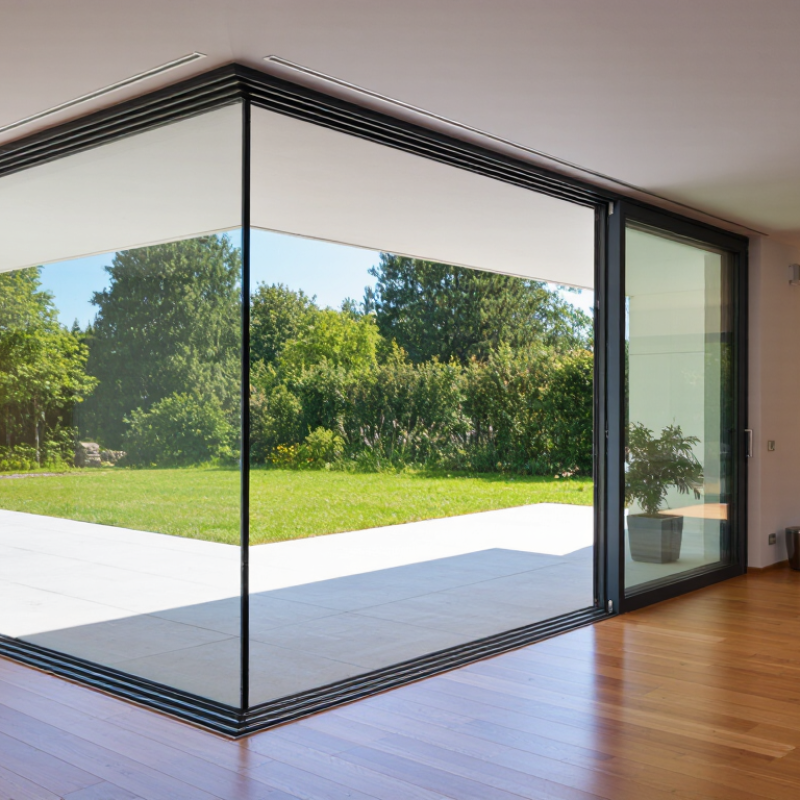
Top Frameless Sliding Door Manufacturers for Global Buyers

What Defines a Frameless Sliding Door and How Does It Work?

A frameless sliding door uses large glass panels with minimal visible framing. “Frameless” is a design description, not a claim that the door has no supporting hardware. Rollers carry each panel along a floor track or overhead rail, while guides help prevent sideways movement. The glass edges remain exposed or lightly covered, creating a clear, open view. That distinction matters.

When one panel slides behind another, the opening stays partly occupied; it does not vanish completely. Seals between panels and at the jamb help limit drafts, but they are not always airtight. Panel weight, glass thickness, track alignment, and floor level all affect smooth operation. A slightly uneven floor can make a heavy panel feel rough. The U.S. Department of Energy estimates that windows account for 25–30% of residential heating and cooling energy use. That figure covers windows generally, not frameless sliding doors specifically, but it shows why glass performance deserves attention. Buyers should compare tested U-factor and solar heat gain coefficient values, where available, and check that the hardware rating matches the panel size and weight. A common oversight is focusing only on appearance; cleaning exposed edges and keeping tracks free of grit also matter. I would not assume “frameless” means maintenance-free.

How Frameless Sliding Door Systems Are Designed and Manufactured

A frameless sliding door is engineered around the glass, not a visible frame. Designers specify glass thickness, panel weight, opening width, and floor conditions before selecting rollers and tracks. The track must carry the load without binding; even a small installation error can make a heavy panel feel rough. Manufacturers machine the hardware, prepare glass edges, and assemble seals and guides. They then check alignment, smooth travel, drainage, and resistance to repeated operation. A slim profile looks clean, but it leaves little room to hide poor tolerances.

Performance matters as much as appearance. The IEA’s 2023 Buildings report estimates that buildings account for about 30% of global final energy consumption. That figure is not specific to doors, but it highlights why designers should consider air leakage and thermal performance alongside daylight and views. Glass specification, seals, and installation details all affect the finished result. Testing should follow relevant project requirements for air and water infiltration, structural loads, and operating cycles. Real sites are rarely perfect; thresholds and walls can be out of square.

Tips: Ask for glass specifications, hardware load ratings, test documentation, and installation tolerances. Confirm how the track drains and how rollers can be adjusted or replaced. If a supplier cannot explain these details clearly, pause and review the design. That extra check is worth it.

Top Frameless Sliding Door Manufacturers for Global Buyers - How Frameless Sliding Door Systems Are Designed and Manufactured

Design or Production Area Common Approach What Global Buyers Should Verify
System configuration Systems are designed around the opening, number of panels, direction of travel, stacking arrangement, and whether the door is for interior or exterior use. Confirm opening dimensions, clear passage width, panel overlap, parking space, and site conditions before approving shop drawings.
Glass selection Frameless panels commonly use safety glass. Glass type and thickness depend on panel size, support method, intended use, and applicable building regulations. Request the specified glass make-up, safety classification, thickness, and documentation required in the destination market.
Glass processing Panels are measured and cut, then edges and any required holes or notches are processed before heat treatment. Post-tempering changes to the glass are generally not possible. Check final dimensions, edge finish, hardware cut-outs, tolerances, and whether the approved drawings match the production files.
Tracks and profiles Tracks and support profiles are commonly made from aluminum or stainless steel. Profile shape and finish are selected to suit the system, environment, and installation method. Confirm material grade, finish, track length, fixing method, and suitability for the expected exposure and cleaning conditions.
Rollers and hardware Roller assemblies, clamps, stops, guides, and optional soft-close components are selected to match the panel dimensions and system design. Ask for the declared panel-weight limits, adjustment range, replacement-part availability, and maintenance instructions for the complete system.
Seals and clearances Brushes, gaskets, and inter-panel seals can help manage contact, movement, and air or water passage. A frameless design does not automatically provide a fully weather-tight seal. For exterior applications, verify tested performance, drainage details, seal locations, and suitability for local weather exposure.
Manufacturing quality checks Production checks may include glass dimensions and appearance, hardware fit, surface finish, panel movement, and completeness of supplied components. Agree on inspection criteria, permitted visual imperfections, packaging standards, and required quality records before production.
Installation and logistics Systems are typically supplied with installation guidance and hardware lists. Glass panels require suitable handling, protection, and transport packaging. Confirm site measurement responsibility, installation sequence, delivery packaging, spare parts, and local code or certification requirements.

Which Standards and Features Matter to Global Buyers?

For global buyers, the right standard depends on where a frameless sliding door will be installed. Building and safety requirements can vary by market, so request current test reports and confirm they apply to the intended use. Ask whether the glass is safety-rated and whether its thickness matches the panel size and hardware system. Small details matter. Polished edges, consistent holes, and clear labeling make inspection easier when a shipment arrives.

Hardware deserves the same scrutiny as the glass. Check the track’s stated load capacity, roller material, corrosion resistance, and tested opening cycles. A door should glide smoothly without rattling or dragging. Ask for installation tolerances, too; uneven floors and walls are common on real projects. A few millimeters can change how the panels meet. It is easy to overlook this until installation day.

Compare documentation, not just catalog claims. Request dimensional drawings, packing details, spare-parts availability, and written warranty terms. For coastal or humid sites, ask how finishes and moving parts were evaluated for moisture exposure. Samples help reveal color and surface differences, but they cannot replace performance evidence. No specification covers every building condition. Buyers should review the details with their installer, and question assumptions that seem convenient but remain unverified.

Leading Frameless Sliding Door Manufacturers by Region

Frameless sliding door manufacturers differ by region, shaped by local building styles, supply chains, and buyer expectations. In Europe, many producers emphasize slim profiles, precise alignment, and hardware suited to compact urban interiors. Buyers should ask how roller assemblies handle repeated use and whether replacement parts remain available. Small details matter.

East Asian manufacturers often offer broad production capacity and flexible configurations, including varied glass dimensions, handle finishes, and track lengths. This can help with larger projects, but a catalog is not proof of consistent quality. Request sample hardware, documented glass specifications, and inspection records from the actual production line. A polished sample may not reflect every batch.

North American suppliers commonly focus on installation practicality, service access, and systems designed around local project requirements. For global buyers, compare more than price: check glass thickness, load ratings, corrosion resistance, packaging, and written installation guidance. Confirm that specifications match the destination market and the project’s site conditions. Not every supplier explains tolerances clearly; that gap deserves a direct question. Regional reputation can guide research, but measurable testing and responsive technical support are better grounds for choosing a manufacturing partner.

How to Compare Suppliers, Pricing, and After-Sales Support

Compare frameless sliding door suppliers using the same opening size, glass specification, and hardware requirements. Ask for technical drawings that show panel thickness, track dimensions, clearances, and installation conditions. Check whether the quoted system includes handles, rollers, seals, and fixing components. Small omissions matter.

Compare itemized prices, not just the price per door. Request separate costs for packaging, freight, installation guidance, and replacement parts. Confirm how the supplier handles changes in dimensions or finishes after approval. A low quote may exclude details that another supplier has included. Do not compare unlike systems.

After-sales support deserves equal attention. Ask how warranty coverage is documented, which parts are replaceable, and how support requests are handled across time zones. Request installation instructions and a clear process for reporting damaged or missing components. For larger projects, confirm expected response times in writing. It is easy to overlook this. A supplier’s answers before an order can reveal how clearly they communicate, though they are not a guarantee of future service.