5 Best Film Faced Plywood Manufacturers for Global Buyers
Choosing the right Film Faced Plywood manufacturer can influence concrete quality, project speed, and total construction cost. Global buyers need more than attractive product photos or low quotations. They must examine core composition, film weight, panel thickness, bonding performance, and production consistency.
This guide reviews five manufacturers serving international markets. It focuses on practical purchasing evidence, including factory experience, export capability, quality control, and technical documentation. Important details include birch, poplar, or mixed hardwood cores, phenolic resin coverage, edge sealing, surface smoothness, and dimensional tolerance. Packaging also matters. Strong pallets, moisture protection, and clear labeling can reduce damage during a long sea journey.
Quality has a physical story. A good panel should release cleanly from concrete, resist repeated use, and remain stable after careful handling. However, no manufacturer fits every project. A panel suited to high-rise formwork may not suit furniture, bridges, or demanding tropical conditions. Buyer feedback can also be incomplete or outdated.
That is worth remembering.
The comparison considers how manufacturers communicate test results, respond to technical questions, and manage custom specifications. Buyers should verify certificates, inspection reports, glue standards, and sample performance before placing large orders. Factory visits and third-party inspections may reveal differences that websites do not show. Prices change with timber supply, film thickness, order volume, and shipping routes.
This introduction is not a promise of universal ranking. It is a practical starting point for more careful supplier evaluation.
What Is Film Faced Plywood and Why Does Manufacturer Selection Matter?
Film faced plywood is engineered plywood covered with phenolic resin film. The film creates a smoother, water-resistant surface for repeated concrete formwork. It is not waterproof forever. Water can enter through cut edges, screw holes, or damaged corners. Core quality matters too. Voids may print through the face or reduce panel stiffness. In practical site inspections, I check flatness, edge sealing, film weight, and bonding before checking price. This simple order prevents expensive surprises.
Manufacturer selection matters because factories control veneer grading, drying, adhesive spread, hot-press pressure, and final calibration. These steps affect thickness tolerance and reuse cycles. The UNECE/FAO Forest Products Annual Market Review tracks plywood separately from other panel products, reflecting significant differences in trade, grades, and regional supply. That distinction helps global buyers compare quotations more accurately. An “18 mm” panel may not perform like another “18 mm” panel. Ask for test reports, production tolerances, moisture data, and batch samples. Verify them independently when possible.
Responsible sourcing also deserves evidence. FSC Facts & Figures 2023 reported more than 160 million hectares of FSC-certified forest worldwide. Certification does not guarantee perfect plywood, but chain-of-custody records strengthen origin claims. Request current certificates, not screenshots. Check formaldehyde classification against destination-market requirements, such as EN 13986 or equivalent standards. Also confirm pallet protection and container loading. Poor storage can ruin good panels. I have seen buyers overfocus on film color. That is an imperfect shortcut. Pressing records and edge quality usually tell more. Some factories provide excellent samples but inconsistent mass production. A pre-shipment inspection is worth considering.
Key Criteria for Comparing Global Film Faced Plywood Manufacturers
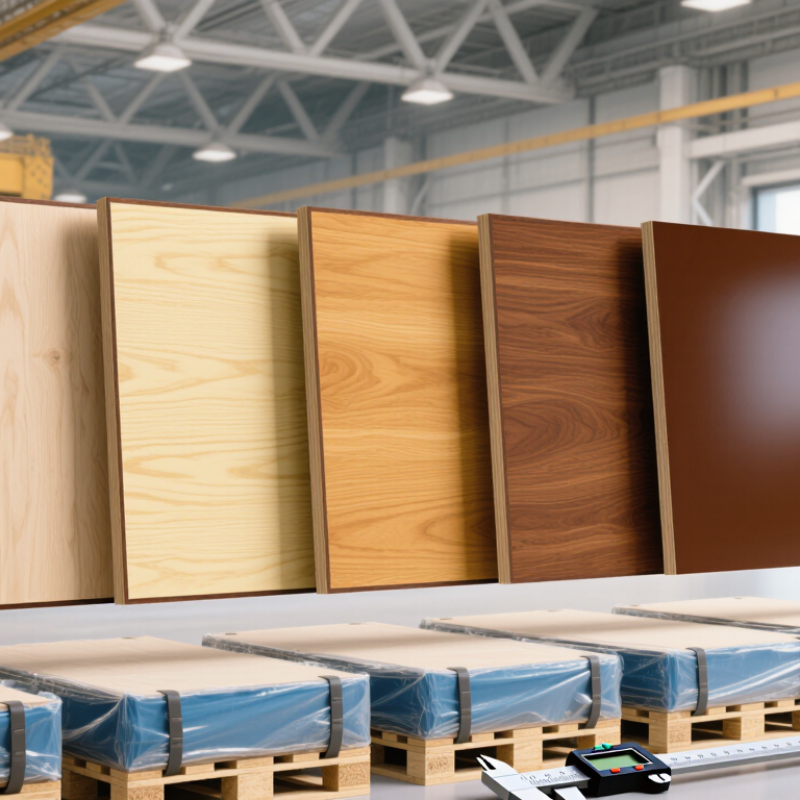
When comparing film faced plywood manufacturers, start with measurable product evidence, not polished catalog images. Check panel thickness with a caliper at several points. Small variations can affect formwork alignment. Ask about veneer species, core construction, resin type, and film weight. A reliable manufacturer should provide technical data, batch records, and recent test reports.
Manufacturing experience matters on demanding job sites. Review production capacity, drying controls, hot-press pressure, and edge-sealing practices. Inspect sample panels for flatness, patched veneer, open edges, and film bubbles. Request samples from different production batches. One excellent sample proves very little. It may hide inconsistent quality.
Supply reliability deserves equal attention. Compare moisture-resistant packaging, pallet strength, loading plans, and export documentation. Confirm whether stated tolerances are checked before shipment. Independent testing can verify bonding strength, water resistance, and reuse performance. Ask how complaints are handled, including replacement timing and root-cause reports. No factory is perfect. Even experienced buyers can overvalue a low price or attractive surface. A careful comparison should record weaknesses as clearly as strengths. That record supports a more practical purchasing decision.
Manufacturer One: Production Strengths, Product Range, and Export Reach
Manufacturer One: Production Strengths, Product Range, and Export Reach
Manufacturer One operates an integrated production line, from veneer drying to hot pressing and edge inspection. This structure can reduce handling errors and improve batch consistency. Its film faced plywood range typically includes 12, 15, and 18 millimetre panels, with phenolic films suited to repeated concrete casting. Core options include poplar, eucalyptus, birch, and mixed hardwood. Panel quality depends heavily on veneer moisture, adhesive control, and pressing temperature. Small defects become obvious on a wet construction site. Documentation matters.
The FAO Forestry Production and Trade database shows wood-based panel production remains above 370 million cubic metres annually worldwide. This scale confirms strong demand, but it does not prove every supplier can export reliably.
Manufacturer One supports palletized container loading, moisture-resistant wrapping, and batch-level inspection records. Its export reach covers contractors, distributors, and formwork businesses across multiple regions. The UNECE/FAO Forest Products Annual Market Review also highlights continuing volatility in construction materials and freight costs. Buyers should therefore examine delivery history, not only factory capacity. That metric is useful, but incomplete.
I would request recent test reports for bonding strength, surface wear, thickness tolerance, and formaldehyde emissions. A certificate without traceable production records deserves careful review.
One weakness may remain: mixed-core panels can perform differently across batches. Clear specifications and independent pre-shipment inspection reduce that risk.
How to Choose the Best Film Faced Plywood Supplier for Your Project
Choosing the best film faced plywood supplier starts with the project, not the sales brochure. Define panel thickness, core construction, film weight, dimensions, edge sealing, and expected reuse cycles. A supplier should explain how these details affect strength, surface quality, and concrete release. Clear technical answers matter more than attractive product photos.
Request recent test reports and production samples before placing a large order. Check bending strength, moisture resistance, thickness tolerance, and formaldehyde compliance for your target market. Inspect the panel edges closely. Uneven sealing can allow water into the core after only a few uses. Ask how the factory controls veneer grading, hot pressing, film bonding, and final inspection. Reliable manufacturers can describe these steps without hesitation.
Capacity and delivery discipline also deserve attention. Confirm monthly output, packing methods, loading plans, and replacement procedures for damaged sheets. A supplier should provide traceable batch information and respond quickly when specifications change. Do not judge quality from one perfect sample. Randomly inspect several sheets from different batches. That takes time. It often reveals more.
Price comparisons can mislead when core quality, film weight, and usable lifespan differ. A cheaper panel may create higher labor costs through edge repairs, poor release, or early replacement. I would also test a small shipment under actual site conditions, because laboratory claims cannot show every climate or handling problem. The right supplier communicates limitations honestly and improves when feedback exposes a weakness.