
Kinetico Water

Top Brackish Water RO System Suppliers for Global Buyers

Water stress is pushing utilities, farms, and factories to consider brackish groundwater as a dependable supply. UNESCO’s United Nations World Water Development Report 2024 notes that 2.2 billion people lacked safely managed drinking water in 2022. That figure does not make reverse osmosis the right answer everywhere. Feedwater quality, power costs, and concentrate management can change a project’s economics.

A Brackish Water Ro System uses pressure and membranes to reduce dissolved salts, but performance depends on careful site design. The U.S. National Research Council’s 2008 report, Desalination: A National Perspective, describes energy use and concentrate disposal as important considerations in desalination planning. Buyers should therefore compare more than a supplier’s advertised capacity. Ask for pilot or reference-site results, feedwater limits, expected recovery, pretreatment details, and membrane replacement assumptions. Small details matter: a variable well-water analysis can affect scaling, cleaning frequency, and uptime.

This guide introduces suppliers serving global buyers and the questions that help distinguish suitable partners from polished brochures. Compare engineering experience, component traceability, commissioning support, spare-parts access, and documented performance under similar water conditions. Request operating data, not just design claims. Not every site. A system sized for one aquifer may perform poorly at another, even when the headline salinity looks similar. Treat published figures as starting points, then verify them against independent testing and local operating conditions.
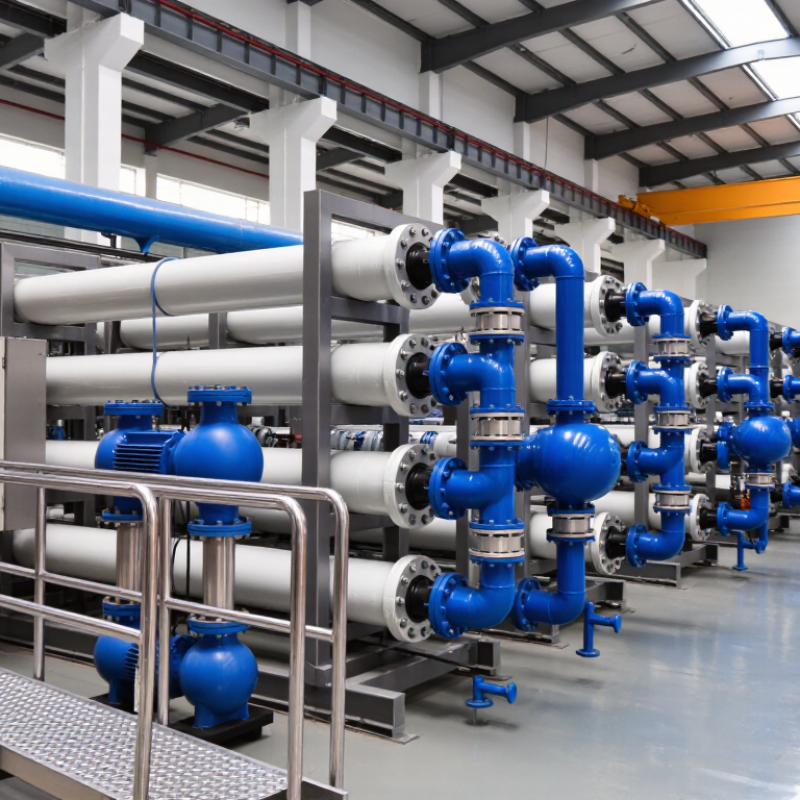
Top Brackish Water RO System Suppliers for Global Buyers

How Brackish Water Reverse Osmosis Systems Work

Brackish water reverse osmosis (RO) uses pressure to push feedwater through a semipermeable membrane. The membrane allows water molecules to pass while rejecting much of the dissolved salt and other impurities. Groundwater can vary widely, so operators should test its composition before selecting a system. Pretreatment often removes suspended particles and reduces the risk of membrane fouling. A feed pump then supplies pressure sufficient to overcome the water’s natural osmotic pressure. Not magic. The right pressure depends on water quality, temperature, and membrane design.

The membrane produces two streams: permeate, the treated water, and concentrate, which carries away much of the rejected material. Recovery describes how much feedwater becomes permeate; pushing it too high can encourage scaling and shorten membrane life. Details matter. Operators commonly track feed pressure, flow rates, and permeate conductivity. A rising pressure difference may point to fouling, while changing conductivity can signal performance loss. Yet readings alone do not explain every problem. A system may appear steady while its source water changes seasonally. Regular sampling and maintenance records help reveal that shift, though they are sometimes overlooked.

Key Criteria for Evaluating Brackish Water RO Suppliers

A brackish water RO supplier should begin with the feed water, not a standard equipment package. Request recent laboratory results for salinity, hardness, iron, silica, and suspended solids. These values shape pretreatment needs and membrane selection. Details matter. Ask how the design handles seasonal changes, because a well can produce different water after heavy rain or prolonged drought.

Compare performance using stated operating conditions. A useful proposal identifies expected permeate quality, recovery rate, pressure, and energy use, rather than offering a single attractive figure. Ask for evidence, such as test data from comparable installations and clear assumptions behind any guarantees. Check whether the system includes cartridge filters, chemical dosing, cleaning connections, and instruments for tracking pressure and conductivity. A small omission can become a daily maintenance problem.

Supplier evaluation should also cover commissioning, operator training, spare-part availability, and response times across your region. Confirm which components are locally serviceable and what routine maintenance costs may look like. Review references from facilities with similar feed water and operating conditions. A polished proposal is not proof of reliable performance; I would still verify its assumptions with an independent water analysis. No checklist removes every uncertainty, but specific questions make supplier claims easier to compare.

Leading Brackish Water RO System Suppliers for Global Buyers

Leading brackish water RO suppliers for global buyers should demonstrate more than membrane expertise. They should size systems around feed-water tests, seasonal salinity changes, and required product-water quality. The World Bank’s 2019 report, The Role of Desalination in an Increasingly Water-Scarce World, estimated global desalination capacity at about 95.6 million cubic metres per day in 2018. That scale highlights a mature industry, but it does not guarantee a suitable design for every well or industrial site.

Ask suppliers to explain pretreatment, recovery rate, energy use, and concentrate management using your actual water analysis. Request references for similar feed-water conditions, plus clear commissioning and spare-parts plans. A proposal should identify operating assumptions, not just quote equipment capacity. Small details matter: iron, hardness, and suspended solids can raise cleaning frequency and shorten membrane life. No design is maintenance-free.

Tips: Send recent lab results and seasonal samples before comparing quotes. Ask for projected operating costs, membrane replacement assumptions, and local service response times. Check what the warranty excludes. Those exclusions can be easy to miss.

Comparing Supplier Capabilities, Service, and Market Coverage

A capable brackish-water RO supplier should explain how its design responds to the actual feedwater, not just quote a standard recovery rate. Ask for the proposed pretreatment steps, expected membrane cleaning intervals, and projected concentrate volume. The National Research Council’s 2008 report, Desalination: A National Perspective, gives an approximate energy range of 0.5–2.5 kWh per cubic meter for brackish-water desalination. Actual use depends on salinity, pressure, and system design. That range is a reference, not a promise.

Service coverage can matter as much as equipment performance. Check whether technicians can reach the site, critical parts are stocked nearby, and remote monitoring includes practical alarms rather than data alone. Request examples of commissioning plans and operator training. Ask suppliers to state response times in writing. Small details count. A replacement cartridge delayed by weeks can disrupt a plant’s operating schedule. For buyers comparing regions, confirm experience with local water chemistry, seasonal changes, and discharge constraints. A supplier may serve many countries yet have limited on-site support in yours. I would also compare guarantees carefully; a polished proposal can still leave energy, uptime, or water-quality assumptions unclear.

Top Brackish Water RO System Suppliers for Global Buyers - Comparing Supplier Capabilities, Service, and Market Coverage
Supplier Type Typical System Capabilities Engineering and Customization Service and Support Typical Market Coverage Best Fit and Buyer Checks
Large water-treatment engineering and project contractors Can integrate pretreatment, RO, post-treatment, controls, and associated utilities into larger water projects. The design should be based on a site-specific feed-water analysis. Often suited to projects requiring detailed process engineering, civil or electrical coordination, and integration with existing facilities. May provide project management, commissioning, and training; confirm the local service arrangements and long-term support scope in the contract. Potentially international, subject to project qualifications, local partners, and the contractor’s operating regions. Suitable for complex or multi-discipline projects. Check references for comparable feed water, defined performance guarantees, and responsibility boundaries.
RO system manufacturers and package suppliers Typically supply packaged membrane systems with pumps, pressure vessels, instrumentation, and controls; the exact package and pretreatment scope vary. May offer standard configurations with options for capacity, automation, and enclosure. Verify that the design accounts for feed-water variability and required recovery. Support can include documentation, startup assistance, troubleshooting, and spare-parts supply; confirm response times and service availability at the installation site. Ranges from domestic sales to export markets, depending on distribution and service networks. A possible fit for modular projects with clearly defined requirements. Compare included equipment, exclusions, warranty terms, and access to replacement parts.
Specialist process-engineering integrators Focus on process selection and integration, including pretreatment choices that can help manage suspended solids, scaling, and fouling risks. Can adapt process design to feed-water chemistry, product-water targets, operating conditions, and site constraints. May support design reviews, commissioning, and operator training. Confirm whether ongoing operations support is offered directly or through partners. Often project-based; coverage depends on engineering staff, local partners, and the locations where they can provide field service. Useful where feed-water conditions or treatment requirements are challenging. Ask for the design basis, pretreatment rationale, and comparable project experience.
Regional water-treatment distributors and service providers May supply packaged equipment and coordinate installation or maintenance; technical scope can vary significantly by provider. Customization may be limited to available product configurations or handled with a separate engineering partner. Local access can make routine maintenance and parts coordination more convenient. Confirm technician qualifications, inventory, and escalation arrangements. Usually strongest in defined local or regional territories; cross-border service should be verified rather than assumed. A potential fit when local service is a priority. Check who is responsible for system design, commissioning, warranties, and performance issues.
Containerized and modular treatment-system providers Offer equipment arranged in containers or modular skids, which can simplify transport and installation where site conditions permit. Modular layouts may support phased capacity or relocation, but site utilities, climate, access, and pretreatment still require project-specific review. Remote monitoring or startup assistance may be available on some systems; clarify connectivity requirements, field-service coverage, and operator responsibilities. Can be shipped internationally, but logistics, import requirements, local installation, and after-sales support vary by destination. Consider for space-constrained, temporary, or rapidly deployable projects. Verify shipping dimensions, environmental limits, and local compliance needs.

Note: This is a comparison of common supplier models, not a ranking of individual companies. Actual capabilities, service levels, and geographic coverage vary by supplier and project. Request a feed-water analysis, a documented design basis, a clear scope of supply, and site-specific service commitments before selection.

Steps for Selecting and Purchasing a Brackish Water RO System

Before requesting quotations, test the actual feedwater. Measure total dissolved solids, hardness, silica, iron, temperature, and seasonal variation. Start with the water. USGS’s 2017 national assessment estimated roughly 2,000 million acre-feet of brackish groundwater across the principal aquifers it examined. That figure signals resource scale, not a guarantee that any site can be treated economically. Ask suppliers to size the system using your own lab results and daily demand.

Compare guaranteed permeate flow, recovery rate, energy use per cubic meter, and pretreatment requirements under stated conditions. Request a pilot test when feedwater quality is uncertain; a clean-looking sample can still foul membranes. The WHO/UNICEF Joint Monitoring Programme’s 2023 report found that 2.2 billion people lacked safely managed drinking water in 2022, underscoring the value of dependable treatment. For purchasing, compare lifecycle costs, not only equipment price: include membrane replacement, chemicals, labor, spare parts, commissioning, and operator training. Confirm what performance support and maintenance are included. I would also check how the supplier handles changing feedwater quality. That detail is easy to overlook. Ask for written performance limits and a clear service schedule before signing.

Brackish Water RO: Feed TDS and Estimated Osmotic Pressure

A first-pass selection guide: higher feed salinity means greater osmotic pressure for the RO system to overcome.

Estimated values are approximately 1.69, 3.38, and 6.77 bar at 25°C, calculated using the ideal van ’t Hoff equation with TDS treated as a sodium-chloride equivalent. Actual osmotic pressure depends on water composition and temperature; these figures are not recommended RO operating pressures. Confirm feed-water analysis, required permeate quality, recovery, and operating conditions with a qualified system designer before purchasing.