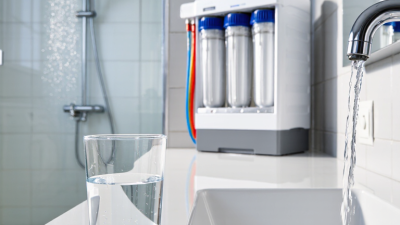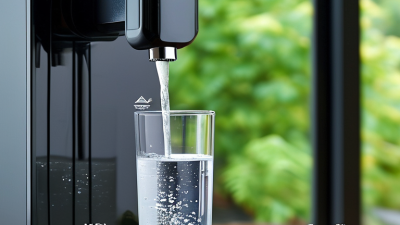
Choosing the right home water filtration system is rarely as simple as selecting the most expensive model. Water quality changes by location, plumbing age, household size, and contaminant type. A clear glass of water may still contain lead, chlorine, sediment, or unwanted chemicals. You cannot judge safety by appearance alone.
Dr. Marc Edwards, a respected civil engineer and water-quality researcher, has warned that lead is dangerous because “you can’t see it, smell it, or taste it.” His observation explains why testing should come before purchasing. A filter designed for chlorine may not remove lead. A reverse osmosis unit may reduce dissolved minerals, but it can waste water and require more maintenance. Small details matter.
This guide examines ten leading home water filtration systems using practical criteria. These include contaminant reduction, independent certification, installation difficulty, filter life, water flow, operating cost, and long-term reliability. Some systems suit renters. Others fit busy families or private-well owners. There is no universal winner.
The comparison is useful, but not flawless. Manufacturer claims can sound polished. Real household conditions are messier. Filters clog sooner in some homes, while replacement costs are often underestimated. We will point out those weaknesses instead of hiding them. Readers should still test their water and review current certification information before making a final decision. A dependable home water filtration system should match the water problem, not merely the marketing promise.
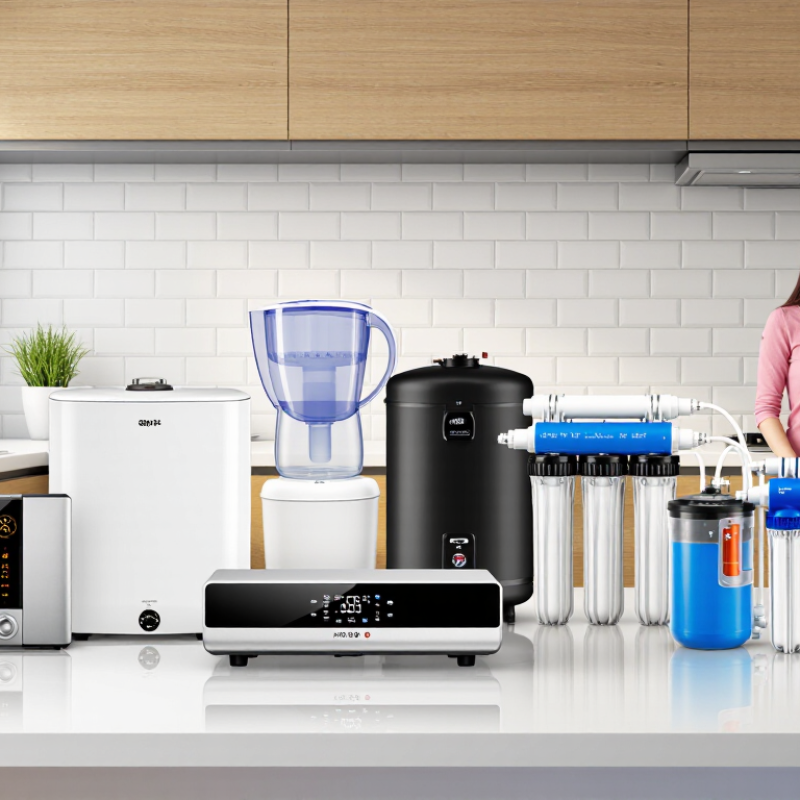
What Are the Top 10 Home Water Filtration Systems?
How Home Water Filtration Systems Work and Why They Matter
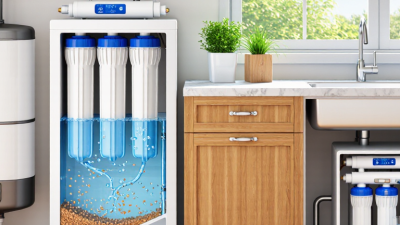
The most useful home systems target different water problems. Sediment filters catch sand, rust, and visible particles. Activated carbon reduces chlorine, unpleasant odors, and some organic chemicals. Reverse osmosis pushes water through a semi-permeable membrane, removing many dissolved substances. Ultraviolet treatment can deactivate microorganisms, but it does not remove sediment or chemicals. Water softeners reduce hardness minerals rather than filtering drinking water directly.
The right setup depends on a water test. Private well water may contain iron, manganese, bacteria, or agricultural contaminants. Municipal water usually receives regular treatment, yet old plumbing can add lead or copper. A certified laboratory report offers better guidance than cloudy water alone. I have seen households replace cartridges too late, when flow weakened and odors returned. Maintenance matters.
Filters are not magic.
Check the rated capacity, replacement schedule, and certification against relevant safety standards. A whole-house filter protects showers and appliances, while a point-of-use system can focus on drinking water. Reverse osmosis may waste water and remove beneficial minerals, depending on its design. UV units need electricity and clear water to work properly. Even careful recommendations can be imperfect because local plumbing, pressure, and contamination levels vary. A practical system matches measured risk, household use, and the owner’s willingness to maintain it.
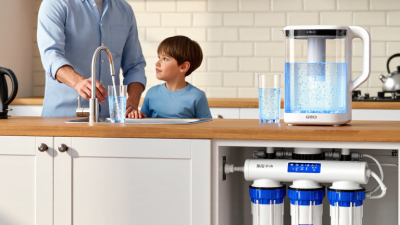
Choosing among the top 10 home water filtration systems requires more than comparing flow rates. Start with a laboratory water report or municipal Consumer Confidence Report. The U.S. Environmental Protection Agency requires these reports for public systems, but household plumbing can still add lead, copper, or sediment. That detail matters.
Match the filter to a verified contaminant. Certification under NSF/ANSI 42 generally addresses taste, odor, and chlorine. NSF/ANSI 53 covers specific health-related contaminants, while NSF/ANSI 58 applies to reverse-osmosis systems. These standards do not mean every certified unit removes everything. Check the exact claim. The Centers for Disease Control and Prevention warns that filters vary widely and cannot remove all germs or chemicals. A certified claim is only useful when it matches your water problem.
Performance data deserves careful attention. Compare tested capacity, replacement intervals, pressure loss, wastewater ratio, and contaminant reduction percentages. A 2023 WHO and UNICEF Joint Monitoring Programme report found that 2.2 billion people lacked safely managed drinking water worldwide. Household treatment therefore has real value, especially where supply quality changes. Still, a small under-sink filter cannot solve unsafe storage or bacterial regrowth. I would also inspect the installation space and maintenance records. An excellent filter neglected for six months becomes a questionable one. The awkward truth is that “top” depends on the water, budget, and user discipline—not a universal ranking.
Ten leading home water filtration systems serve different technologies and household needs. Sediment filters catch sand and rust before they reach taps. Activated carbon improves taste, odor, and chlorine levels. Catalytic carbon targets chloramine, which ordinary carbon may handle poorly. Ceramic filters physically block many particles and some microbes. Ultrafiltration uses a fine membrane without removing most dissolved minerals. Reverse osmosis is stronger for dissolved salts, arsenic, and certain metals.
The U.S. Environmental Protection Agency notes that traditional reverse osmosis can waste five gallons or more for every gallon treated. That weakness matters.
Ultraviolet systems disinfect water without adding chemicals, but they need clear water and steady electricity. Distillation removes many dissolved substances through boiling and condensation, although it uses considerable energy. Ion-exchange softeners reduce hardness, protecting heaters and glassware rather than producing fully purified drinking water. Whole-house oxidation or air-injection systems can address iron, sulfur odors, and staining at the entry point.
Ten options. Different jobs.
The CDC advises checking a filter’s certification for the specific contaminant, not trusting broad “purification” language. NSF/ANSI 42 covers aesthetic claims, while Standards 53, 55, and 58 address selected health, ultraviolet, and reverse-osmosis claims.
The WHO and UNICEF Joint Monitoring Programme reported that 2.2 billion people lacked safely managed drinking water in 2022, showing why treatment choices deserve careful testing.
In practice, I would test the source water first, then compare flow rate, maintenance, and wastewater. Some systems look impressive. They still fail when cartridges sit unchanged for too long.
A useful top-10 comparison should measure more than contaminant claims. NSF/ANSI 42 covers taste and odor, while standards 53, 58, and 401 address health effects, reverse osmosis, and selected emerging contaminants. Certification matters. Independent laboratory data matters more than a glossy product chart.
Performance varies sharply. Activated-carbon systems often improve chlorine taste with low water waste. Reverse-osmosis units can reduce dissolved solids, fluoride, and some metals, but EPA WaterSense data notes that older units may discharge five gallons for every gallon produced. Efficient models can approach a 1:1 ratio. Ultraviolet systems treat microorganisms, yet they do not remove sediment or dissolved chemicals. Capacity also changes the experience: a small under-sink unit may serve one household, while a whole-house system needs higher flow and larger cartridges.
Costs are uneven. A basic point-of-use filter may cost about 50–200 dollars initially, while a professionally installed reverse-osmosis system commonly reaches 300–1,000 dollars. Annual replacement costs can range from 40 to 200 dollars, depending on usage and cartridge count. CDC guidance recommends timely filter replacement, because neglected housings can support microbial growth. That detail is easy to overlook. Maintenance schedules are not identical, and real costs often rise when fittings, storage tanks, or pressure regulators fail. I would also question any ranking based only on capacity; a large cartridge is not automatically better if testing is weak or replacement parts are difficult to find.
| Rank | System Type | Primary Filtration Method | Typical Contaminant Reduction | Typical Flow or Output | Approx. Equipment Cost | Typical Capacity | Routine Maintenance | Best Suited For |
|---|---|---|---|---|---|---|---|---|
| 1 | Under-Sink Reverse Osmosis | Sediment and carbon prefilters, semi-permeable membrane, post-carbon filter | Can substantially reduce dissolved solids, lead, arsenic, fluoride, nitrate, and many other regulated contaminants when properly certified and maintained | 0.1–0.5 gal/min at faucet | $200–$800 | 50–100 gal/day membrane rating | Prefilters 6–12 months; membrane 2–5 years | High-purity drinking and cooking water at one tap |
| 2 | Whole-House Carbon Filtration | Granular activated carbon or catalytic carbon media | Effectively reduces chlorine, taste, odor, and some organic compounds; performance depends on contact time and media selection | 5–15 gal/min | $700–$2,500 | 100,000–1,000,000 gal per media charge | Backwash as specified; media replacement about 3–7 years | Homes needing improved water throughout the plumbing system |
| 3 | Whole-House Sediment and Carbon Filter | Replaceable sediment cartridge combined with activated carbon | Reduces sand, rust, silt, chlorine, taste, and odor; does not reliably remove dissolved minerals | 4–12 gal/min | $150–$700 | 10,000–100,000 gal per cartridge set | Cartridges every 3–12 months | Municipal water with visible particles or chlorine taste |
| 4 | Ultrafiltration System | Hollow-fiber membrane with pores generally around 0.01 micron | Reduces bacteria, cysts, sediment, and many suspended particles; generally leaves beneficial minerals in the water | 0.5–2 gal/min at point of use | $250–$900 | 1,000–100,000 gal, model dependent | Prefilters 6–12 months; membrane 2–5 years | Well water users seeking particle and microbial reduction without demineralization |
| 5 | Ultraviolet Disinfection System | UV-C light, commonly designed around a dose of at least 40 mJ/cm² | Inactivates bacteria, viruses, and protozoa; does not remove chemicals, sediment, or dissolved solids | 5–20 gal/min | $500–$1,500 | Usually rated for continuous household flow | Lamp annually; quartz sleeve cleaned periodically | Private wells with confirmed microbial risks and low-turbidity water |
| 6 | Countertop Reverse Osmosis | Sediment and carbon filtration followed by reverse osmosis | Can reduce many dissolved contaminants, including salts, lead, arsenic, nitrate, and fluoride, subject to membrane performance | 0.05–0.2 gal/min | $250–$700 | 0.5–2 gal storage tank or batch operation | Filters 6–12 months; membrane 1–3 years | Renters or households without space for permanent plumbing changes |
| 7 | Faucet-Mounted Carbon Filter | Activated carbon block or granular activated carbon | Primarily reduces chlorine, taste, odor, and selected contaminants covered by the filter certification | 0.3–0.7 gal/min | $20–$100 | 100–500 gal per cartridge | Cartridge every 2–4 months | Low-cost improvement for a single kitchen faucet |
| 8 | Refrigerator or Inline Carbon Filter | Carbon block or activated carbon cartridge | Usually reduces chlorine, taste, odor, and selected particulate or chemical contaminants listed in the product certification | 0.3–0.75 gal/min | $30–$150 | 200–750 gal per cartridge | Cartridge about every 6 months | Improving drinking water supplied by a refrigerator or ice maker |
| 9 | Gravity-Fed Countertop Purifier | Carbon block, ceramic, or combined multi-stage cartridge | Can reduce sediment, bacteria, chlorine, taste, and odor; virus and chemical reduction varies substantially by certified model | 0.05–0.2 gal/min | $50–$300 | 0.5–4 gal reservoir | Cartridge replacement every 3–12 months | Apartments, emergency preparedness, and locations without plumbing access |
| 10 | Iron and Manganese Filtration System | Oxidizing media, aeration, or catalytic filtration with optional backwashing | Targets iron, manganese, and related metallic taste or staining; exact removal range depends on pH, concentration, and pretreatment | 5–12 gal/min | $800–$3,000 | Approximately 100,000–500,000 gal per media charge | Backwash regularly; media typically lasts 3–8 years | Private wells with iron, manganese, metallic taste, or orange-black staining |
Note: Cost, flow rate, capacity, and replacement intervals are typical residential ranges in U.S. dollars and vary by water quality, household demand, installation requirements, and product configuration. Actual contaminant reduction should be verified through independent certification and the system’s performance data sheet.
Choosing among the top 10 home water filtration systems starts with your water, not advertising. Review your local water report and test private well water annually. Check the system’s flow rate, filter life, installation space, and contaminant reduction claims. A certified performance report is more useful than a dramatic product promise. Activated carbon can improve taste and odor, while reverse osmosis may reduce dissolved minerals. However, it also wastes water and needs more maintenance. Match the technology to the problem.
Tips: Measure your kitchen cabinet before buying. Write the filter-change date on the housing. Replace cartridges according to usage, not just the calendar. A family of five may exhaust a filter faster than a single resident. Watch for slower flow, unusual taste, leaks, or cloudy water. Small changes matter.
Maintenance protects both water quality and equipment. Wash your hands before handling cartridges, shut off the supply, and relieve pressure carefully. Clean the housing with mild soap, never harsh chemicals. Inspect rubber seals for flattening or cracks. After replacement, flush the system until the water runs clear. I have found that people often delay this step, assuming clear water means safe water. That assumption can be wrong. Keep a simple service log, and arrange professional testing when odors, sediment, or repeated leaks continue. No system fits every home.
Typical maintenance and replacement intervals vary with water quality, household usage, and the manufacturer’s instructions. Use this chart as a planning guide rather than a fixed service schedule.
Choose the technology according to the contaminant you need to reduce. Sediment and carbon systems are common for improving appearance, taste, odor, and particulate levels. Reverse osmosis is suited to many dissolved contaminants but requires drain water and regular filter changes. Ultraviolet systems require reliable electricity and lamp replacement, while distillers need frequent descaling. Test your source water first, follow certified performance claims, replace cartridges on schedule, sanitize reusable housings, check for leaks, and keep a maintenance record.