Top 10 Electric High Lift Pallet Trucks for Global Buyers?
Choosing the right Electric High Lift Pallet Truck can shape daily warehouse performance, safety, and operating costs. Global buyers often compare lifting height, rated capacity, battery endurance, turning radius, and service support. These details matter when moving pallets through narrow aisles or loading goods onto raised platforms.
This guide introduces ten leading models for international purchasing teams. It considers practical warehouse use, not only attractive catalog specifications. Each truck should be evaluated against local floor conditions, pallet dimensions, shift length, and operator experience. A compact unit may work well in a small distribution center but struggle under continuous heavy loads. That difference is easy to miss.
Battery chemistry, charging time, emergency lowering, braking control, and mast visibility also deserve close attention. Reliable manufacturers should provide clear manuals, traceable specifications, warranty terms, and accessible replacement parts. Buyers should verify regional certification requirements before placing an order. Requirements vary by market, and assumptions can become expensive.
No ranking is universally perfect. Supplier data may use different testing conditions, so direct comparisons require caution. Real-world results can change with temperature, floor quality, maintenance habits, and pallet weight. We have included these limitations because honest purchasing guidance should expose uncertainty, not hide it.
The following selection is designed to support informed comparison. It combines technical evidence with practical observations from warehouse operations. Use it as a starting point, then request demonstrations, reference cases, and total-cost estimates. A truck that feels efficient on paper may disappoint during a crowded afternoon shift. That is where careful judgment matters.
What Is an Electric High Lift Pallet Truck?
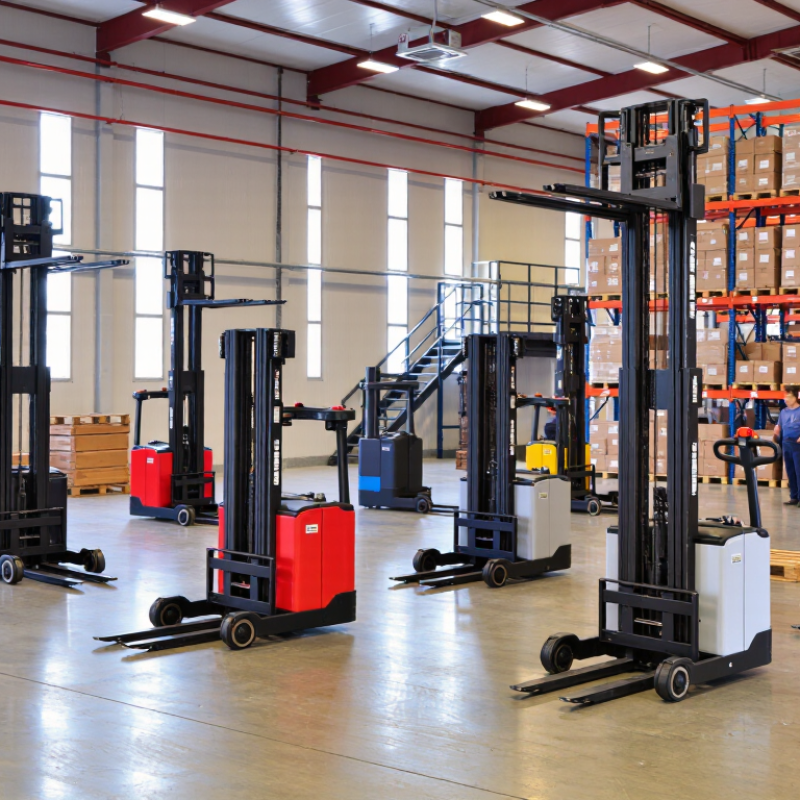
An electric high lift pallet truck is a battery-powered material-handling vehicle that raises pallets above normal transport height. Its forks lift loads to an ergonomic working level, often around 800 to 1,200 millimeters, depending on the design. Operators may walk behind the truck or stand on a small platform. That distinction matters.
Unlike a standard electric pallet truck, this equipment supports loading, unloading, order picking, and short-distance transport with less bending. It does not automatically replace a stacker or forklift. Lift height, rated capacity, aisle width, battery endurance, and floor condition must match the application. A 1,500-kilogram rating may fall quickly at maximum lift. Buyers should check the load center, mast stability, emergency lowering system, braking, and operator training requirements.
Safety deserves careful attention. The U.S. Occupational Safety and Health Administration estimates that powered industrial trucks cause about 35,000 serious injuries and 62,000 non-serious injuries annually. This figure covers several truck types, not high lift pallet trucks alone. MHI’s 2024 Annual Industry Report also identifies growing adoption of robotics and automation in material handling, but automation does not remove human risk. A poorly planned route still creates collisions. Not always. In practical trials, operators may prefer lower lift speeds because controlled movement feels safer, even when productivity falls. The definition sounds simple, yet selecting the right truck requires site measurements, load tests, and honest review of daily work habits.
Key Specifications for Comparing High Lift Pallet Trucks
When comparing high lift pallet trucks, start with usable lift height, not the advertised maximum. A truck reaching 800 millimeters may suit a workbench, while a 1,200-millimeter model supports higher picking tasks. Check capacity at full lift. It often falls below the headline rating. A 1,000-kilogram rating may apply only near the floor.
Fork length, width, and outside dimensions affect daily control. Longer forks handle large pallets, but they need more turning space. Measure twice. Confirm the lowered fork height for low-clearance pallets. Also inspect the turning radius, ground clearance, wheel material, and load roller size. Polyurethane wheels usually reduce floor noise, while larger rollers handle uneven surfaces more confidently.
Electric high lift pallet trucks require closer specification checks. Compare battery voltage, working hours, charging time, and battery replacement access. Test the lifting speed with a real load, not an empty fork. Review emergency lowering, overload protection, parking brakes, and the visibility of the control handle. During site trials, note operator wrist position after repeated pumping or steering. Comfort is easy to overlook. It becomes expensive when shifts are long. Ask for rated capacity charts, maintenance intervals, and test documentation from the supplier. A polished brochure cannot replace a practical trial, and my own evaluations have shown that claimed performance sometimes changes under cold storage conditions.
Top 10 Electric High Lift Pallet Trucks for Global Buyers
Key specifications for comparing high lift pallet trucks by rated load capacity and maximum lift height.
This benchmark uses representative commercial electric high-lift pallet truck configurations. Typical rated capacities range from 1,000 to 2,000 kg, while maximum lift heights range from 1,600 to 5,000 mm. Buyers should also verify battery type, charging time, aisle width, fork dimensions, operator platform design, and local safety requirements.
Top 10 Electric High Lift Pallet Trucks for Global Buyers
Top 10 Electric High Lift Pallet Trucks for Global Buyers
Choosing the top 10 electric high lift pallet trucks requires more than comparing prices. WITS reported over 2.1 million industrial trucks worldwide in 2023, showing strong demand for electric material-handling equipment. Global buyers should compare rated capacity, lift height, turning radius, battery chemistry, and charging time. A 1,500-kilogram truck may suit standard pallets, but uneven floors can reduce practical performance. ISO 3691-5 also highlights safety requirements for pedestrian-controlled trucks. Check emergency stops, braking, visibility, and operator controls before approving any unit.
A reliable shortlist should include compact warehouse trucks, ergonomic high-lift models, and heavy-duty options. Battery endurance matters during long shifts. Lithium batteries can support opportunity charging, while lead-acid systems may remain attractive where budgets are limited. The IEA reports that battery prices have declined substantially over the past decade, yet replacement costs and recycling arrangements still need careful review. Local technicians, spare-part availability, warranty terms, and certification documents can affect ownership more than the purchase quote. I would not pretend that one ranking fits every country. Import rules, floor conditions, and operator training change the result.
Tips: Request a recorded load test. Measure your narrowest aisle. Confirm the real lifting height. Ask for battery-cycle data, not sales estimates. Test the tiller with gloves. A short trial often reveals awkward controls, weak visibility, or unstable loads. Mistakes remain possible, especially when suppliers provide incomplete duty-cycle information.
Top 10 Electric High Lift Pallet Trucks for Global Buyers | Rank | Representative Configuration | Rated Capacity | Maximum Lift Height | Load Centre | Battery System | Lift Speed | Travel Speed | Turning Radius | Overall Width | Service Weight | Recommended Use |
| 1 | Heavy-Duty Electric High-Lift Truck | 2,000 kg | 3,000 mm | 600 mm | 24 V / 300 Ah lead-acid | 0.12 m/s loaded | 5.5 km/h | 1,550 mm | 820 mm | 690 kg | Intensive warehouse handling |
| 2 | High-Capacity Electric Pallet Stacker | 1,800 kg | 3,500 mm | 600 mm | 24 V / 270 Ah lead-acid | 0.11 m/s loaded | 5.0 km/h | 1,520 mm | 800 mm | 640 kg | Medium-height racking |
| 3 | Compact Electric Straddle Stacker | 1,600 kg | 3,000 mm | 600 mm | 24 V / 210 Ah lead-acid | 0.13 m/s loaded | 5.0 km/h | 1,480 mm | 790 mm | 570 kg | Narrow aisles and mixed pallets |
| 4 | Long-Run Electric High-Lift Truck | 1,500 kg | 3,500 mm | 600 mm | 24 V / 240 Ah lithium-ion | 0.14 m/s loaded | 5.5 km/h | 1,600 mm | 820 mm | 590 kg | Multi-shift distribution |
| 5 | Walkie Electric Pallet Stacker | 1,400 kg | 2,700 mm | 600 mm | 24 V / 160 Ah lead-acid | 0.12 m/s loaded | 4.5 km/h | 1,420 mm | 780 mm | 505 kg | Retail and light industrial use |
| 6 | Lithium-Ion Compact High-Lift Truck | 1,200 kg | 3,000 mm | 600 mm | 24 V / 100 Ah lithium-ion | 0.14 m/s loaded | 5.0 km/h | 1,390 mm | 760 mm | 425 kg | Frequent short-distance tasks |
| 7 | Counterbalanced Electric Stacker | 1,200 kg | 2,500 mm | 600 mm | 24 V / 160 Ah lead-acid | 0.11 m/s loaded | 4.5 km/h | 1,550 mm | 900 mm | 620 kg | Closed pallets and uneven loads |
| 8 | Entry-Level Electric High-Lift Truck | 1,000 kg | 2,500 mm | 600 mm | 24 V / 100 Ah lead-acid | 0.10 m/s loaded | 4.5 km/h | 1,350 mm | 760 mm | 390 kg | Small warehouses and workshops |
| 9 | Narrow-Aisle Electric Stacker | 1,000 kg | 3,000 mm | 600 mm | 24 V / 120 Ah lithium-ion | 0.12 m/s loaded | 4.5 km/h | 1,300 mm | 700 mm | 410 kg | Space-constrained facilities |
| 10 | Low-Noise Electric High-Lift Truck | 800 kg | 2,500 mm | 600 mm | 24 V / 80 Ah lithium-ion | 0.11 m/s loaded | 4.0 km/h | 1,280 mm | 680 mm | 350 kg | Retail, food and indoor operations |
Note: Specifications are representative values based on commonly published configurations for electric high-lift pallet trucks. Actual capacity, lift height, battery endurance, dimensions and weight may vary according to mast type, fork length, battery option, load centre and regional safety requirements.
Safety, Compliance, Battery, and Maintenance Considerations
Top 10 Electric High Lift Pallet Trucks for Global Buyers
Safety and compliance should guide every high lift pallet truck shortlist. Choose models with stable masts, controlled lowering, emergency stop controls, and clear load ratings. Operators need training for uneven floors, narrow aisles, and elevated loads. Check local workplace rules, electrical standards, and required inspection records before importing. Compliance is not identical across markets. That detail is easy to miss.
Battery selection affects productivity and maintenance costs. Lithium batteries support frequent charging and usually reduce watering work. Lead-acid batteries may suit lower budgets, but they require ventilation, charging space, and regular electrolyte checks. Confirm voltage, charging time, replacement access, and battery weight. A truck that runs eight hours on paper may perform differently in cold storage or heavy traffic. Real site testing remains valuable.
Tips: Measure aisle width and floor condition before choosing lift height. Ask suppliers for test reports, service manuals, and spare-parts availability. Inspect forks, wheels, chains, brakes, and connectors on a fixed schedule. Keep charging areas dry, visible, and free from stored materials. Record faults immediately, even when the truck still moves. I have seen small wheel damage become a major handling problem. Maintenance intervals also need review after the first operating month, because dust, ramps, and high humidity change wear patterns. Safety improves when operators can report uncomfortable controls without pressure.
How to Choose the Right Model for Your Market
Choosing among the top electric high lift pallet trucks requires market-specific evidence, not a global bestseller list. The World Industrial Truck Statistics (WITS) reported more than two million industrial truck deliveries worldwide in 2023. That scale hides major regional differences. European warehouses may prioritize compact turning radii and lower noise. Hotter markets need battery cooling and durable seals. Check local pallet dimensions, rack heights, aisle widths, floor quality, and operator training practices before comparing prices.
Capacity is only one decision. A 1.2-ton truck may lift well but perform poorly on ramps or uneven concrete. Measure the full duty cycle, including travel distance, lift frequency, and daily operating hours.
Lithium-ion batteries can support opportunity charging, while lead-acid systems may suit sites with fixed charging periods. Request verified data for residual capacity at maximum lift height.
ISO 3691-1 provides useful safety guidance, but local requirements still need review. A common mistake is trusting catalogue figures without testing a loaded truck on the actual floor.
Tips: Ask for a supervised site trial. Record energy use, braking distance, mast stability, noise, and charging time. Compare total cost over five years, including batteries, service visits, spare parts, and downtime. WITS data supports global demand analysis, but it cannot replace a local inspection. That part is often underestimated. Also question optimistic productivity claims; real operators may need more turning space, rest breaks, or simpler controls.