Top 10 Diaper Bag Manufacturers in China
Choosing a Diaper Bag manufacturer is not just a matter of comparing prices or attractive product photos. Parents notice practical details: a zipper that opens smoothly, a bottle pocket that holds its shape, and straps that stay comfortable during a long walk. Small failures matter. Don Norman, a researcher in design, wrote, “Good design is actually a lot harder to notice than poor design, in part because good designs fit our needs so well that the design is invisible.” His broader point offers a useful lens for assessing everyday baby products. The best features often feel effortless in use.
This guide to the Top 10 Diaper Bag Manufacturers in China introduces companies for buyers to evaluate, not a universal ranking for every project. It considers product range, customization options, materials, construction details, and communication during development. A neat sample is only a start. Ask how factories check stitching, test zippers, and maintain consistency between samples and larger orders. Request clear specifications for fabrics, linings, pockets, and hardware. Compare responses, not just brochures.
There are limits to any shortlist. Supplier capabilities can change, and public information may not reveal production conditions or defect rates. Verify important claims directly, inspect samples, and agree on quality expectations before ordering. The details deserve scrutiny. A Diaper Bag should look considered, carry essentials comfortably, and hold up to daily use—though no checklist can replace careful, current supplier checks.
China’s Diaper Bag Manufacturing Industry
China’s diaper bag manufacturing industry benefits from a broad base of textile, sewing, hardware, and packaging suppliers. This can help factories source water-resistant fabrics, zippers, insulated linings, and stroller clips within established production networks. The World Bank’s World Development Indicators put China’s manufacturing value added at roughly 26% of GDP in 2023. The National Bureau of Statistics reported 5.0% growth in manufacturing value added that year. These figures describe the wider industrial base, not diaper-bag output specifically. That distinction matters.
On a factory floor, product quality is shaped by small choices: reinforced seams at strap joints, smooth zipper tracks, and linings that wipe clean without trapping moisture. Buyers can assess these details through sample reviews, material specifications, and repeat-production checks. The sector’s scale may support varied order sizes, but it does not guarantee consistent workmanship. Details matter. Color matching and stitching can still vary between batches, especially when specifications are vague. A useful supplier assessment therefore looks beyond a polished sample and checks how the factory documents materials, inspection points, and corrective actions. This is less glamorous than comparing designs, but often more revealing.
Criteria for Evaluating Diaper Bag Manufacturers
A useful comparison of diaper bag manufacturers starts with verifiable production controls, not a polished catalog. Ask for recent audit records, a clear production flow, and written inspection criteria for incoming fabric and finished bags. Check whether the factory can trace a sample lot back to its material supplier. Paper is not proof.
Inspect the details caregivers handle daily: zipper cycles, strap stitching, lining seams, bottle-pocket insulation, and wipe-clean surfaces. Request test reports for colorfastness, seam strength, and material composition, then confirm that the tested sample matches the production specification. Textile Exchange’s Materials Market Report 2024 estimates recycled materials made up 7.9% of global fiber production in 2023. For bags containing recycled fabric, ask for transaction-level evidence rather than relying on a label. I would still verify this independently; paperwork can be incomplete.
Production capacity matters, but so does communication when a defect appears. Ask how the factory records rework, handles sample changes, and reports late orders. The World Bank’s 2023 Logistics Performance Index ranked China 19th among 139 economies; that provides useful national context, not a guarantee about any individual supplier. Compare actual lead-time records, packaging samples, and pre-shipment inspection results. Test the seams.
Profiles of 10 Leading Diaper Bag Manufacturers in China
China offers a broad supplier base for diaper bags, from small cut-and-sew workshops to factories with in-house sampling and quality teams. These ten profiles compare production focus, material choices, customization, and export experience. Look closely at practical details: reinforced handle stitching, wipe-clean linings, smooth zipper tracks, and insulated bottle pockets. Small details matter.
Grand View Research’s diaper-bag market outlook projects continued growth through 2030, reflecting sustained demand for organized, portable baby-care products. China’s National Bureau of Statistics reported online retail sales of physical goods reached 13.02 trillion yuan in 2023, up 8.4 percent year over year. That broad figure is not specific to diaper bags, but it helps explain why suppliers increasingly discuss online-ready packaging and flexible order quantities. Buyers should still verify those claims directly.
The profiles also consider sample turnaround, production capacity, inspection routines, and communication across development stages. Ask for material specifications and inspect a pre-production sample, especially around seams and pocket closures. A polished catalogue is not proof of consistent workmanship. Public supplier information can be uneven, so these profiles are a starting point, not a substitute for factory checks.
China’s Annual Births: 2014–2023
China’s annual births declined from 16.87 million in 2014 to 9.02 million in 2023. This demographic trend provides market context for diaper bag manufacturers; it does not compare individual companies.
Source: National Bureau of Statistics of China. Figures are in millions of births.
Product Ranges and Manufacturing Capabilities
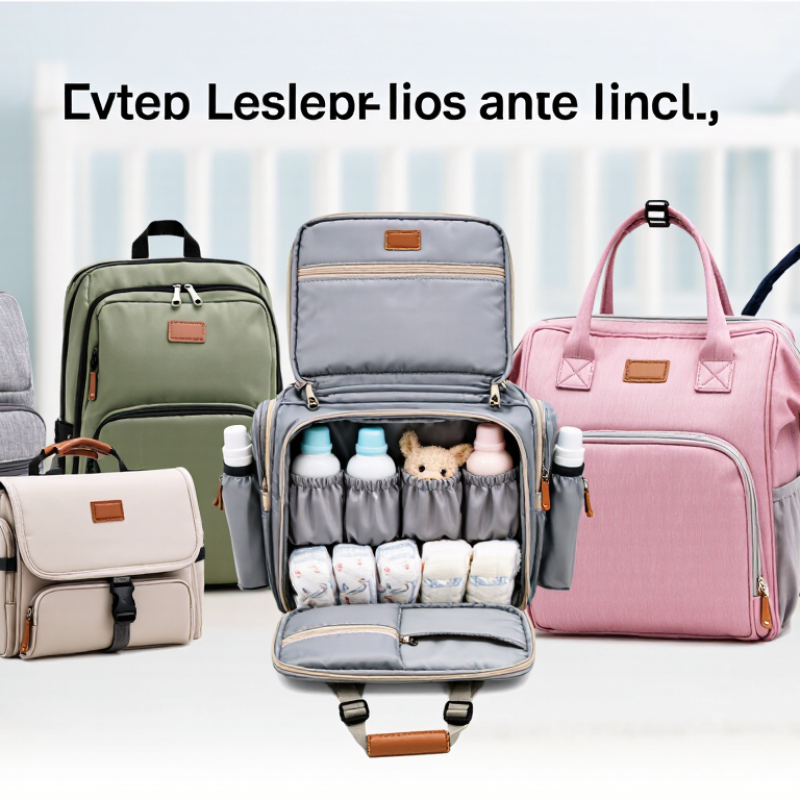
China’s diaper-bag manufacturers offer backpacks, shoulder totes, stroller organizers, and compact travel bags. Common features include wipe-clean linings, insulated bottle pockets, padded changing mats, and stroller straps. Product range matters, but so does construction: zippers must run smoothly, seams need reinforcement, and pocket sizes should fit real bottles and wipes. Details matter.
Global Market Insights’ diaper-bag market report estimated the market at about USD 1.5 billion in 2022, with projected growth through 2032. Market estimates depend on how products are categorized, so treat them as directional rather than guaranteed demand. Factories may offer material sourcing, pattern development, sample making, bulk sewing, and inspection. Ask how they test stitching, colorfastness, and insulation performance. A polished sample can still hide weak seams. Small details are easy to miss.
Tips: Request a sample with your intended fabric and hardware. Test it with a full bottle, wet wipes, and a loaded changing mat. Ask for written inspection criteria, not just photos. A factory’s stated capacity is useful, but delivery consistency deserves equal scrutiny.
Supplier Comparison and Sourcing Considerations
Top 10 Diaper Bag Manufacturers in China: Supplier Comparison and Sourcing Considerations
When comparing Chinese diaper bag suppliers, look beyond the unit price. Check fabric specifications, stitching samples, zipper performance, and how clearly each factory explains its inspection process. Ask for a sample with insulated bottle pockets, wipe-clean lining, and loaded shoulder straps; these details reveal practical weaknesses quickly. A polished catalogue is not proof of consistent production. Request the same quotation terms from each supplier, including material grades, packaging, sampling fees, and lead time.
The World Bank’s 2023 Logistics Performance Index ranked China 19th, with a score of 3.7 out of 5. This offers useful country-level context for logistics, but it does not rate individual factories or guarantee delivery dates. Compare a supplier’s own production schedule, export experience, and shipment records. Small orders may expose gaps that large-batch claims hide. And quotes can be hard to compare when material descriptions are vague.
Tips: Ask suppliers to identify the lining, foam, and hardware in writing. Test a sample with damp wipes and a full bottle. Keep dated photos and written approval notes. One missed detail can matter. Allow time for revisions; a sample can look right while the finished batch differs.