10 Towel Display Rack Tips for Choosing the Best One
Choosing a Towel Display Rack is about more than finding a place to hang towels. The right design should fit the room, hold the towels you use, and stay steady through daily routines. In a narrow bathroom, a deep floor stand can obstruct a door or crowded walkway. A wall-mounted rack may save space, but only if the wall and installation method suit its weight. Measure before shopping. A few centimeters can matter.
Think about how the rack will work in real life. A family may need several bars or hooks, while a guest bathroom may benefit from a compact, easy-to-reach design. Stainless steel, coated metal, and wood each have different care needs, especially in damp rooms. Check the stated dimensions, load guidance, finish, and mounting hardware instead of relying on appearance alone. Looks are not enough. A sturdy rack that is difficult to clean may still frustrate you later.
Small details matter. Rounded edges, open spacing, and a stable base can make towels easier to hang and help them dry between uses. That is easy to miss when comparing product photos. No single rack suits every room, and even careful shoppers sometimes underestimate how much clearance they need. The ten tips ahead focus on practical checks, from capacity and materials to placement and upkeep, so you can choose a rack that fits your space and habits—not just your décor.
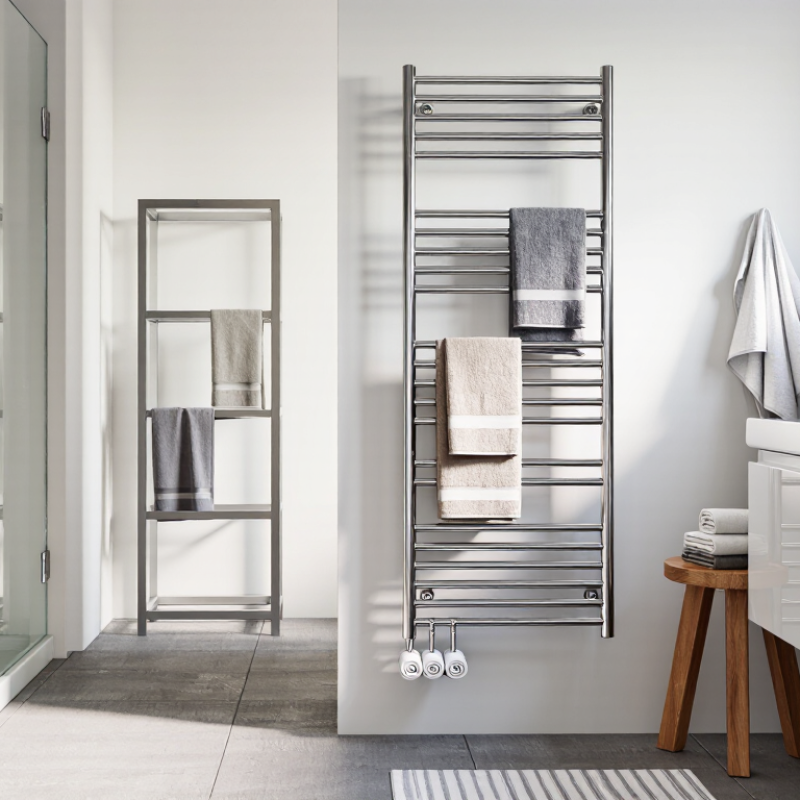
Define Your Towel Display Rack Needs and Intended Use
Before choosing a towel display rack, define who will use it and how often.
A family bathroom may need separate bars for damp bath towels and clean spares. A guest bathroom may need only a compact stand near the sink. For salons or lodging spaces, estimate towels per busy hour and check how quickly staff can reload the rack.
Small details matter. Measure the widest folded towel, then compare it with each bar or shelf. A rack that looks generous in a showroom can crowd a narrow doorway at home.
Location matters as much as capacity. The 2023 U.S. Houzz Bathroom Trends Study reported that 76% of renovating homeowners upgraded their shower. That makes the route from shower to towel storage worth planning, not guessing. Keep a towel within easy reach, but leave enough clearance for wet fabric to hang freely.
For a wall-mounted rack, check the wall surface and fixing points before ordering. For a freestanding model, test its footprint beside the vanity or tub. It is easy to overestimate spare floor space.
One more reflection: a tall rack may hold more towels, yet feel unstable when loaded unevenly. Choose capacity for your real routine, then consider whether that routine might change.
Compare Rack Types, Materials, and Design Styles
10 Towel Display Rack Tips for Choosing the Best One
Compare Rack Types, Materials, and Design Styles
A towel rack should fit the room, not just the towels. Freestanding racks can move between spaces, but they need clear floor area. Wall-mounted models save space and keep towels within reach. Over-door racks work well in rentals, though thick doors may not close smoothly. Measure the intended spot, including door swings and nearby drawers. A rack that looks compact online can feel bulky beside a narrow vanity.
Tip: Match the rack type to your routine. Choose open bars for faster drying, or shelves for neatly folded guest towels. Check the spacing between bars; tightly packed towels stay damp longer. For small bathrooms, a simple wall rack may be more useful than a decorative ladder.
Material and finish affect both upkeep and appearance. Stainless steel resists rust, while coated metal can chip if bumped. Solid wood adds warmth, but it needs care in humid rooms. Look for smooth edges, stable joints, and hardware suited to the wall surface. A matte finish can hide fingerprints, although dust may show more clearly. Compare the rack’s style with nearby fixtures, but don’t chase a perfect match. Sometimes the practical choice looks a little plain, and that is fine.
Measure Available Space and Estimate Towel Capacity
Measure the wall, floor, and nearby door swing before choosing a towel display rack. Record usable width and depth, not just the room’s overall dimensions. Leave room to walk past the rack and open drawers or cabinet doors. The National Kitchen & Bath Association’s bathroom-planning guidance recommends at least 21 inches of clear space in front of lavatories and toilets. For accessible approaches, the 2010 ADA Standards specify a 30-by-48-inch clear floor space. These figures help protect circulation; they are not rack-size recommendations. A quick paper outline taped to the wall can reveal awkward projections. It’s easy to miss one.
Estimate capacity using the towels you actually fold and store. Measure a folded towel’s width, then add a small gap so damp fabric does not crowd neighboring towels. For example, a 30-inch rail with towels measuring 10 inches across and roughly 2 inches between them fits about two comfortably. Count shelves and hooks separately, since bulky bath sheets need more room than hand towels. Check the rack’s usable dimensions, too; frame edges can reduce the space available. A tight fit may look efficient on paper, but daily use can feel frustrating.
Measure Available Space and Estimate Towel Capacity
Estimated capacity assumes each folded bath towel uses about 15 cm of usable rack width. Measure the space where the rack will sit, then check the rack’s usable bar length and your towel size before choosing.
Check Stability, Installation Requirements, and Safety
A towel rack should feel steady before it looks stylish. Check the rated load and compare it with wet towels, which weigh more than dry ones. Do not treat a small wobble as harmless. A loose bracket can worsen with daily pulling. Small details matter.
Installation depends on the wall. Find a stud where possible, or use anchors rated for the wall material and expected load. For tile, drill carefully with the correct bit and avoid placing holes near edges or grout cracks. Follow the supplied instructions, then test the rack with a gentle downward pull. Do not hang your body weight on it. I would recheck the fasteners after a week; walls and fittings can settle.
Safety matters in a room where floors get wet.
A CDC analysis of U.S. emergency-department data recorded 234,094 bathroom injuries among people aged 15 and older in 2008; 81.1% involved falls. The report does not identify towel racks as a cause, but it underlines the need to keep walkways clear. Place the rack within easy reach, away from door swings, and smooth any exposed edges. That check is not a guarantee. It is still worth doing.
Evaluate Maintenance, Durability, and Overall Value
Maintenance is easy to underestimate when a towel rack looks attractive on a showroom floor. In a humid bathroom, water collects around joints, and lint can settle on narrow bars. Choose a finish that wipes clean with a soft cloth and tolerates regular moisture. Check the care instructions before buying; some coatings need gentler cleaners than expected. Simple is better. Removable bars or open spaces between rails make cleaning easier, while complicated hinges can trap grime.
Durability depends on more than a rack’s weight. Examine the joints, mounting points, and material thickness, then consider how many damp towels it will hold each day. A rack that wobbles when lightly pressed may not stay steady under a full load. Wall-mounted designs need secure installation, while freestanding ones should have a stable base on your bathroom floor. Overall value includes the purchase price, upkeep, and likely replacement costs. A cheaper rack may be worthwhile in a guest bathroom, but not where towels are used constantly. I would still inspect the finish in person when possible; product photos can hide rough edges. A small flaw matters more after months of daily use.