7 Tips for Choosing the Best Pool Water Tester
Clear pool water can still hide an imbalance. A reliable Pool Water Tester helps reveal what eyes cannot: changing pH, sanitizer levels, and other water conditions. But choosing one is not just a matter of buying the most expensive device. The right choice depends on how often you test, which readings you need, and how comfortable you are following instructions.
Pool-chemistry educator Richard Falk is known for explaining water balance to pool owners. A practical paraphrase of his teaching—not a verbatim quotation—is: “Test the water you have, not the water you assume.” That idea matters on a busy Saturday, when swimmers are waiting and a quick guess feels tempting. A useful tester should give clear results, fit your routine, and make repeat checks manageable. Small details count. Can you read the display in bright sunlight? Are replacement reagents easy to find? Does the kit cover the measurements your pool actually needs?
The tips ahead compare test strips, liquid kits, and digital meters, along with accuracy, upkeep, and cost. No tester removes the need to collect a representative sample or follow its directions. Even a sophisticated meter can mislead when it is poorly maintained. And sometimes, a result deserves a second test. That may feel inconvenient, but it is better than trusting a number you cannot explain.
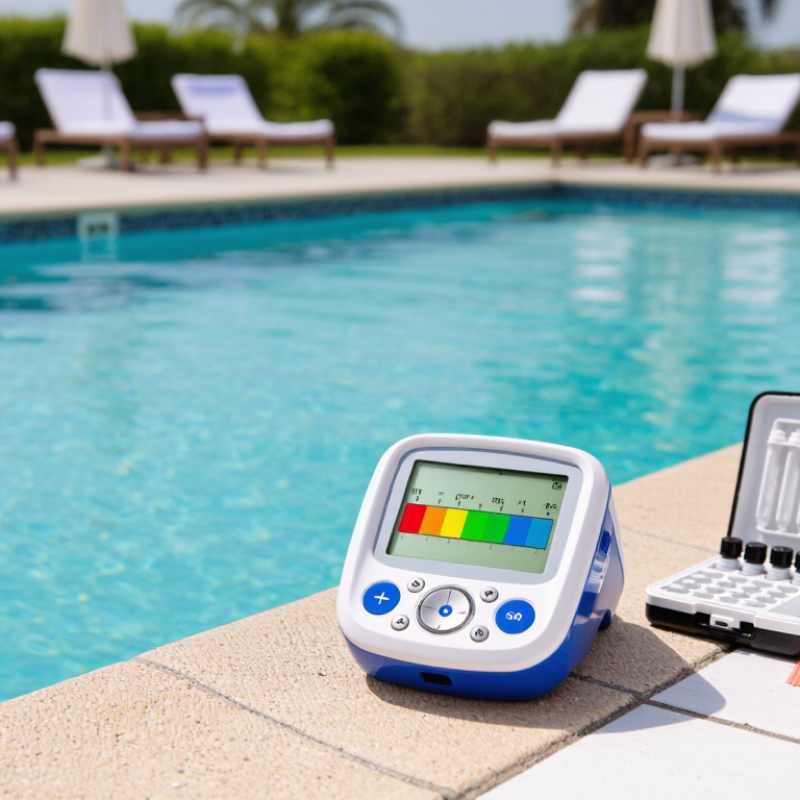
Understand What a Pool Water Tester Measures
A pool water tester does more than report whether water looks clear. It checks chemical levels that affect comfort, sanitation, and equipment. Most testers measure free chlorine, which helps control germs, and pH, which affects both swimmer comfort and chlorine performance. Some also measure total alkalinity, calcium hardness, cyanuric acid, or salt. The exact list varies. Read the package details before buying, and check that its measurement range suits your pool.
These values work together. For example, pH that is too high can make chlorine less effective, even when a test shows chlorine is present. Low alkalinity may cause pH to swing after small chemical changes. Calcium hardness matters too: very low levels can be corrosive, while excessive levels may contribute to scale. A tester cannot diagnose every water problem. Cloudy water may have several causes. I’ve found it easy to focus on one reading and overlook the others.
Tip: Match the tester to the levels you actually need to monitor. Test strips are quick, but color matching can be tricky under dim light. Reagent kits may offer clearer comparisons, though they require careful timing and clean sample tubes. Digital testers can reduce color-judgment errors, but they still need proper calibration or reagents, depending on the model. Collect water away from return jets, follow the test instructions, and record results with the date. Small differences are worth checking again.
Compare Strips, Liquid Kits, and Digital Meters
Test choice matters because a clear pool can still have unbalanced water. The CDC’s Healthy Swimming guidance recommends pH between 7.0 and 7.8 and at least 1 ppm free chlorine in pools. It also advises testing at least twice daily, with more checks during heavy use. Check local operating guidance, especially if the water contains a stabilizer.
Strips are quick and portable. Dip one beside the return jet, then compare its colors with the chart before the timing window closes. That comparison can be subjective, especially in dim light. Liquid kits take more steps, but measured drops and a clear color-change endpoint can make results easier to interpret. Keep reagents capped and replace expired bottles; old chemistry can mislead.
Digital meters display numbers, not color blocks. That feels precise. Still, a number is only useful when the device is suited to the test, maintained, and calibrated as its instructions require. Some meters use reagent packets; electronic pH probes need careful care. For a busy pool, strips can support quick checks, while a liquid kit or meter can help investigate an unexpected reading. Record results and retest after adjusting water. A notebook is less impressive than a screen, but it can reveal a pattern.
Evaluate Accuracy, Ease of Use, and Ongoing Costs
Choosing a pool water tester starts with accuracy, not the number of features. Check which readings it measures, such as free chlorine, pH, and alkalinity. Compare its stated range with your pool’s typical needs. A result near a recommended limit deserves a second test, especially after heavy rain or a busy weekend. Small differences matter.
Ease of use affects whether testing becomes a reliable habit. A clear display, simple instructions, and a sample cup that rinses clean can save time on a warm afternoon. Test strips are quick, while digital meters may offer more precise readings but need calibration and careful storage. Neither option is foolproof. Check whether replacement strips or reagents are easy to find. Ongoing costs can exceed the purchase price. Factor in refills, batteries, calibration solutions, and parts that need regular replacement. Also consider shelf life; an inexpensive kit may be poor value if its reagents expire before you use them. Leave room for uncertainty: sunlight, a dirty container, or rushed timing can skew results. Rinse tools, follow the stated wait time, and record readings. That small routine helps reveal changes instead of prompting a reaction to one odd number.
7 Tips for Choosing the Best Pool Water Tester
Compare common tester types by accuracy potential, ease of use, and lower ongoing cost. Scores are qualitative (1–5), not results from controlled product testing; actual performance depends on the specific tester and following its instructions.
Higher scores indicate better performance for each criterion. “Lower ongoing cost” rates affordability of recurring supplies, calibration, and replacements—not the initial purchase price.
Check Calibration, Storage, and Replacement Supplies
Tip: Check calibration before relying on a tester, especially after a long period in storage. Follow its instructions and use fresh calibration solutions when required. Tip: Recheck readings if the result seems surprising. A cloudy pool or an unexpected color change may have several causes, so one measurement should not tell the whole story. Small details matter.
Tip: Store the tester as its instructions recommend. Keep the case out of direct sun, away from pool chemicals, and protected from damp conditions. Keep it dry. Tip: Rinse reusable probes with clean water after testing, then handle them gently. Scratches, residue, or a loose cap can affect readings. It is tempting to leave a tester beside the pool for convenience, but heat and splashes can shorten its useful life.
Tip: Check replacement supplies before they run out. Test strips and calibration liquids can expire, so note dates and keep containers tightly closed. Tip: Replace worn probes or damaged parts as directed; cleaning cannot fix every problem. Tip: Make sure the supplies match your tester and the test you need. This is easy to overlook. If results remain inconsistent after calibration and fresh supplies, pause and consult the device instructions rather than guessing.

