
Kinetico Water

What Is a Noise Meter and How Does It Work?

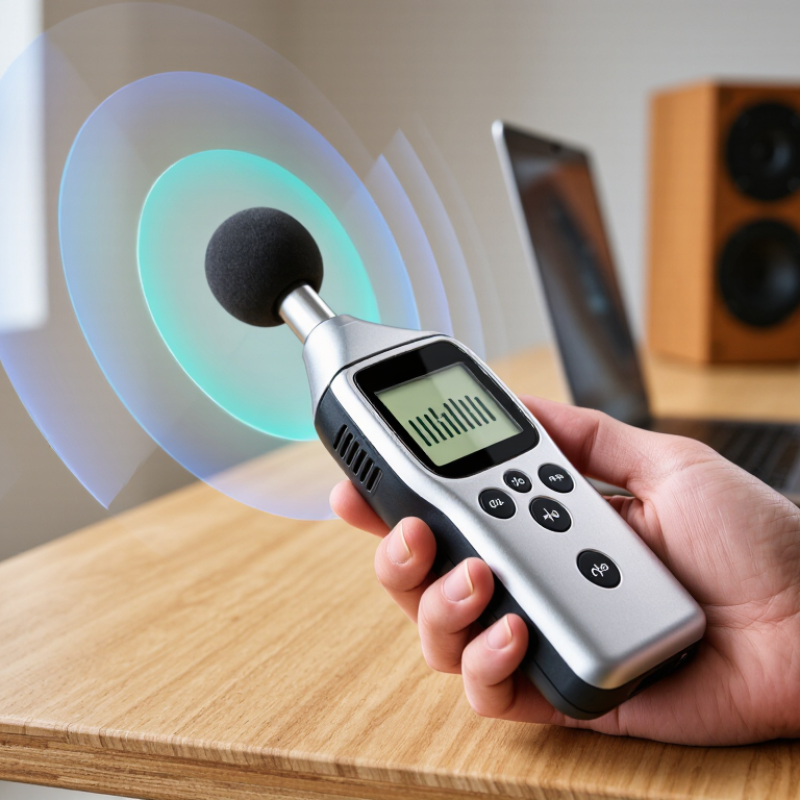
A Noise Meter is a practical instrument for measuring sound levels in homes, workplaces, studios, and outdoor spaces. It converts changes in air pressure into electrical signals through a sensitive microphone. The device then displays the result in decibels, usually as dB sound pressure level. In simple terms, it shows how loud a sound appears at a specific location.

Inside the meter, several processes happen quickly. The microphone detects vibrations caused by voices, machinery, traffic, or music. An electronic circuit strengthens and processes those signals. Frequency weighting, such as A-weighting, adjusts the reading to reflect how human hearing responds. Many professional models also offer fast, slow, or impulse response settings. These controls help users observe steady noise, sudden peaks, or changing environments more accurately.

Small details matter. Hold the meter away from your body, point its microphone correctly, and avoid blocking the sensor. Before serious measurements, trained technicians normally check calibration with an acoustic calibrator. Even a reliable device can produce misleading results when wind, reflections, battery problems, or poor positioning affect the reading. I have found that a quiet room is not always acoustically simple. Walls and furniture can create unexpected variations. That limitation deserves attention. A Noise Meter provides evidence, not a complete judgment. Understanding its operating principles helps users interpret readings responsibly and make better decisions about comfort, safety, and noise control.
What Is a Noise Meter and How Does It Work?

What Is a Noise Meter and What Does It Measure?

A noise meter is a handheld instrument that measures sound pressure in the surrounding air. Its main reading is expressed in decibels, usually written as dB. The scale is logarithmic, so a small numerical increase can represent a significant rise in sound energy. Most meters offer dB(A), shown as dB(A), which roughly follows human hearing. dB(C), or dB(C), records low-frequency sound more strongly. dB(Z)-weighting measures a wider frequency range with minimal adjustment. That distinction matters.

During workplace and building checks, a technician may examine average, maximum, and peak levels. The equivalent continuous level, often called Leq, represents changing sound over a selected period. Frequency bands can also show whether traffic rumble, machinery vibration, or a sharp alarm dominates the measurement.

I have learned that microphone position changes results. Walls, floors, wind, and even a nearby person can reflect or block sound. A windscreen helps outdoors, but it cannot correct every error. The meter should be calibrated before and after important measurements, preferably with a certified acoustic calibrator.

One reading can mislead me. Repeated measurements provide stronger evidence, especially when the sound changes throughout the day. A noise meter measures sound pressure, not annoyance, sleep quality, or health effects directly. Those questions require context, exposure time, and professional interpretation.

The Main Components and Functions of a Noise Meter

What Is a Noise Meter and How Does It Work?

The Main Components and Functions of a Noise Meter

A noise meter converts air-pressure changes into readable sound levels. Its microphone detects vibrations, while a preamplifier strengthens the tiny electrical signal. The meter then calculates sound pressure in decibels, usually shown as dB or dB(A). A-weighting filters approximate human hearing sensitivity. C-weighting captures more low-frequency energy, which matters near engines and heavy machinery.

The display shows the current level, while the detector may record maximum, minimum, or time-weighted values. Many professional instruments also include data storage, adjustable response speeds, and an external calibration function. Fast response follows sudden changes. Slow response produces a steadier reading. That difference is easy to overlook.

A practical measurement begins with calibration before and after testing. The microphone should face the sound source, away from reflective surfaces when possible. NIOSH’s Criteria for a Recommended Standard identifies 85 dBA over eight hours as a recommended exposure limit, using a 3 dB exchange rate. OSHA’s occupational noise standard uses a 90 dBA eight-hour permissible exposure limit and a 5 dB exchange rate. These different methods can produce different compliance results.

A noise meter does not explain the source. It only measures sound at a location and time. Background noise, wind, handling, and room reflections can distort readings. WHO’s Environmental Noise Guidelines for the European Region links long-term environmental noise with sleep disturbance and cardiovascular risks. Still, one reading is not a diagnosis. That assumption needs questioning.

How a Noise Meter Detects and Processes Sound

What Is a Noise Meter and How Does It Work?

A noise meter converts air pressure changes into measurable sound levels. Its microphone detects tiny movements caused by sound waves. A preamplifier strengthens this electrical signal before digital processing begins. The meter then applies frequency weighting, commonly A-weighting, to resemble human hearing. It also uses time weighting, such as Fast or Slow, to smooth changing readings. A sudden alarm may produce a different display from steady machinery.

The final value appears in decibels, usually dB(A). This unit is logarithmic, not linear. A small numerical increase can represent much greater sound energy. NIOSH’s Occupational Noise Exposure criteria identifies 85 dB(A) over eight hours as a recommended exposure limit. It also uses a 3 dB exchange rate, meaning allowable exposure time halves after each 3 dB increase. The number matters.

Good measurements require technique. I place the microphone near the listener’s ear, away from walls and reflective surfaces. A windscreen helps reduce airflow noise outdoors. Calibration before and after testing improves confidence, although field conditions still create uncertainty.

IEC 61672-1 defines performance requirements for sound level meters, including accuracy and frequency response. The World Health Organization’s 2018 environmental noise guidelines recommend keeping road traffic exposure below 53 dB Lden and 45 dB Lnight. These values describe long-term exposure, not every passing sound.

A single reading can mislead. / Noise changes constantly.

Understanding Decibels, Frequency Weighting, and Time Response

A noise meter measures sound pressure and displays it in decibels (dB). Decibels use a logarithmic scale, so a small numerical change can represent a large change in sound energy. A reading of 80 dB is not simply twice as loud as 40 dB. This often confuses new users.

Frequency weighting helps the meter resemble human hearing. A-weighting, shown as dB(A), reduces very low and very high frequencies. It is common for workplace and environmental checks.
C-weighting, or dB(C), includes more bass and suits loud music or sudden impact sounds. Z-weighting is nearly flat across the measured range. None is perfect. Human hearing changes with level, age, and listening conditions.
Tips: Choose the weighting before measuring. Use Fast response for changing sounds, such as machinery or passing vehicles. Slow response gives a steadier display for general exposure checks. Impulse response captures very brief peaks, but it needs careful handling. Keep the microphone at ear height, avoid blocking it, and record location, distance, and weather. A meter can be accurate and still mislead if placed beside a wall. I have seen readings shift noticeably after moving only a short distance. That detail deserves attention, even when the screen looks convincing.

Common Uses and Key Factors in Choosing a Noise Meter

What Is a Noise Meter and How Does It Work?

Common Uses and Key Factors in Choosing a Noise Meter

A noise meter measures sound pressure and displays the result in decibels. Its microphone detects air vibrations, while internal circuits convert them into readable levels. Most models offer A-weighting, which reflects human hearing at ordinary volumes. C-weighting captures stronger low-frequency sound, such as machinery or heavy vehicles. Time settings also matter. Fast responses reveal sudden peaks, while slow responses show steadier noise.

Noise meters are used in factories, construction areas, offices, schools, and residential inspections. They can help assess workplace exposure, identify noisy equipment, and compare sound levels before and after control measures. For dependable results, place the microphone near the listener’s ear height. Avoid walls, large objects, and your own body. Small positioning errors can change the reading.

Choosing a meter requires more than checking its maximum range. Consider measurement accuracy, frequency weighting, response settings, display readability, and data logging. A calibrator is valuable before and after important surveys. Look for equipment tested against recognized standards, such as IEC 61672. Weather protection may be necessary outdoors. Battery life matters during long monitoring sessions. Some advanced meters provide frequency analysis, but that feature may be unnecessary for simple checks. More functions do not always mean better decisions. An inexpensive meter can mislead when its microphone saturates, calibration is ignored, or background reflections are overlooked. Even careful measurements need interpretation. Decibels describe sound level, not automatically its cause or risk.

What Is a Noise Meter and How Does It Work?

A noise meter measures sound pressure and displays the result in decibels, usually using the A-weighted scale (dB(A)) to reflect how the human ear responds to different frequencies. The values below show typical sound levels in common environments.

Sound levels are logarithmic: an increase of 10 dB represents approximately ten times more sound intensity. When choosing a noise meter, consider measurement range, frequency weighting, time weighting, display resolution, calibration capability, and whether data logging is required.