2026 How to Choose a Metal Cutting Board for Your Business?
Choosing a Metal Cutting Board in 2026 requires more than comparing prices or polished product photos. It requires evidence, daily experience, and a clear understanding of commercial food preparation. The World Health Organization’s estimates report approximately 600 million foodborne illness cases worldwide each year. That figure makes sanitation design a business concern, not merely a kitchen preference. The CDC also estimates that foodborne diseases cause about 48 million illnesses annually in the United States. Small surface decisions can carry serious operational consequences.
A Metal Cutting Board can offer a non-porous work surface, strong impact resistance, and straightforward visual inspection. However, metal is not automatically hygienic. Scratches, welded seams, sharp edges, and poor drainage can create cleaning difficulties. The FDA Food Code 2022 emphasizes smooth, durable, nonabsorbent, and easily cleanable food-contact surfaces. NSF/ANSI 51 also provides recognized requirements for materials and finishes used in commercial food equipment. These references create a useful purchasing baseline, but they do not replace hands-on evaluation.
Look closely at the details. Can staff lift the board safely during closing cleanup? Does its surface remain stable beneath a wet fish fillet or a heavy cleaver? Is the alloy documented for food contact? A cheap board may become expensive after repeated replacement, warped supports, or damaged knives. That assumption deserves testing. Compare thickness, edge treatment, corrosion resistance, maintenance instructions, and supplier traceability. Metal can perform exceptionally well, yet the best choice depends on your menu, workflow, cleaning system, and staff habits. This guide examines those practical factors before your business commits to a long-term purchase.
Business Cutting Needs and Metal Board Use Cases
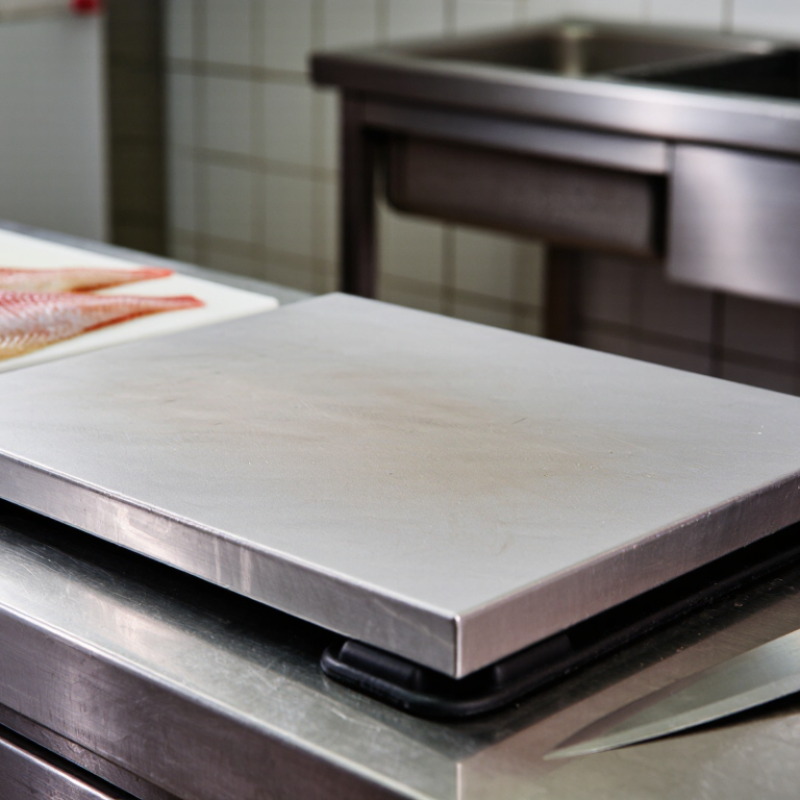
For 2026, businesses should choose a metal cutting board around their actual cutting demands. A busy food preparation area needs a nonporous, corrosion-resistant surface. Food-contact grade stainless steel is often practical. It tolerates frequent washing and does not absorb juices, oils, or odors. However, metal is harder than most knife edges. It can dull blades quickly and create uncomfortable noise.
Use cases differ across workplaces. Butcher shops may use metal boards for trimming, portioning, and handling packaged cuts. Commercial kitchens can use them for pastry scraping, dough portioning, and general preparation. They also work well beside sealing machines, where spills require fast cleaning. A textured surface may improve grip, but deep patterns can trap residue. Smooth surfaces clean easily, yet wet ingredients may slide.
Measure the board against daily volume, not occasional peak demand. Check its thickness, corner radius, drainage design, and resistance to bending. Rounded edges reduce cleaning risks and protect workers’ hands. Confirm food-contact documentation and follow local sanitation rules. In practice, a metal board is not always the best direct knife surface. A replaceable softer insert may protect blades, but it adds maintenance and another cleaning task. That compromise is easy to overlook. Test one board during a full shift before changing an entire work area.
Key Metal Types and Their Performance Differences
For a business, metal type affects cutting speed, maintenance, noise, and knife life. Stainless steel is the common heavy-duty choice. It resists rust, handles frequent washing, and stays stable under pressure. A food-grade 304 surface suits most kitchens, while 316 offers better resistance in salty or chemical-heavy environments. Stainless steel is dependable, but it can quickly dull softer knives.
Aluminum is lighter and easier to move between workstations. It also costs less in many markets. However, repeated chopping can leave dents, grooves, and uneven edges. Acidic ingredients may also react with uncoated aluminum. Anodized surfaces reduce this concern, though scratches can expose the softer metal. Watch the surface closely. Small dents can hold residue.
Carbon steel provides high hardness and a firm cutting feel. It may suit dry preparation areas or workshops where precision matters. Moisture is its weakness. It needs immediate drying, controlled storage, and regular protective treatment. Otherwise, orange rust may appear around scratches and corners. Titanium offers low weight and strong corrosion resistance, but its price can challenge a tight operating budget.
Test the board with your actual knives, cleaning routine, and busiest shift. A thick stainless board may survive years, yet its sound can disturb a quiet workspace. A lighter alloy may improve handling, but replacement costs can rise. I once underestimated edge damage during inspection. That mistake showed me that material choice needs real workflow data, not just a specification sheet.
2026 How to Choose a Metal Cutting Board for Your Business?
Key metal types and their typical performance differences
The chart compares typical engineering values for commonly used metal types. Hardness indicates resistance to dents and surface wear, while thermal conductivity indicates how quickly the material transfers heat. Values are representative of common grades and can vary with alloy, temper, thickness, and surface treatment.
304 stainless steel: corrosion-resistant and hygienic for demanding food environments. 6061-T6 aluminum: lightweight and highly thermally conductive, but softer. A36 carbon steel: durable and economical, but requires corrosion protection. C110 copper: excellent heat transfer, but relatively soft and reactive with some foods. Galvanized steel: moderate strength with zinc-coated corrosion protection; avoid damaging the coating.
Size, Thickness, Surface Design, and Workstation Fit
2026 How to Choose a Metal Cutting Board for Your Business?
Size should follow the workstation, not personal preference. Measure the usable counter depth, sink distance, and clearance around equipment. Leave enough room for a chef’s hands and a collection tray. A 600 mm board may suit a compact prep station, while a 900 mm model supports larger batches. Bigger is not always better. It can block movement and encourage awkward reaching.
Thickness affects stability, noise, and long-term maintenance. A thicker stainless steel board usually resists bending under heavy chopping, but it also adds weight. Check the frame, feet, and counter load together. I would test the board with one hand before purchase. If it slides, the problem is not solved by extra thickness. The U.S. FDA Food Code 2022 requires food-contact surfaces to be smooth, easily cleanable, corrosion-resistant, and nonabsorbent. Those requirements should guide surface selection.
Surface design needs practical attention. A lightly textured finish can reduce glare and hide minor marks, but deep grooves may retain food residue. Flat welds and rounded corners simplify cleaning. The CDC estimates 48 million foodborne illnesses occur annually in the United States, based on its 2011 national report. Cleaning access matters. Review the cutting area after a full shift, not inside a showroom. For workstation fit, compare board height with the operator’s elbow position and check whether containers can slide underneath. I may still choose a smaller board after testing; wasted surface space is often less costly than wasted movement.
Food Safety, Cleaning Standards, and Long-Term Durability
A metal cutting board is not automatically safer for business use. Choose food-contact stainless steel with a smooth, nonporous surface. It should resist rust, staining, and odor absorption during repeated use. Inspect welded seams carefully. Tiny gaps can trap food residue and moisture. A rounded edge also reduces debris buildup and makes handling easier. Remember, metal can dull knives and become slippery when wet.
After each task, remove scraps before washing the board with hot water and a suitable detergent. Sanitize it afterward, following the chemical concentration and contact time on the product label. Verify procedures against local food safety requirements and the board’s care instructions. Air-dry the surface completely. Keep raw proteins separate from ready-to-eat foods, even when both boards are metal. Cleaning logs help, but they are not proof of perfect hygiene. Staff still need to notice invisible residue.
Tips: Choose a board with strong support feet and enough thickness to prevent bending. Check it weekly for deep scratches, corrosion, loose parts, or warped areas. Replace damaged boards promptly. I have seen teams overlook small dents because the surface still looked clean. That judgment can fail. Also test the board during a busy shift; excessive noise, sliding, or knife damage may reveal practical problems before they become costly.