How to Choose an 11 a Side Football Pitch
Choosing an 11 A Side Football Pitch is more than finding enough grass for 22 players. The right site must support safe play, reliable drainage, clear sightlines, and regular maintenance. Small decisions matter: a muddy goalmouth can disrupt a match, while poor access can complicate mowing and repairs.
The Laws of the Game, published by IFAB, allow senior pitches to range from 90 to 120 metres long and 45 to 90 metres wide. For international matches, the permitted range narrows to 100–110 metres by 64–75 metres. FIFA’s stadium technical guidance identifies 105 by 68 metres as a standard playing-field dimension for major venues. These figures are useful benchmarks, not a substitute for checking local competition rules and site constraints.
Look beyond the marked lines. Consider the safety run-off, surface type, drainage, lighting, changing facilities, and expected weekly use. A natural-grass pitch may feel familiar underfoot, but its condition depends on weather and careful upkeep. Artificial turf can support heavier use, yet infill, heat, and maintenance deserve close attention. Ask suppliers for product specifications and independently verifiable test results. Then compare them with the needs of your players and grounds team. There is no perfect pitch for every club. A checklist helps, but it cannot predict every wet winter or busy weekend.
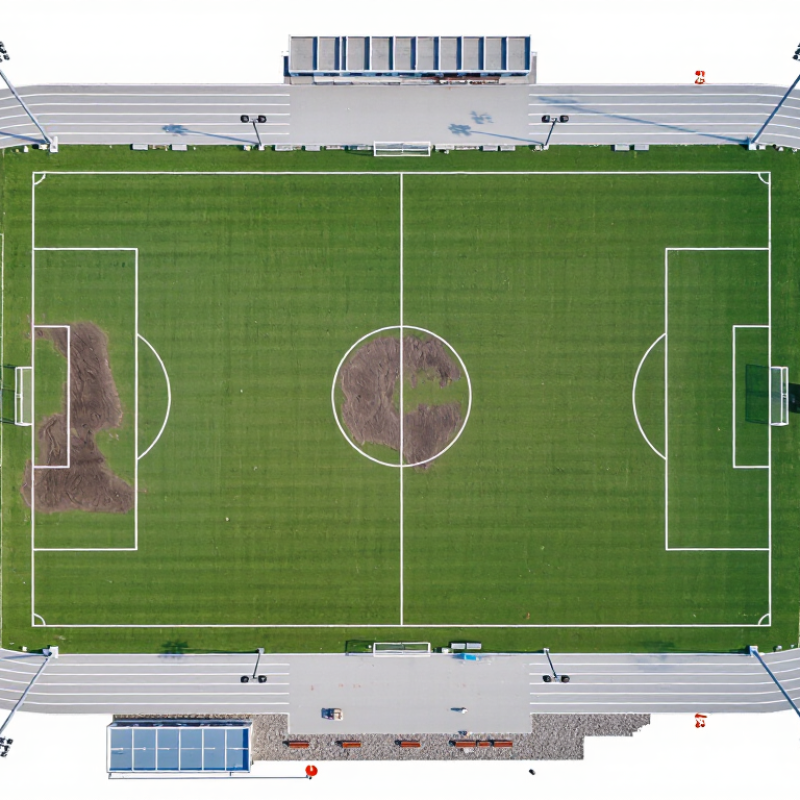
Define Your Match Format and Pitch Requirements
Before choosing an 11-a-side pitch, confirm how it will be used. A weekend league, school fixture, and training session may need different layouts. Check the competition rules for permitted pitch dimensions, goal size, and safety margins. Requirements can vary, so avoid relying on a generic measurement alone. Small details matter.
Allow space beyond the touchlines and goal lines for players to slow down safely. Check whether the surface suits the expected use and local weather; a poorly drained pitch can become difficult to play on after rain. Walk the perimeter, noting slopes, worn patches, benches, and entrances. They can affect both play and access. Measure the usable area, not just the marked rectangle.
Also consider practical match needs: changing rooms, toilets, parking, lighting, and room for substitutes and officials. For evening games, ask how evenly the pitch is lit and whether shadows affect visibility near the goals. I would not treat a pitch as suitable based on size alone. It is easy to overlook the sidelines when comparing options, then discover they are too narrow on match day. If possible, inspect the ground during a similar fixture and confirm its current dimensions with the venue.
Check Pitch Dimensions and Markings
Before choosing an 11-a-side pitch, measure the usable playing area, not just the open grass. The IFAB Laws of the Game 2024/25 set full-size boundaries at 90–120 metres long and 45–90 metres wide. For international matches, the permitted range narrows to 100–110 by 64–75 metres. FIFA’s Stadium Guidelines use 105 by 68 metres as a recommended field size for top-level stadiums. That is a useful reference, not a universal requirement.
Markings matter as much as the overall rectangle. IFAB says boundary lines must be no wider than 12 centimetres, and all lines must have the same width. Measure the touchlines and goal lines carefully; a few extra centimetres can reduce the actual playing area. Check that halfway, centre, penalty and goal-area lines are visible and correctly positioned. Keep paint consistent. Faded corners are easy to miss.
Walk the pitch after measuring it. Check whether goals sit squarely on the goal lines and whether the penalty marks align with the goal centres. Allow room beyond the boundary lines for safe movement and maintenance; the playing dimensions alone do not provide that space. A tape measure can expose an awkward truth: the available rectangle may not fit. Recheck measurements before ordering equipment or scheduling line marking.
Compare Playing Surfaces and Conditions
How to Choose an 11 a Side Football Pitch
Compare Playing Surfaces and Conditions
The surface changes how an 11-a-side match feels. Natural grass can offer a softer landing, but worn goalmouths and uneven patches may affect footing. Check whether the grass is dense, level, and recently maintained. After rain, look for standing water or muddy areas. A pitch that looks green from the sidelines may still be slippery underfoot.
Artificial turf can provide more consistent footing, though surface types and maintenance vary. Notice whether the fibres lie flat, the infill is evenly spread, and seams are secure. On hot days, some surfaces become warmer than natural grass. Ask what footwear is suitable, and check the pitch’s guidance before playing. I have found that a reliable surface matters more than a perfect-looking one, but appearance can be misleading.
Tips: Visit the pitch before booking if possible. Walk across the centre and check the goal areas. Look closely. Consider drainage, shade, and recent weather, not just the surface label. If conditions seem questionable, ask the facility how the pitch is inspected and maintained. A small soft patch may be harmless; a slick corner could change the game.
Assess Location, Access, and Facilities
Choosing an eleven-a-side pitch starts before you inspect the turf. Consider where players travel from, not just the address on a map. A site near bus routes, safe walking paths, and major roads can reduce late arrivals. Check traffic at match time; a quiet midday visit may give a false impression. Ask whether parking fills quickly and whether drop-off space works for people carrying equipment. Small details matter.
Then inspect access and facilities. Are the gates wide enough for kit bags and mobility aids? Is the route from the car park firm and well lit after dusk? Check changing rooms, toilets, drinking-water points, and shelter for substitutes. Notice whether showers work and rooms stay clean during busy periods. Ask who handles maintenance and how quickly faults are fixed. A polished clubhouse does not guarantee reliable upkeep. It is easy to overvalue appearance here. If possible, visit during a busy session and speak with a coach or regular user. They may mention muddy entrances, crowded parking, or limited storage that a short tour misses. Some issues are easy to overlook.
How to Choose an 11-a-Side Football Pitch
Compare official pitch-dimension limits, then check that the location is easy to reach and that changing rooms, toilets and parking suit your players and spectators.
The chart shows the minimum and maximum permitted length and width under the Laws of the Game. International matches use narrower dimension ranges. Confirm the requirements for your competition before choosing a venue.
Review Safety, Maintenance, and Costs
An 11-a-side pitch should feel safe underfoot, not just look impressive from the touchline. Check that the surface is even, with no raised seams, loose infill, or worn patches near the goalmouth. Walk the playing area after rain, if possible. Water that collects around the centre circle may signal poor drainage. Inspect goal anchors, net fittings, perimeter fencing, and access gates. Ask who checks them and how often; a vague answer deserves a follow-up.
Maintenance affects both safety and long-term costs. Request a written schedule covering brushing, infill checks, drainage, line marking, and repairs. Ask to see recent inspection records, not only a sales estimate. Compare the full cost over several years, including lighting, cleaning, resurfacing, and downtime. A cheaper pitch can become expensive if it needs frequent repairs. Still, forecasts are never exact; weather and usage can change the budget. That part is easy to underestimate.
Tips: Visit during a busy session. Watch how the surface handles sharp turns and wet boots. Ask for a sample maintenance log and a clear breakdown of recurring costs. If possible, speak with the people who manage the pitch each week. Their small complaints often reveal what a brochure misses.
How to Choose an 11-a-Side Football Pitch — Review Safety, Maintenance, and Costs
Use this comparison to shortlist a playing surface. Cost ratings are relative only: actual construction and operating costs depend on location, ground conditions, drainage, usage, labor, and the project specification.
| Surface option | Safety considerations | Typical maintenance needs | Relative cost profile | Best suited to | Checks before choosing |
| Natural grass | Provides a natural playing feel, but uneven ground, worn goal areas, poor drainage, or a slippery surface can increase the risk of slips and trips. Inspect the surface and goals regularly. | Regular mowing during the growing season; seasonal aeration, fertilizing, overseeding, and repair of worn areas. Play may need to be restricted while the surface recovers. | Usually lower-to-moderate initial surface cost; ongoing costs can be high because of groundskeeping, irrigation, materials, and recovery time. | Clubs and schools with grounds staff, suitable soil and climate, and enough time between heavy-use periods for recovery. | Check soil, drainage, irrigation availability, annual playing hours, maintenance capacity, and the expected recovery period after wet weather. |
| Long-pile synthetic turf (commonly called 3G) | Check that the surface is even and that seams, infill, and transitions are in good condition. Surface temperature can become high in direct sun; follow the facility’s heat and footwear guidance. | Regular brushing and litter removal, plus inspection of seams, infill distribution, and high-wear areas. Periodic specialist cleaning and infill top-ups may be needed. | Usually high initial cost; ongoing maintenance is different from grass and can be moderate. Budget for periodic repairs and eventual surface renewal. | Venues seeking frequent use across the year, subject to local rules, suitable maintenance, and an appropriate surface specification. | Review drainage, surface performance, infill type, maintenance plan, warranty terms, end-of-life arrangements, and compliance with the relevant competition rules. |
| Hybrid turf | Performance depends on both the natural grass and the reinforcing system. Keep the surface level and well maintained, and promptly repair worn or damaged areas. | Requires many natural-grass tasks, such as mowing and aeration, as well as care appropriate to the reinforcement system. Usage and recovery still need to be managed. | Usually high initial cost; ongoing costs are often moderate to high because natural-grass maintenance remains necessary. | High-use venues seeking a natural-grass playing surface with additional reinforcement and the staff to maintain it. | Confirm the system’s maintenance requirements, suitability for the local climate and soil, contractor support, drainage design, and expected playing schedule. |