Choosing among water treatment systems is not a simple matter of comparing prices or polished product images. The right option depends on water quality, household needs, local conditions, and long-term maintenance. A clear glass of water can look safe, yet it may still contain dissolved minerals, microorganisms, or unwanted chemicals. Appearance alone is weak evidence.
Reliable decisions begin with testing. A certified laboratory report can reveal hardness, iron, lead, nitrates, bacteria, and other concerns. Treatment goals should follow those results. A family using well water may need sediment filtration and disinfection. An office may require a compact drinking-water system with scheduled filter replacement. Industrial sites demand stricter monitoring, documented performance, and professional installation.
The best choice is not always the most advanced. Sometimes, a basic filter solves the actual problem. Sometimes, it creates pressure loss or expensive maintenance. Small details matter, including replacement costs, flow rate, storage space, noise, and wastewater discharge. Manufacturer claims should be checked against recognized certifications and independent technical guidance.
There is no perfect system.
Practical evaluations often expose overlooked weaknesses. A neglected filter can reduce water quality instead of protecting it. Poor installation can also undermine excellent equipment. This guide examines how to compare water treatment systems with a careful, evidence-based approach. It also acknowledges uncertainty, because water conditions can change throughout the year. A sound decision protects health, controls operating costs, and remains realistic for the people responsible for daily use.
Choosing a water treatment system should begin with evidence, not appearance. Clear water can still contain lead, nitrate, microbes, or PFAS. Review your latest utility water quality report, then test water from the actual tap you drink from. The U.S. Centers for Disease Control and Prevention recommends annual testing for private wells, especially after flooding, repairs, or changes in taste. A single test is not a complete picture. Seasonal changes matter.
Use an accredited laboratory and request tests linked to local risks. The World Health Organization’s Guidelines for Drinking-water Quality list 10 µg/L for arsenic and 50 mg/L for nitrate as guideline values. In 2024, the U.S. Environmental Protection Agency set enforceable limits of 4 ng/L for PFOA and PFOS. These figures show why generic “all-in-one” claims deserve caution. Start there. Treatment must match the contaminant.
Hard water may need ion exchange, while sediment often requires filtration. Microbial risks require validated disinfection, not simply better taste. Check flow rate, installation conditions, replacement intervals, wastewater, and maintenance records. Look for independent performance certification against the specific contaminant. I would also compare treated and untreated samples after installation. That step is easy to skip, but it can reveal poor sizing or exhausted media. The most expensive system is not automatically the safest. Your household’s water use, plumbing age, budget, and ability to maintain equipment should shape the final choice.
How to Choose the Best Water Treatment Systems?
Choosing a water treatment system starts with testing the water, not guessing from taste or appearance. A laboratory report can reveal sediment, hardness, chlorine, metals, or microorganisms. Municipal water and private well water often require different solutions. Do not skip testing.
Activated carbon filters reduce chlorine, odors, and some organic compounds. They work well for improving drinking water taste. However, they do not reliably remove dissolved salts or every contaminant. Reverse osmosis uses a membrane to reduce many dissolved substances, including certain metals and salts. It needs pressure, filter changes, and wastewater management. The result can be excellent, but maintenance is often underestimated. Ultraviolet systems can inactivate many microorganisms without adding chemicals. They need electricity and clear water, because sediment can block the light. Distillation removes many impurities through boiling and condensation, but it uses considerable energy. Water softeners target hardness, not general contamination.
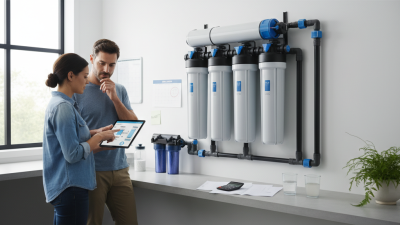
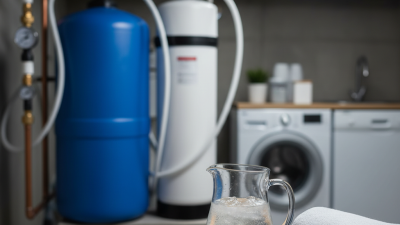
Match the system to the problem and the point of use. A whole-house filter may protect showers and appliances, while an under-sink unit can focus on drinking water. In one common installation, a sediment prefilter extends the life of later equipment. Small details matter. Check flow rate, replacement intervals, certification, and installation requirements. An oversized system wastes money; an undersized one may struggle during peak demand. Review test results after installation. Water conditions can change, and even a well-designed system may need adjustment.
How to Choose the Best Water Treatment Systems?
Match System Features to Your Home or Facility
Choosing a water treatment system starts with the building, not the equipment catalog. A small home may need point-of-use filtration for drinking water, while an apartment facility may require whole-building treatment. Measure daily demand, peak flow, pipe size, and installation space before comparing features. Test the water through an accredited laboratory, because clear water can still contain unwanted minerals or microbes. Match each result to a treatment method, rather than buying the most complex option. I have seen undersized systems lose pressure during busy mornings. That detail matters.
Tips: Check flow ratings at actual pressure, not only the maximum figure. Ask who will replace cartridges, inspect tanks, and record service dates. For a facility, confirm alarms, bypass controls, drainage, and safe access for technicians. Request performance data from independent testing organizations when available.
Homes often value quiet operation, compact design, and simple maintenance. Facilities need stronger monitoring, redundancy, and clear operating procedures. A softener may protect heaters from scale, but it does not solve every water concern. A sediment filter can clog quickly when source conditions change. Plan for disposal, electricity, wastewater, and replacement costs. Do not ignore user behavior; a difficult system may fail in practice. I would leave room for revision after reviewing several months of test results. The first choice is rarely perfect.
| System Type | Primary Treatment Function | Typical Contaminants or Issues Addressed | Typical Flow or Capacity | Best Fit | Key Features | Important Limitations | Typical Maintenance |
|---|---|---|---|---|---|---|---|
| Sediment Filtration | Removes suspended particles through mechanical filtration. | Sand, silt, rust particles, pipe scale, and visible turbidity. | Approximately 5–25 gallons per minute for common point-of-entry units, depending on filter size and pressure loss. | Homes, farms, workshops, and facilities with visibly cloudy or particle-laden water. | Low operating complexity; available with washable screens, cartridge filters, or automatic backwashing media. | Does not reliably remove dissolved chemicals, hardness, microorganisms, or unpleasant tastes and odors. | Inspect pressure drop regularly; clean or replace cartridges when clogged. |
| Activated Carbon Filtration | Adsorbs or reduces selected organic compounds and improves water aesthetics. | Chlorine, some chloramine formulations, taste, odor, and certain organic chemicals. | Approximately 2–15 gallons per minute for residential point-of-entry systems; contact time strongly affects performance. | Homes and facilities supplied with treated municipal water that has chlorine taste or odor. | Improves taste and odor without adding chemicals; can be installed at the point of use or point of entry. | Performance varies by carbon type, contact time, water chemistry, and contaminant concentration; untreated units can support bacterial growth. | Replace media according to water usage, manufacturer specifications, and verified capacity. |
| Water Softener | Uses ion exchange to reduce calcium and magnesium hardness. | Hardness that causes scale on fixtures, boilers, heat exchangers, and plumbing equipment. | Approximately 5–20 gallons per minute for many residential systems; larger commercial units provide higher flow. | Homes, laundries, hotels, and facilities with hard water or scale-related equipment problems. | Can protect water heaters and reduce soap consumption; automatic regeneration is common. | Does not disinfect water or remove most dissolved chemicals; adds sodium or potassium during treatment and requires drain discharge during regeneration. | Refill salt or regenerant; check brine tank, settings, bypass valves, and hardness performance. |
| Ultrafiltration (UF) | Uses a membrane barrier to reduce suspended solids, bacteria, and larger particles. | Turbidity, bacteria, cysts, colloids, and some high-molecular-weight organic matter. | Approximately 1–20 gallons per minute for residential and small commercial modules, depending on membrane area and feed quality. | Homes, schools, and facilities needing microbiological and particulate reduction while retaining dissolved minerals. | Usually operates at lower pressure than reverse osmosis and normally produces little or no reject water. | Does not reliably remove dissolved salts, hardness, nitrate, or many small organic molecules; adequate pretreatment is important. | Periodic flushing, cleaning, and membrane replacement based on pressure loss and water quality. |
| Ultraviolet (UV) Disinfection | Inactivates microorganisms by exposing water to ultraviolet light. | Bacteria, viruses, and protozoa, when the system receives an appropriate UV dose. | Approximately 5–100 gallons per minute, depending on UV dose, lamp power, and water clarity. | Private wells, rural properties, food-service areas, and facilities concerned about microbial contamination. | No chemical taste; rapid treatment with no known formation of disinfectant residual in the water. | Does not remove particles, chemicals, hardness, or toxins; cloudy water can shield microorganisms, so prefiltration is often necessary. | Clean the quartz sleeve and replace the UV lamp generally once per year or as indicated by monitoring equipment. |
| Iron and Manganese Removal | Oxidizes and filters dissolved metals that cause staining, taste, or dark deposits. | Iron, manganese, and sometimes hydrogen sulfide, depending on the selected media and oxidation method. | Approximately 5–20 gallons per minute for common residential systems; sizing depends on concentration and pH. | Private wells with orange, brown, or black staining and metallic or sulfur-like odors. | Can be designed with aeration, chemical oxidation, catalytic media, or air-injection processes. | Performance is highly dependent on pH, dissolved oxygen, competing contaminants, and accurate laboratory testing. | Backwash media as required; inspect air-injection components and replenish oxidizing chemicals when used. |
| Reverse Osmosis (RO) | Uses a semipermeable membrane to reduce many dissolved contaminants. | Dissolved salts, total dissolved solids, nitrate, fluoride, arsenic, lead, and other contaminants when the membrane is properly selected and maintained. | Point-of-use units commonly produce about 10–100 gallons per day; larger systems can produce hundreds to thousands of gallons per day. | Drinking-water taps, laboratories, medical areas, food production, and applications requiring low dissolved-solids water. | High contaminant reduction capability; commonly combined with sediment and carbon pretreatment. | Produces reject water, requires sufficient feed pressure, and removes beneficial minerals along with unwanted dissolved substances. | Replace prefilters and postfilters regularly; monitor membrane performance, storage tank pressure, leaks, and reject-water flow. |
| Commercial or Industrial RO | Provides controlled reduction of dissolved solids for higher-volume applications. | Salts, hardness, nitrate, fluoride, metals, and other dissolved constituents targeted by the membrane design. | Approximately 500–100,000 gallons per day or more, depending on system configuration and feed-water quality. | Manufacturing, food and beverage operations, boiler feedwater, laboratories, and large facilities. | Can include multiple membrane stages, high-pressure pumps, conductivity monitoring, automatic flushing, and recovery controls. | Requires engineering, pretreatment, adequate drainage, operator training, and careful control of scaling and fouling. | Routine monitoring of pressure, conductivity, recovery, antiscalant dosing, filters, membranes, and cleaning intervals. |
| Chemical Disinfection | Uses a disinfectant to control microorganisms throughout a distribution system. | Bacteria, viruses, and other microorganisms, depending on disinfectant type, concentration, and contact time. | Can serve from small buildings to municipal-scale facilities when properly designed. | Facilities requiring a disinfectant residual in storage tanks or distribution piping. | Can provide ongoing protection after treatment when an appropriate residual is maintained. | Requires controlled dosing and monitoring; may affect taste and can create regulated disinfection by-products if poorly managed. | Check dosing equipment, chemical storage, residual concentration, contact time, and safety procedures. |

How to Choose the Best Water Treatment Systems?
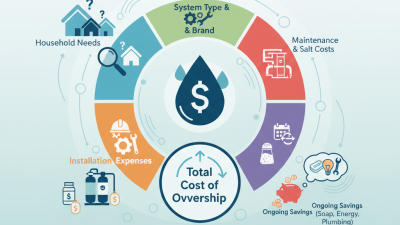
A reliable choice begins with a site assessment, not a sales estimate. Test source water, flow rate, pressure, and daily demand before comparing equipment. Installation costs may include plumbing changes, electrical work, drainage, permits, and temporary water service. A compact system can still require major pipe modifications. Ask for a written, itemized estimate. Hidden work is expensive.
Maintenance often determines the real cost of ownership. Check replacement intervals for filters, membranes, lamps, seals, and treatment media. Confirm whether trained technicians are available locally. Review labor charges and emergency service rates. Small leaks matter. A neglected component can reduce water quality and damage nearby cabinets or floors. My first estimate was too optimistic because it excluded annual sanitation and calibration.
Operating costs include electricity, water waste, chemicals, replacement parts, and monitoring. Compare these expenses over five to ten years, rather than focusing only on the purchase price. A system using more electricity may offer better capacity, but that advantage matters only when demand is high. Ask for performance data under conditions similar to your property. Manufacturer claims should be checked against independent testing or recognized standards. Also examine warranty limits, service records, and disposal requirements. Not always. The lowest quote may become the costliest option when maintenance is difficult or parts are unavailable. Keep a modest contingency budget for unexpected repairs, because real installations rarely match ideal assumptions.
Comparing installation, annual maintenance, and operating costs helps identify the most economical water treatment option for your household. The figures below are typical residential planning estimates in USD and may vary by water quality, system capacity, labor rates, and energy prices.
Key insight: Carbon filtration generally has the lowest total cost, while reverse osmosis typically requires higher installation and maintenance spending because of membrane replacement and wastewater production.
A water treatment system should solve a measured problem, not an imagined one. Start with a recent laboratory test of your household water. Check for minerals, microorganisms, metals, and unusual odors. Match the system to those results. A clear glass does not prove safe water.
Verify performance through independent test data, not only advertising claims. Look for recognized safety standards, such as NSF/ANSI certifications, where applicable. Confirm the exact contaminant, reduction rate, flow speed, and rated capacity. A filter may reduce lead but do little against bacteria. Read the technical sheet carefully.
Safety also depends on installation and maintenance. Follow the required replacement schedule. Record filter changes on a small calendar near the unit. Inspect tubing for leaks, especially beneath the sink. Poor maintenance can undo good filtration. It is easy to forget.
Long-term value requires more than a low purchase price. Calculate replacement cartridges, electricity, wastewater, testing, and professional servicing. Compare the system’s output with your family’s daily use. An oversized unit may waste money, while a small unit may lose performance quickly. In practice, users often focus on taste and overlook maintenance costs. That is a mistake worth reconsidering. Choose documented performance, manageable upkeep, and safety evidence that remains clear after installation.