

Choosing the best Pipe Ring Bending Machine starts with the ring, not the machine brochure. Each project has different demands. Pipe diameter, wall thickness, material strength, ring diameter, and bend radius all affect the final choice. A small stainless-steel ring behaves differently from a large carbon-steel frame.
Dr. Michael Turner, a tube-forming consultant with more than twenty years of workshop experience, says, “The best bending machine protects accuracy before it increases speed.” That principle deserves attention. A strong frame, stable rollers, accurate tooling, and repeatable controls can prevent flattened sections and uneven joints. These details matter on the shop floor.
Production volume matters too. A three-roll machine may suit flexible batches and large ring diameters. A rotary draw system may offer tighter control for smaller, precise bends. Check the machine’s working range carefully. Do not trust impressive maximum figures alone. A machine that bends one heavy pipe may struggle with thin-wall tubing.
Ask about tooling changes, setup time, motor power, control systems, and technical support. Inspect sample rings if possible. Measure ovality after bending. Look for surface marks under bright workshop lighting. Small flaws become obvious after welding or coating.
There is no universal best choice. That is the uncomfortable part. Some buyers focus on price and regret the decision later. Others purchase excessive capacity and waste valuable floor space. This guide examines the practical trade-offs, helping you select a Pipe Ring Bending Machine that matches real production needs, not advertising promises.
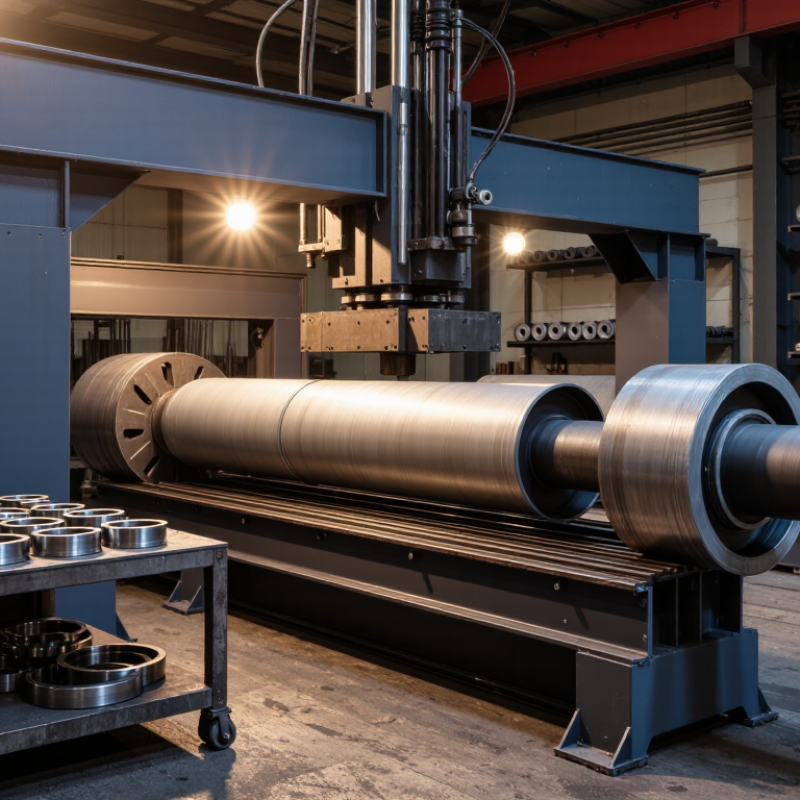
A pipe ring bending machine is a forming system that curves straight pipe into circular rings or controlled arcs. It uses rollers, dies, or hydraulic pressure to shape the pipe without cutting it. The machine must control force, speed, and bending radius. Otherwise, the pipe may flatten, wrinkle, or develop surface marks.
These machines serve many industries. Fabricators use them for handrails, circular frames, heat-transfer coils, pressure-related components, and structural supports. Stainless steel, carbon steel, aluminum, and copper pipes may require different tooling. Wall thickness matters greatly. A thin pipe can collapse during bending, while a thick pipe may demand higher forming force. In practical workshops, measuring the finished ring after bending is essential. Small springback can change the final diameter.
Choosing the best machine starts with the pipe range, target ring diameter, and required production volume. Check the maximum outside diameter and wall thickness, then confirm the smallest achievable radius. A machine with digital angle control can improve repeatability, but skilled adjustment still matters. My early mistake was choosing capacity only by pipe diameter. It ignored tooling changes and setup time. That choice slowed production. Ask for a test bend using your actual material and dimensions. Inspect roundness, weld quality, surface condition, and repeat accuracy. Also examine guarding, emergency controls, maintenance access, and operator training. Bigger is not always better.
| Dimension | Information | Typical Data or Recommendation | Why It Matters |
|---|---|---|---|
| Definition | Pipe ring bending machine | A machine that forms straight pipes or tubes into circular rings, arcs, coils, or other curved profiles by applying controlled bending force through rolls, dies, or hydraulic tooling. | It produces repeatable curved components while reducing deformation, wrinkling, and dimensional variation compared with manual bending. |
| Primary forming method | Roll bending | Uses three or more rolls to progressively curve the pipe. Suitable for large-radius rings, arcs, and continuous production. | Provides gradual forming and is generally suitable when a smooth radius and low surface damage are required. |
| Primary forming method | Rotary-draw bending | Uses a bend die, clamp die, pressure die, and mandrel when necessary to form a fixed-radius bend. | Offers accurate radius control and is effective for smaller radii, tight bends, and applications requiring consistent geometry. |
| Machine type | Manual or hand-operated | Best for light-duty work, prototypes, repairs, and occasional production. Capacity depends strongly on pipe material, wall thickness, and tooling. | Lower purchase and maintenance cost, but higher operator effort and lower repeatability than powered systems. |
| Machine type | Hydraulic | Uses hydraulic cylinders to generate high forming force. Commonly selected for medium- to heavy-wall steel or stainless-steel pipe. | Provides high force and stable forming performance for larger diameters and thicker walls. |
| Machine type | CNC or programmable | Uses programmed bending angles, feed lengths, rotation, and repeat cycles. Often includes automatic positioning and recipe storage. | Best for repeated production, complex shapes, reduced setup variation, and improved dimensional consistency. |
| Pipe diameter | Required working range | Specify the minimum and maximum outside diameter that the machine and tooling must support. Common machine ranges extend from small tubing to large structural pipe. | A machine rated only for a narrow diameter range may require additional tooling or may not be suitable for future projects. |
| Wall thickness | Required material range | Confirm the minimum and maximum wall thickness for carbon steel, stainless steel, aluminum, copper, or other specified materials. | Thin-wall pipe is more vulnerable to flattening and wrinkling, while thick-wall pipe requires greater forming force. |
| Minimum bending radius | Centerline-radius capability | Choose tooling based on the required centerline radius. The practical minimum radius depends on outside diameter, wall thickness, material strength, tooling, and whether a mandrel is used. | A smaller radius generally increases the risk of ovalization, wall thinning, wrinkling, or cracking. |
| Dimensional quality | Roundness and springback control | Look for adjustable roll pressure, calibrated tooling, controlled over-bending, and programmable compensation where precise ring dimensions are required. | Elastic springback causes the pipe to open slightly after forming; compensation improves final accuracy. |
| Tooling requirement | Dies, rolls, guides, and mandrels | Tooling should match the pipe outside diameter, profile, material, wall thickness, and target radius. Dedicated tooling is often used for repeated sizes. | Correct tooling supports the pipe, limits surface marking, and helps maintain the intended cross-section. |
| Production volume | Low-volume or prototype work | Manual or basic hydraulic equipment may be sufficient when changeovers are frequent and output requirements are limited. | Simple equipment can reduce initial cost when automation and high cycle rates are unnecessary. |
| Production volume | Medium- and high-volume work | Hydraulic, servo-assisted, or CNC equipment is generally more suitable for repeat orders and multiple identical rings. | Powered automation reduces cycle time, operator fatigue, and variation between parts. |
| Main application | Handrails, guardrails, and architectural structures | Used for curved railings, ramps, entrance features, canopy frames, and decorative metalwork. | These applications often require smooth appearance, consistent curvature, and minimal surface marking. |
| Main application | Automotive and transport components | Used for exhaust sections, chassis members, protective bars, vehicle frames, and other tubular components. | Accurate geometry helps ensure proper fit, clearance, weld alignment, and repeatable assembly. |
| Main application | Industrial piping and process equipment | Used for pipe loops, supports, manifolds, heat-transfer layouts, and fabricated piping sections. | Controlled bending can reduce the number of joints and fittings, but the final design must still satisfy applicable piping requirements. |
| Main application | Boilers, heat exchangers, and energy equipment | Used for tube coils, heating circuits, cooling circuits, and curved connections made from suitable metals. | Accurate spacing and bend geometry support efficient installation and reliable fluid flow. |
| Main application | Furniture, lighting, and fitness equipment | Used for chair frames, table bases, lamp structures, exercise equipment frames, and tubular consumer products. | These products typically require repeatable shapes, clean surfaces, and attractive finished appearance. |
| Safety and maintenance | Operational requirements | Prioritize guarding, emergency stops, overload protection, clear tooling access, lubrication points, and operator training. | Safe machine design and regular maintenance reduce injury risk, unplanned downtime, and tooling damage. |
| Best selection rule | Match the machine to the complete job specification | Evaluate pipe material, outside diameter, wall thickness, target radius, ring diameter, production volume, tolerance, surface requirements, available tooling, and floor space. | The best machine is not necessarily the largest one; it is the model that covers the required range with adequate force, accuracy, safety, and operating efficiency. |