How to Choose the Best Outdoor Garden Buddha Statue?
Choosing an Outdoor Garden Buddha Statue is about more than finding a peaceful face or attractive finish. The piece should suit your garden’s scale, weather, and everyday use. A small resin figure may sit comfortably beside a herb bed, while a heavy stone statue can anchor an open courtyard. Details matter. Check the base, carved features, and surface closely; uneven footing or shallow details may become noticeable outdoors.
This guide explains how to compare materials, size, craftsmanship, and placement before you buy. Stone and concrete can offer visual weight, but their porous surfaces may need thoughtful care in wet or freezing conditions. Resin is easier to move, though lighter pieces may need shelter from strong winds. Look for a stable base, durable construction, and care instructions from a reliable seller. Then consider where the statue will feel balanced: near a pond, beneath a tree, or against a plain wall. Keep it clear of paths and avoid placing it where water collects.
There is no single best choice. A statue that looks ideal in a product photo may feel oversized beside a narrow walkway. I have found that viewing the intended spot from several angles helps reveal such mismatches. Still, gardens change with the seasons, and no placement stays perfect forever. A little doubt is useful. The following sections offer practical checks to help you choose a statue that fits your space and remains easy to care for.
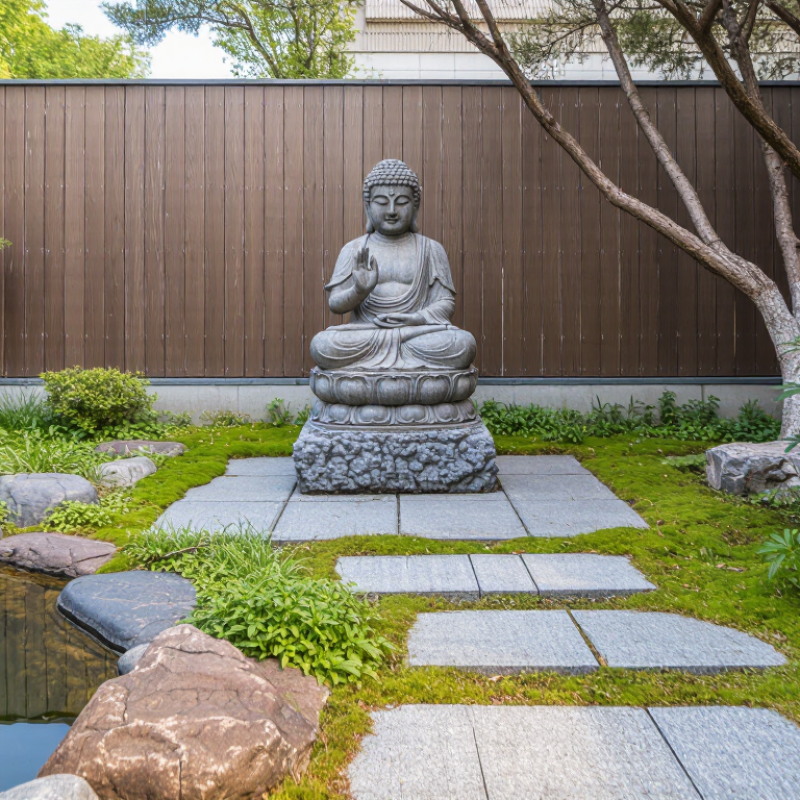
Determine the Statue’s Purpose and Garden Location
Before choosing a garden Buddha statue, decide what role it should play. It might mark a quiet place for reflection, create a visual focal point, or simply complement existing plants and stonework. These purposes call for different sizes and positions. A large figure can anchor an open courtyard, while a smaller one may feel more at home beside a shaded path. Less can be enough.
Walk through the garden at different times of day. Notice where sunlight falls, where rain collects, and which views naturally draw your attention. Set the statue on firm, level ground, away from narrow walkways and areas where roots may shift the base. A sheltered spot can reduce weather exposure, but deep shade may hide fine details. Not every corner works. A statue partly obscured by a fast-growing shrub may look thoughtful at first, then feel forgotten.
Consider how the placement fits the garden’s tone and your own intentions. Keep enough space around the figure for plants to mature and for visitors to approach without stepping over borders. If the statue is meant for quiet contemplation, avoid positioning it beside a noisy pump or busy seating area. I sometimes think a perfect-looking arrangement matters less than a location that remains comfortable and accessible through the seasons. Still, garden plans change; leave room to reconsider.
Choose a Buddha Figure and Style That Suit the Setting
Choose a Buddha figure as part of the garden’s composition, not as a standalone decoration. A seated figure can suit a sheltered corner beside ferns, while a standing form may feel more at home near a gate or tall grasses. Check the statue’s height against nearby plants and furniture. Scale matters. A small figure can disappear behind mature leaves; an oversized one may overwhelm a narrow path. The National Gardening Association’s 2024 National Gardening Survey estimated that U.S. households spent $52.3 billion on lawn and garden retail in 2023, reflecting the care many people give these spaces. That investment makes thoughtful placement worthwhile.
Match the material and finish to the setting. Weathered stone or a muted, textured surface often blends with gravel, wood, and foliage; a polished finish can become a strong focal point in a simple courtyard. Consider the view from the house, too, and leave clear space around the figure so it does not look crowded. Let it breathe. Avoid placing a statue where rainwater collects or where branches will constantly scrape it. A perfectly coordinated garden can feel staged, though. One slightly unexpected contrast—dark stone against pale flowers, for example—may give the setting more character. Step back and observe it in morning and evening light before settling on the final position.
How to Choose the Best Outdoor Garden Buddha Statue?
Choose a Buddha figure and style that suit the setting. Use the example 1–5 ratings below as a planning checklist, then adjust them for your garden.
How to use it: Rate each factor for your space. Consider the statue’s scale, surrounding style, exposure to weather, and whether you can easily care for it.
Select a Material for Your Local Climate
Your local weather should guide the material more than appearance alone. In regions with freezing winters, water trapped inside porous stone or concrete can expand and cause cracks. Look for dense, well-cured stone, and check whether the maker recommends winter protection. Concrete can be sturdy, but quality and finish vary. Ask about drainage and avoid placing a statue where water collects. Small details matter.
In rainy or coastal areas, consider how quickly a material dries and whether it resists corrosion. Resin is relatively light and easy to move, though strong sun may fade or weaken some finishes over time. Metal can handle varied conditions, but untreated surfaces may rust, especially near salty air. Hot, dry climates bring different concerns: direct sun can heat surfaces, while very dry soil may shift beneath a heavy base. I would not assume that a sealed finish makes every statue weatherproof. Before buying, check care instructions for your climate and inspect seams, feet, and painted details. A covered winter spot may help, but moving a heavy statue is not always practical. Choose a material you can maintain, not just one that looks convincing in the shop.
Match the Statue’s Size to the Space
A garden Buddha statue should suit the space around it, not compete with it. Measure the spot before shopping, including its width and the height of nearby plants, walls, or benches. In a narrow courtyard, a tall statue may make the area feel crowded. A low, compact figure can leave room for stepping stones and greenery. In a broad lawn, a small statue may disappear among shrubs. Give it enough visual presence to be noticed from the main path.
Think about viewing distance, too. A statue seen from a kitchen window needs a clearer silhouette than one placed beside a garden bench. Mark the statue’s approximate footprint with cardboard or a garden hose, then view it from several angles. This simple test can reveal awkward proportions. A slightly smaller figure may feel underwhelming at first; check the scale before deciding it needs to be larger. Keep space around the base for drainage and routine care, especially near dense plants.
Tips: Measure twice. Check seated eye level from nearby paths. Leave a little breathing room around the statue. If unsure, test a paper outline first.
Assess Stability, Craftsmanship, and Maintenance Needs
How to Choose the Best Outdoor Garden Buddha Statue?
Stability, craftsmanship, and maintenance matter more than a dramatic finish. The National Gardening Association’s 2023 National Gardening Survey estimated that 80% of U.S. households took part in lawn and garden activities in 2022. A statue should suit the space people actually use. Check its base on uneven ground, and consider whether wind could tip a tall, narrow piece. A broad, low center of gravity helps. Looks sturdy can still be wrong.
Inspect the carving closely. Crisp folds, balanced facial features, and consistent surface texture often signal careful workmanship. Look underneath, too: hollow cast pieces may need anchoring, while heavy stone can strain a weak patio edge. Match the material to local weather. NOAA’s 1991–2020 Climate Normals provide local temperature and precipitation data; repeated freezing and thawing can stress porous materials. Sealed surfaces may reduce water absorption, but sealers require renewal. Maintenance is easy to underestimate.
Tips: Before buying, set a cardboard outline where the statue will stand. Check drainage after rain, then ask how the piece should be cleaned and resealed. Avoid harsh abrasives on painted or delicate finishes. Keep the base clear of leaves and standing water. If the site feels exposed, reconsider the placement—not just the statue.