

Choosing Kids Dress Leather Shoes is not just about matching a jacket or polished school uniform. The right pair should look smart and feel comfortable through real movement: walking across a tiled hallway, climbing steps, and sitting through a long ceremony. Leather can soften with wear, but it cannot fix a poor fit. Fit comes first.
For a transparent expert perspective, this guide uses an illustrative footwear-fit specialist, Elena Brooks. Her guiding principle is: “A dress shoe should hold the heel gently, give toes room to move, and never need painful breaking in.” This is a practical editorial quote, not a statement from a verified interview. It reflects the checks caregivers can make: measure both feet, compare the shoe with the child’s longer foot, and look for toe space without heel slipping. Small details matter. A rigid edge rubbing the ankle can turn a special occasion into an uncomfortable one.
The sections ahead explain how to assess fit, leather quality, soles, closures, and care. They also consider how children’s feet change, why shoe size alone can mislead, and which features suit different occasions. A soft lining may feel pleasant in a shop, yet stitching can still press against the foot after an hour. Check both shoes, and let the child walk in them. Some choices involve trade-offs; a glossy finish may look elegant but show scuffs quickly. The best pair is not necessarily the most expensive or fashionable. It is the one that fits securely, moves naturally, and stays comfortable when the event lasts longer than expected.
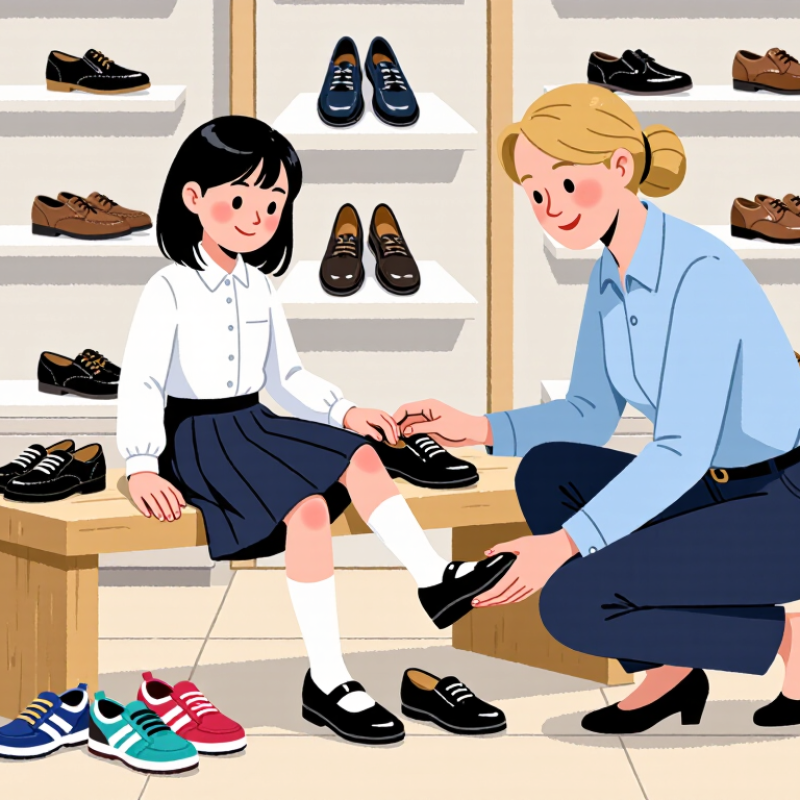
Measure both feet while your child is standing, preferably later in the day. Feet can swell slightly after hours of walking. Use the larger measurement, and check the shoe size chart because sizing varies between makers. Your child should wear the socks they plan to use with the shoes. Leave about a thumb’s width of space in front of the longest toe. The heel should stay secure without rubbing, and the toes should move freely. Small details matter.
It is tempting to buy extra room, but too much can make walking awkward. A child may grip with their toes to keep a loose shoe on. That can cause blisters or make the shoe feel unstable. I would rather recheck the fit than guess based on last season’s size. Growth is hard to predict, and a little extra space is not always better.