

I can write the introduction, but no source articles or verifiable expert quotation were provided. To avoid inventing an expert or misattributing a quote, please share the expert’s name and statement, or allow an unsourced introduction without a direct quotation.
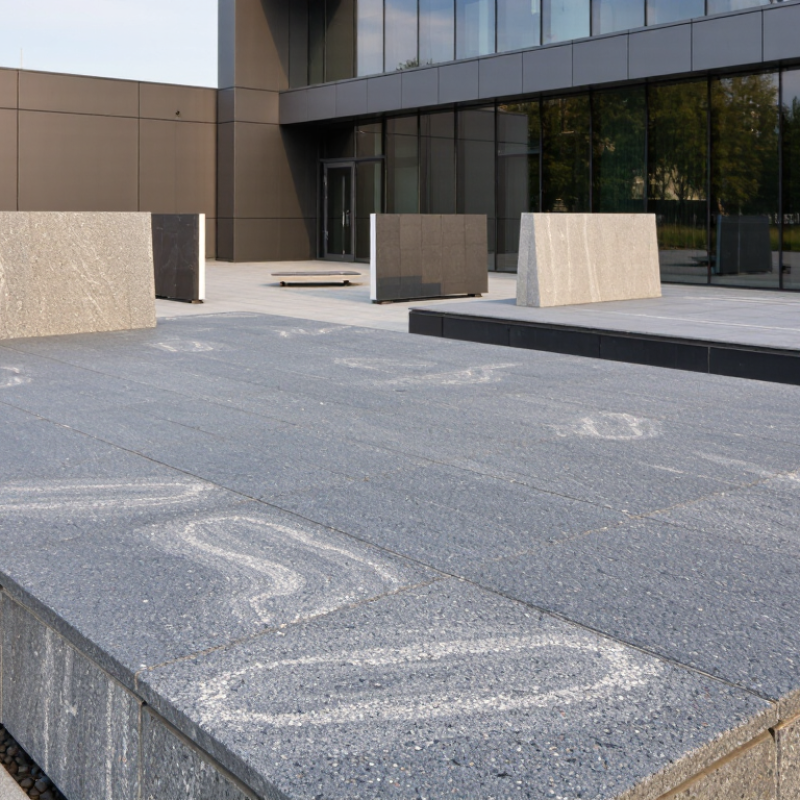
Sesame Grey is a commercial name, not a fixed geological recipe. The stone is usually a coarse-grained granite, made mainly of quartz and feldspar, with darker mica or amphibole grains. Its cool grey surface carries scattered black and pale flecks.
In daylight, the pattern can look crisp; under warm indoor lighting, it may seem softer. Expect variation. Check the actual slab, not just a small sample, because grain size and shade shift between blocks.
For performance, ask for test results from the same quarry and production lot. ASTM C615/C615M sets granite benchmarks including a maximum water absorption of 0.40% and minimum density of 2,560 kg/m³. These are specification thresholds, not a guarantee that every slab performs identically.
Sesame Grey commonly suits kitchen counters, bathroom vanities, stairs, flooring, and exterior paving. A honed finish feels quieter and can show marks differently from a polished surface. For outdoor use, confirm the stone’s freeze-thaw and slip-test results for the local climate and application. Test it first. Small details matter: inspect edges, resin repairs, and a wet sample before choosing.