How to Choose the Right Electrical Breakers for Your Needs?
Choosing the right Electrical Breakers is crucial for any electrical system. Electrical breakers protect your home. They prevent overloads and short circuits. Understanding your specific needs can help you select the best options.
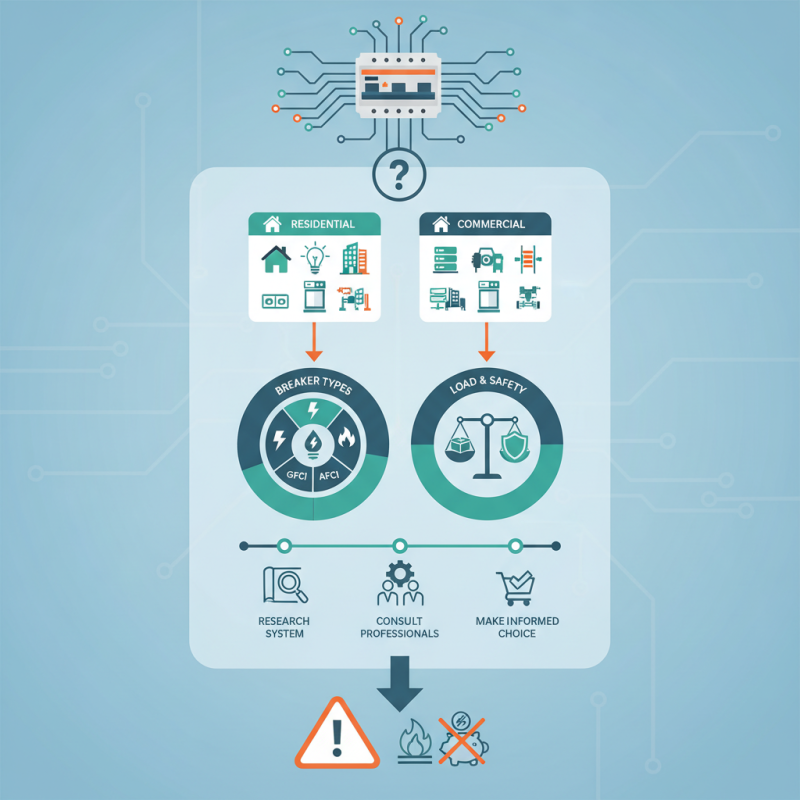
Electrical breakers come in various types and ratings. Some are designed for specific applications. Knowing where to use each type is essential. For example, residential settings often require different breakers than commercial ones. You might feel overwhelmed by the choices. However, researching and consulting professionals can ease the decision-making process.
Keep in mind, not all electrical breakers are created equal. Some may not fit your electrical load requirements. It’s vital to evaluate your current system. Pay attention to your safety needs. This can prevent costly repairs or even electrical fires. Take time to reflect on your options before making a purchase.
Understanding the Basics of Electrical Breakers and Their Functions
Electrical breakers are essential for managing the flow of electricity in your home. They protect circuits from overload and short circuits. Understanding how they work is crucial for making informed choices.
There are several types of breakers. Circuit breakers interrupt the flow when there’s a fault. Ground fault circuit interrupters (GFCI) prevent shocks in wet areas. These deviations can be life-saving. It’s easy to overlook their importance until a problem arises. Safety should always come first.
When selecting a breaker, consider your home’s needs. Check the voltage and amperage requirements. The right breaker ensures optimal performance. However, many homeowners make assumptions that can lead to improper installations. A visual inspection is a good start, but consulting a professional is often wise.
Identifying Your Electrical Needs and Load Requirements
When choosing electrical breakers, understanding your load requirements is crucial. Knowing how much electricity your appliances use can prevent overload. A survey from the National Electrical Manufacturers Association states that about 30% of residential electrical fires are caused by overloaded circuits.
Assess your devices. A refrigerator may need 15 amps, while an air conditioner can require 20 amps or more. Add up these demands to determine if your electrical panel can handle the load. Using a load calculator can help clarify these needs. The Department of Energy suggests a safety buffer of 20% to avoid potential issues.
You might face challenges. Breakers might trip unexpectedly, even if loads seem adequate. This often indicates underlying issues, such as wiring problems. Regular maintenance and assessments can identify these concerns. Consulting a licensed electrician ensures that your system is safe and functional. Making informed decisions can minimize risks and enhance efficiency.
Exploring Different Types of Electrical Breakers Available in the Market
Choosing the right electrical breaker is essential for safety and efficiency. There are several types of electrical breakers available in the market. Each type serves a specific purpose. Familiarizing yourself with these options can lead to better decision-making.
Miniature Circuit Breakers (MCBs) are common in residential settings. They protect against overload and short-circuit situations. These breakers reset automatically after a fault. In contrast, Residual-Current Circuit Breakers (RCCBs) focus on detecting ground faults. They safeguard people from electric shocks. While both types are crucial, understanding their functions is key to effective protection.
Another option is the Molded Case Circuit Breaker (MCCB). This type can handle higher currents and is suitable for industrial applications. Its complexity may require professional installation. Often overlooked, AFCIs (Arc Fault Circuit Interrupters) are also important. They detect arc faults and reduce fire risks. This points to a larger issue: ensuring you have the right mix of breakers in your home or business may involve some trial and error.
Considering all these types, take time to evaluate your specific needs. Each breaker type has strengths and weaknesses. Look for guidance but also reflect on past experiences with electrical systems. A well-informed choice can improve safety and efficiency.
How to Choose the Right Electrical Breakers for Your Needs?
| Type of Breaker | Application | Current Rating (A) | Voltage Rating (V) | Features |
| Miniature Circuit Breaker (MCB) | Residential and light commercial | 6 to 100 | 230/400 | Overcurrent protection, quick reset |
| Residual Current Device (RCD) | Protection against electric shock | 30, 100, 300 | 230/400 | Detects earth faults, enhances safety |
| Miniature Circuit Breaker (MCB) | Industrial applications | 100 to 250 | 400 | Modular design, easy installation |
| Earth Leakage Circuit Breaker (ELCB) | Older wiring systems | 15 to 100 | 230 | Protection from earth faults, manual reset |
| Circuit Breaker (CB) | Commercial buildings | 40 to 2000 | 400 | Customizable trip settings, remote operation |
Evaluating Quality and Brand Reliability for Electrical Breakers
When selecting electrical breakers, quality and brand reliability are essential. Look into manufacturers with a solid reputation. Companies that have been in business for years often provide better products. Research their product testing standards and certifications. A reliable brand ensures your breakers will perform efficiently.
Tips: Check user reviews and expert opinions. Online forums can offer insights into customer satisfaction and common issues. Don’t overlook the importance of warranties. Brands with longer warranties may indicate higher confidence in their products.
Another factor is the materials used in the breakers. High-quality materials enhance durability and resistance to wear. Read specifications to understand the type of plastic or metal used. Sometimes, cheaper options save money in the short term but may cost more later. Investing in reliable brands can prevent such regrets.
Consider consulting an electrician if unsure. Professionals can provide guidance based on their experience. They may point out specific brands or types suited for your electrical load. Balancing cost and quality is crucial. Remember, safety and reliability should always come first.
Installation Considerations and Safety Tips for Electrical Breakers
When installing electrical breakers, safety is paramount. Always wear appropriate protective gear, such as gloves and goggles. Ensure the power is off before beginning the installation. This safeguards you from any unexpected shocks. Use insulated tools to minimize risks. It’s essential to familiarize yourself with the breaker panel layout. Understanding the circuit configuration helps you avoid errors.
Consider the load requirement of your home. Each breaker should match the specific circuit it protects. A breaker that is too powerful may not trip in an overload, posing fire hazards. On the other hand, a weak breaker may trip frequently, leading to inconvenience. If there are doubts about the load calculations, consulting with a qualified electrician is wise.
Taking into account local electrical codes is crucial. These rules exist for a reason—ensuring safety and efficiency. Avoid skipping this step, as adherence to codes can prevent potential legal issues. Additionally, ensure that the breakers are accessible for future maintenance. Recognize that mistakes can happen, and it's okay to seek advice. Electrical work can be complex, and careful consideration is vital to preventing future problems.
Electrical Breakers Selection Guide