Why Choose Industrial PC for Your Business Needs?
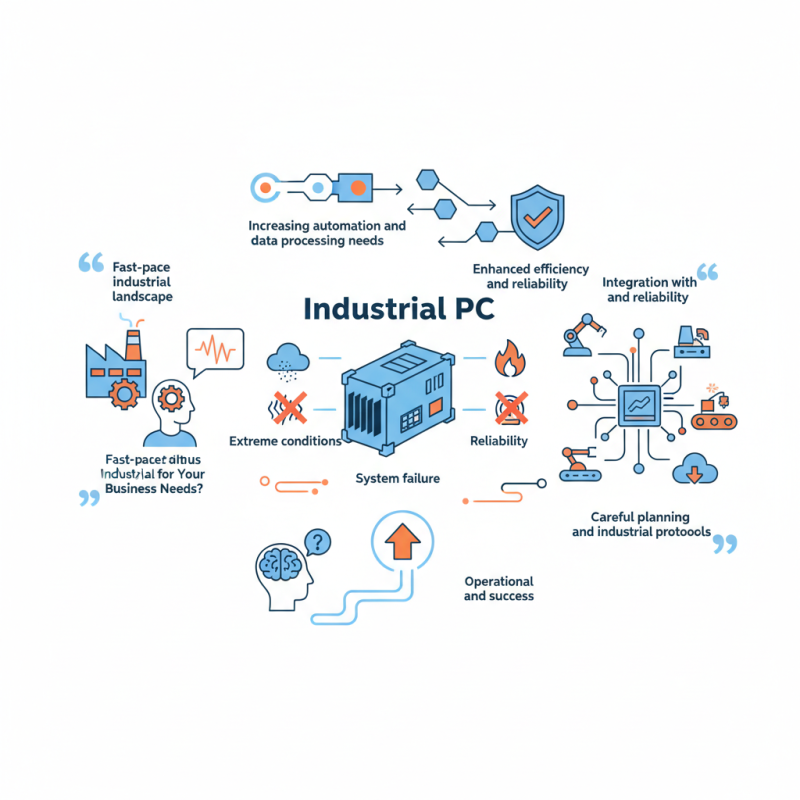
In today's fast-paced industrial landscape, the choice of computing hardware is critical. Experts like Dr. Emily Zhang, a renowned authority in industrial computing, emphasize, "An Industrial PC adapts to the rigorous demands of any operational environment." With increasing automation and data processing needs, businesses must explore how Industrial PCs can enhance efficiency and reliability.
Industrial PCs stand out for their robust design and adaptability. Unlike standard computers, they are built to withstand extreme conditions such as dust, heat, and vibrations. In manufacturing settings, even a small system failure can lead to significant downtime. It's essential to consider the reliability of your computing solution.
Moreover, companies face challenges in integrating new technologies. Industrial PCs often provide more straightforward compatibility with automation devices and industrial protocols. This integration can enhance overall performance but requires careful planning and reflection. The choice of an Industrial PC may not be simple, but it can significantly impact operational success.
Understanding the Role of Industrial PCs in Modern Business Operations
Industrial PCs play a crucial role in modern business operations. These robust machines are designed to withstand harsh environments, enabling industries to maximize efficiency. Their durability makes them suitable for manufacturing, logistics, and other demanding sectors. A reliable industrial PC can handle complex tasks, from data processing to real-time monitoring. This adaptability is key in today’s fast-paced market.
Tips: When choosing an industrial PC, consider the specific requirements of your operation. Analyze the environment—temperature, dust, and moisture can affect performance. Assess processing power and storage needs based on users’ workloads.
Another vital aspect is connectivity. Industrial PCs offer various communication protocols, ensuring seamless integration with other systems. Evaluate your existing technology to ensure compatibility. Remember, investing in quality may save costs in the long run.
While industrial PCs have numerous advantages, businesses must reflect on their unique needs. Not every model is suitable for all applications. Evaluate the scalability options to adapt as your business grows. A thoughtful approach will enhance operational efficiency and position your business for future challenges.
Key Advantages of Industrial PCs Over Traditional Computers in Industry
Industrial PCs have distinct advantages over traditional computers, especially in demanding environments. The design of industrial PCs allows them to withstand harsh conditions, such as extreme temperatures and moisture. For example, a study by BSRIA states that reliable performance can be maintained in temperatures ranging from -20°C to 60°C. This reliability is crucial for industrial operations, where downtime can lead to significant financial losses.
Additionally, industrial PCs typically offer superior longevity. Many traditional computers have an average lifespan of 3-5 years, but industrial PCs can last a decade or more. A report from the International Data Corporation highlights that durability in industrial PCs reduces the total cost of ownership. Companies can save approximately 30% on replacement costs alone. This longevity means businesses can invest more time in innovation rather than continual hardware upgrades.
Another key aspect is the expanded connectivity options available in industrial PCs. These machines often support various protocols essential for industrial applications. For example, fieldbus systems and Ethernet interfaces facilitate seamless communication between devices. However, not all industrial PCs come with these capabilities built-in. Businesses must choose models that align with their specific needs and projects. This nuanced decision-making process requires careful consideration of both current requirements and future scalability.
Evaluating the Cost-Effectiveness of Industrial PCs for Long-term Use
Industrial PCs are becoming increasingly popular in various sectors. They offer a unique blend of durability and performance. Evaluating the cost-effectiveness of these machines is essential for businesses.
In many cases, industrial PCs may require a higher initial investment. However, their longevity often compensates for this expense. Many traditional PCs don’t last long in harsh environments. They tend to fail faster due to dust, heat, or moisture. Industrial PCs, on the other hand, are designed to endure challenging conditions. This durability can lead to lower replacement costs over time.
Maintenance is another factor to consider. Industrial PCs often come with specialized support. This can reduce downtime and repair costs since they are built to be easily serviced. While the upfront costs may seem daunting, the long-term savings can be significant. Businesses that evaluate their specific needs may find these machines to be a wise choice. Yet, it is vital to assess whether the benefits align with operational demands.
Analyzing Industry-Specific Applications of Industrial PCs and Their Benefits
Industrial PCs serve a crucial role in various sectors. They are designed to handle specific tasks in challenging environments. Industries such as manufacturing, automation, and transportation benefit significantly from these robust systems. Their durability allows for continuous operation, even in harsh conditions. This reliability can reduce downtime, which is vital for productivity.
In an industrial setting, precision is essential. Industrial PCs often provide real-time data processing and monitoring. This capability increases the efficiency of operations. Additionally, they can integrate seamlessly with existing machinery. The adaptability of these systems means they can evolve with the business’s needs. However, not all industrial PCs are created equal. It's essential to assess the specific requirements of your applications before making a choice.
The advantages extend beyond performance. Industrial PCs are often more energy-efficient than standard computers. They can save costs in the long run. Yet, investment in these systems requires careful planning. Businesses may overlook the importance of staff training. Ensuring that personnel can operate and maintain these systems is vital. This element can significantly impact return on investment.
Industry Trends: The Growing Demand for Industrial PCs in Automation Solutions
The demand for industrial PCs has seen a significant surge, driven by automation solutions across various sectors. According to a recent report by MarketsandMarkets, the industrial PC market is expected to reach $5.62 billion by 2026, growing at a CAGR of 6.5% from 2021. This growth reflects the increasing reliance on automation in manufacturing, logistics, and other industries. Industrial PCs are central to this transformation, offering durability and performance suited for harsh environments.
Automation solutions today require reliable hardware to ensure seamless operations. Industrial PCs are designed to withstand extreme conditions, including temperature fluctuations and vibrations. A study from Grand View Research highlighted that 40% of industrial automation projects are prioritized for their potential to improve efficiency and reduce downtime. However, companies must acknowledge the complexities in integrating these systems. Many struggle with outdated equipment that cannot support new technologies, creating gaps in efficiency. There is room for improvement in adapting to rapid technological advancements.
Businesses looking to embrace automation should evaluate their current systems critically. They might find that legacy infrastructure hinders their overall progress. Upgrading to robust industrial PCs can lay the foundation for a smarter, more efficient operation. Data security and interoperability are also common concerns. Addressing these will require thoughtful planning and expert insights to leverage the full potential of industrial PCs in the automation landscape.