How to Choose the Best Salt Free Water Softener for Your Home?
Choosing the right salt free water softener can be challenging. Many options are available, each with varying features and benefits. It’s essential to understand your home’s specific needs before making a decision. Think about your water quality and the hardness levels.
A salt free water softener works differently than traditional softeners. It helps reduce scale buildup while preserving healthy minerals. These systems are often more environmentally friendly. They may not produce the same level of softness as salt-based alternatives. However, they can be a better choice for some homes.
Consider how much water your household uses daily. Larger families may require more robust systems. Budget is another critical factor. A salt free water softener can be more cost-effective in the long run. Evaluate options wisely. Balancing performance and price may lead to unexpected challenges. Reflect on all aspects before making your final choice.

Understanding the Basics of Water Softening and Its Importance
Water softening is crucial for maintaining the quality of water in homes. Hard water contains high levels of calcium and magnesium. This hardness can lead to scale buildup in pipes and appliances. Reports indicate that about 85% of American homes have hard water. This affects not only plumbing but also the efficiency of detergents and soaps. People often notice that their laundry doesn't come out as clean.
Salt-free water softeners offer an alternative to traditional systems. They reduce hardness without using salt. This means less environmental impact and lower costs over time. Studies show that salt-free systems can reduce scale by about 50%. However, they might not completely eliminate hard water effects. Some people still experience issues with soap scum or scale buildup. Choosing the right system depends on individual needs and water quality.
Regular maintenance is essential regardless of the system used. Many homeowners overlook this step. They may choose a system and forget to check its effectiveness. Reports highlight that regular checks can improve performance by up to 30%. A well-informed decision requires understanding not just the technology, but also the unique needs of your household.
Types of Salt-Free Water Softeners: A Comparative Overview
When selecting a salt-free water softener, it's essential to understand the options available. There are two main types: template-assisted crystallization (TAC) and electronic descalers. TAC systems alter the hardness minerals in water, preventing them from forming scale. They are effective and require minimal maintenance.
On the other hand, electronic descalers work through electromagnetic waves. These waves change how minerals behave in water, making them less likely to stick. However, their effectiveness can vary based on water conditions. Some users report mixed results, questioning the long-term benefits.
Each type has unique benefits and limitations. TAC systems can be more consistent in performance. Yet, electronic descalers involve less hassle for installation. Consider your home’s specific needs before making a choice. It's essential to weigh the pros and cons, as not every system fits every situation perfectly.
Key Factors to Consider When Choosing a Water Softener
Choosing the right salt-free water softener involves careful consideration. One key factor is your water hardness level. According to a recent industry report, about 85% of U.S. homes have hard water. Knowing the specific hardness is crucial. Test kits can measure calcium and magnesium levels to guide your choice.
Another important aspect is the system's capacity. A typical household may require a unit that can handle 30,000 to 50,000 grains. However, not all families have the same needs. A family of four might need different specifications compared to a single person. Evaluating your water usage can help avoid under or over-purchasing.
You should also think about maintenance. Some systems require minimal upkeep, while others may demand more effort. According to expert evaluations, a unit with an easy-to-replace filter can simplify your life. Reflect on your willingness to maintain the softener. It can significantly affect your long-term satisfaction with the system.
How to Choose the Best Salt Free Water Softener for Your Home?
This chart illustrates the key factors to consider when choosing the best salt-free water softener for your home. Each factor is rated on a scale from 1 to 10, where higher values indicate greater importance or satisfaction. Consider these aspects to make an informed decision.
Evaluating Cost, Efficiency, and Longevity of Water Softeners
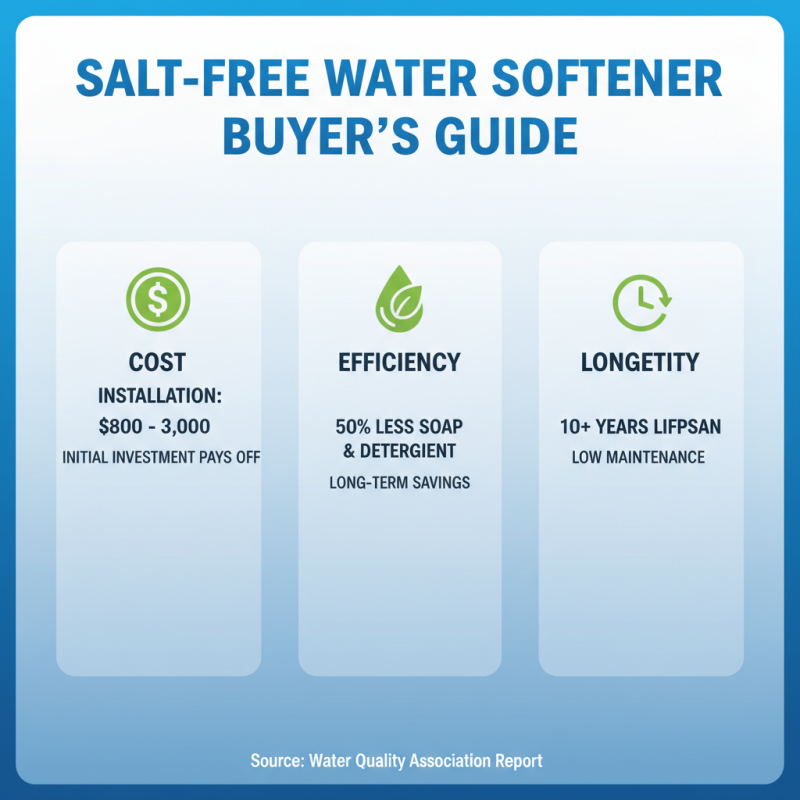
When selecting a salt-free water softener, cost, efficiency, and longevity are crucial factors. According to a report from the Water Quality Association, the average cost of installing a water softener ranges from $800 to $3,000. Initial investment is significant. Yet, it can lead to savings in soap and detergent usage. Households report using up to 50% less, which equates to substantial savings over time.
Efficiency varies among models. Some systems reduce scale buildup by over 80%. However, others may be less effective, especially in hard water regions. A study noted that while salt-free systems are eco-friendly, they don't provide the same immediate results as salt-based models. Homeowners should assess their specific needs carefully. Misjudging requirements can lead to frustration and wasted resources.
Longevity is another aspect to consider. Many salt-free systems last 10 to 15 years. Regular maintenance is essential. However, neglect may shorten their lifespan. Consumer feedback often highlights this concern. Some users report reduced efficiency after a few years, prompting them to rethink their choices. All these elements contribute to a well-rounded decision.