Kinetico Water

China Top Candy Shop Shelves Suppliers for Global Buyers

China has become a practical sourcing destination for candy shop shelves, serving retailers, wholesalers, and store designers worldwide. Suppliers offer metal, wood, acrylic, and modular display systems for different shop formats. Their product ranges can support compact kiosks, supermarket aisles, and branded candy boutiques.

This guide examines how global buyers can evaluate reliable Chinese manufacturers. It considers shelf capacity, coating quality, edge safety, assembly methods, and space efficiency. A well-designed shelf should hold colorful bags, jars, boxes, and seasonal products without looking crowded. Adjustable tiers can make restocking faster. Clear acrylic panels may improve visibility, while powder-coated steel can provide stronger daily support.

Supplier experience matters. Buyers should review factory photos, production records, sample quality, and export experience. A video inspection can reveal details that catalog images hide. Ask about material thickness, load testing, packaging protection, and replacement parts. Confirm dimensions carefully before approving a sample. Small errors can create expensive installation problems.

Reliable communication is equally important. Written specifications should cover finishes, colors, logos, quantities, lead times, and shipping terms. Buyers may also compare several quotations instead of choosing the lowest price. Low cost is not always real value. Some suppliers may respond quickly but provide limited technical evidence. Others may offer excellent craftsmanship but need clearer communication. That difference deserves attention. This article presents a practical approach for finding dependable candy shop shelves suppliers in China, while recognizing that every retail project has different budgets, layouts, and operating conditions. Careful testing remains essential.

China Top Candy Shop Shelves Suppliers for Global Buyers

What Are Candy Shop Shelves and Why Do They Matter?

What Are Candy Shop Shelves and Why Do They Matter?

Candy shop shelves are retail fixtures designed to display sweets clearly and safely. They hold jars, boxes, bags, and seasonal products at different heights. More importantly, they guide customer movement through the store. A well-planned shelf places popular items near eye level and smaller treats beside the checkout. Poor spacing makes products look crowded and difficult to reach. That detail is often underestimated.

For global buyers, Chinese suppliers can provide modular shelves for shops of many sizes. Experienced buyers usually request material samples, load tests, and accurate drawings before placing large orders. Powder-coated steel resists scratches, while MDF or plywood can create a warmer appearance. Clear dimensions reduce mistakes during installation. I have learned that a cheaper shelf can become expensive when replacement parts arrive late.

Reliability also depends on communication and quality control. Suppliers should explain production times, packaging methods, and inspection procedures in plain language. Factory photos help, but physical samples reveal more. Check wheel quality, edge finishing, shelf stability, and coating consistency. Packaging deserves attention too, especially for overseas transport. There is no perfect fixture. A slightly uneven panel may escape inspection and become obvious under bright shop lighting. Small corrections before shipment usually protect both the buyer’s budget and the store’s appearance.

Main Types of Candy Shop Shelves for Global Retailers

China Top Candy Shop Shelves Suppliers for Global Buyers

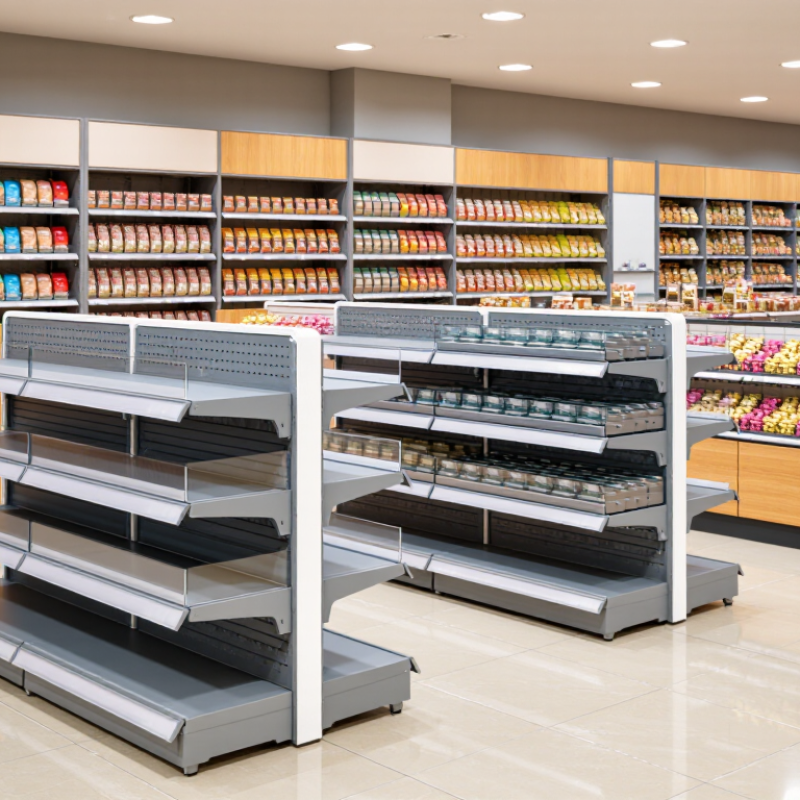
Candy retailers usually choose four main shelf types: wall-mounted racks, gondola units, countertop displays, and mobile modular shelving.

Wall-mounted racks save floor space and suit boxed chocolate or seasonal packs. Gondola shelves create two-sided selling lanes, improving product visibility from both directions.

Countertop displays support impulse purchases near checkout. Small, bright packages work well there.

The global confectionery market was valued at about USD 235 billion in 2022, according to Grand View Research. Its report forecasts steady growth through 2030.

This supports flexible shelving investments, but market data varies by region. For high-volume stores, adjustable steel shelves allow faster replenishment and different package heights.

Gravity-feed trays can move older stock forward, although they may not suit delicate wrappers. Clear acrylic bins offer visibility, but cleaning marks appear quickly.

China-based suppliers often provide powder-coated steel, tempered glass, acrylic, and laminated board options. Ask for load testing, edge finishing, corrosion resistance, and replacement parts before ordering.

ISO 7170 provides useful guidance for storage furniture strength and durability. In real stores, shelf depth is easy to underestimate.

Deep shelves can hide small candy bags and create forgotten inventory. A practical starting point is a shallow upper tier, stronger lower shelves, and clear price-label channels.

One layout rarely fits every country. Packaging size, shopper height, climate, and local safety requirements still need careful review.

China’s Key Candy Shop Shelf Manufacturing Regions

China’s candy shop shelf manufacturing is concentrated in several practical production regions. Guangdong is known for metal, acrylic, and illuminated display fixtures. Factories around Foshan and Dongguan often support custom cutting, bending, welding, and powder coating. These capabilities suit colorful shelves with hooks, trays, and clear product holders.

Zhejiang has a strong base for retail furniture and light display equipment. Manufacturers in Ningbo and nearby cities commonly produce steel-wood shelving, checkout units, and modular store fixtures. Yiwu is useful for buyers seeking smaller accessories, packaging displays, and mixed trial orders. Sample approval matters here. Photos alone can hide weak welds or uneven edges.

Jiangsu and Shandong also deserve attention. Jiangsu suppliers often provide structured production management and detailed finishing options. Shandong can offer practical steel shelving for larger stores and warehouse-style candy outlets. In factory visits, check material thickness, load testing, coating consistency, and corner protection. Ask for a sample before confirming volume production. It takes time, but it reduces costly revisions.

Not every low quotation is efficient. Some suppliers quote attractive prices, then add packaging or tooling fees later. A reliable sourcing process should review drawings, tolerances, carton strength, and replacement procedures. I have found that simple shelves are sometimes harder to inspect than complex ones. Small gaps, unstable feet, and fading surfaces can affect daily retail use. Regional strengths help, but factory discipline still decides the final result.

How to Evaluate China’s Top Candy Shelf Suppliers

China Top Candy Shop Shelves Suppliers for Global Buyers

How to Evaluate China’s Top Candy Shelf Suppliers

Choosing a candy shelf supplier requires more than comparing prices. Review the supplier’s production experience, factory capacity, and quality control records. Ask for material specifications, surface-treatment details, and food-contact safety documents when shelves are used near unpackaged products. Request recent production photos, not only polished catalog images. A reliable supplier should explain load limits, assembly methods, packaging protection, and replacement procedures clearly. Vague answers are a warning.

Order samples before approving a large shipment. Check welds, edges, paint consistency, shelf spacing, and stability on uneven floors. Measure every part against the approved drawing. During my sourcing reviews, small packaging weaknesses often caused scratched panels or missing screws. Suppliers should provide inspection reports, carton dimensions, and realistic lead times. Confirm export documents and communication responsibilities early. Fast replies are helpful, but technical accuracy matters more.

Tips: Compare at least three suppliers using the same checklist. Verify factory details through video calls or independent inspections. Test a sample under expected weight. Keep written approval records for color, dimensions, materials, and packaging. Do not select the lowest quotation automatically. It may exclude testing, stronger cartons, or spare parts. I still find supplier evaluation imperfect, especially when production changes after sampling. That is why periodic inspections and clear contracts remain necessary.

China Top Candy Shop Shelves Suppliers for Global Buyers – How to Evaluate China’s Top Candy Shelf Suppliers

Evaluation Dimension Recommended Benchmark What Global Buyers Should Verify Why It Matters for Candy Retail Displays Priority
Material Selection Powder-coated steel, stainless steel, aluminum, tempered glass, or certified wood-based panels suitable for retail interiors. Request material specifications, coating details, thickness information, and declarations for restricted substances. Candy shelves must withstand frequent cleaning, product handling, humidity, and continuous retail use without excessive corrosion or surface deterioration. High
Load Capacity Common retail shelf configurations should support approximately 30–80 kg per shelf, depending on span, depth, and construction. Ask for tested load ratings, shelf-span limits, evenly distributed-load conditions, and safety factors. Packaged candy can create concentrated loads, particularly on lower shelves and promotional display areas. High
Dimensional Accuracy Finished dimensions should normally remain within approximately ±1–2 mm for critical assembled components. Review dimensional inspection records, assembly drawings, tolerance requirements, and pre-shipment inspection procedures. Accurate dimensions reduce installation problems and help shelves fit standardized retail layouts. High
Surface Finish Uniform powder coating or plating with consistent color, adhesion, edge coverage, and scratch resistance. Check coating thickness, adhesion-test results, color references, sample approval procedures, and defect criteria. Clean, durable surfaces improve visual presentation and reduce maintenance costs in high-traffic candy shops. High
Food-Contact Safety Display surfaces that directly contact unpackaged candy should comply with the destination market’s applicable food-contact requirements. Confirm whether products are intended for packaged or unpackaged food, and request relevant material declarations or test reports. Regulatory requirements can differ by market, and ordinary decorative materials may not be suitable for direct food contact. High
Safety and Stability Stable base design, rounded or protected edges, secure brackets, anti-tip features, and no exposed sharp points. Review structural drawings, stability tests, installation instructions, and anchoring recommendations. Retail shelving is used by staff and customers; stability and edge protection help prevent accidents and product loss. High
Modular Design Adjustable shelf heights, interchangeable hooks or baskets, compatible accessories, and expandable bays. Request a component compatibility list, adjustment range, accessory catalog, and replacement-part policy. Candy packaging varies in size, so flexible displays improve merchandising efficiency and seasonal reconfiguration. High
Customization Capability Ability to modify dimensions, colors, headers, signage areas, shelf depths, lighting provisions, and packaging. Evaluate engineering drawings, prototype procedures, sample approval steps, and tooling or development charges. Custom dimensions help buyers match local store layouts, product assortments, and visual merchandising guidelines. Medium
Production Capacity Capacity should be matched to the project schedule, with documented monthly output and reserved production windows. Ask for capacity planning, production lead-time estimates, subcontracting information, and peak-season contingency plans. Reliable capacity is important when opening multiple stores or completing promotional displays before fixed launch dates. High
Minimum Order Quantity Standard products may offer lower order quantities; customized projects often require higher quantities or setup charges. Obtain separate quotations for standard, semi-custom, and fully customized orders, including tooling and sample costs. Understanding order thresholds helps small retailers control inventory risk and compare suppliers fairly. Medium
Quality Management A documented quality system with incoming-material inspection, in-process checks, final inspection, and corrective-action records. Request quality-control procedures, inspection checklists, nonconformity records, and audit evidence where available. Consistent inspection reduces variation in dimensions, color, welding, hardware, and final assembly quality. High
Testing and Compliance Testing should be selected according to product materials, retail use, destination country, and applicable safety regulations. Verify the issuing laboratory, report date, tested model, test scope, and whether the report matches the supplied product. Valid, product-specific documentation supports customs clearance and reduces compliance risks in international markets. High
Packaging Protection Export packaging should protect corners, coated surfaces, glass, hardware, and assembled frames during repeated handling. Review packaging drawings, carton specifications, drop-test procedures, moisture protection, and container-loading photographs. Effective packaging lowers the likelihood of scratches, dents, breakage, and missing installation components. High
Shipping and Incoterms Quotations should clearly identify trade terms, port or destination, shipment method, packing basis, and documentation fees. Compare EXW, FOB, CIF, and DAP quotations on the same specification and confirm export-document responsibilities. Transparent shipping terms prevent hidden costs and make landed-cost comparisons more accurate. High
Lead Time Typical production schedules may range from approximately 20–60 days after design approval, depending on customization and quantity. Confirm sample lead time, bulk production time, raw-material availability, holiday impacts, and delay procedures in writing. Accurate lead-time planning helps coordinate store construction, merchandising, freight, and opening schedules. High
After-Sales Support Clear warranty terms, installation guidance, spare-part availability, and response procedures for quality claims. Review warranty duration, exclusions, claim evidence requirements, replacement policy, and technical-support channels. Prompt support limits downtime and simplifies repairs when displays are installed across multiple locations. Medium
Sustainability Efficient material use, recyclable packaging, durable construction, low-emission finishes, and repairable components. Request recycled-content information, packaging-material details, environmental declarations, and waste-reduction practices. Longer product life and reduced packaging waste can support sustainability goals and lower replacement costs. Medium
Total Landed Cost Evaluation should include product price, customization, tooling, inspection, packaging, freight, duties, installation, and maintenance. Use a comparable cost sheet based on identical specifications, quantities, delivery terms, and destination requirements. The lowest unit price may not provide the lowest total cost after freight, damage, installation, and replacement expenses. High

Note: Benchmarks are general purchasing references. Buyers should confirm the final requirements according to the product design, destination-market regulations, store environment, and intended method of candy display.

Customization, Quality Control, and International Shipping Steps

China Top Candy Shop Shelves Suppliers for Global Buyers
Reliable candy shop shelf suppliers begin with practical customization. Buyers can request adjustable tiers, transparent panels, rounded corners, and specific color finishes. A shelf should fit the store, not only the factory drawing. Suppliers should confirm dimensions, load capacity, material thickness, and assembly methods before production. Small details matter. For example, a 900-millimeter shelf may need extra support when holding glass jars or packed confectionery. Digital drawings and a physical sample reduce misunderstandings, although samples can still miss real store conditions.
Quality control should cover incoming materials, welding points, surface coating, and final assembly. Experienced inspectors measure frame alignment and test each shelf under its stated load. They also check edges for sharp surfaces and confirm packaging protection. Photographs, inspection records, and random carton checks improve accountability. A recurring mistake is approving appearance without testing stability. That decision can create costly revisions later. Honest suppliers should report defects instead of hiding them.
International shipping requires careful coordination. The supplier normally confirms carton size, gross weight, product quantity, shipping marks, and destination port. Buyers should review commercial invoices, packing lists, origin documents, and any required material or safety declarations. Export packaging may include corner guards, moisture barriers, and reinforced cartons. Sea freight often reduces cost, while air freight suits urgent samples. Delivery terms must be written clearly, including responsibility for customs clearance and inland transport. Delays still happen. Port congestion, document errors, or inaccurate weights can disrupt an otherwise well-planned shipment.