What Is the Best Tiffin Lunch Box for Global Buyers?
Choosing the best Tiffin Lunch Box for global buyers requires more than comparing prices and product photos. A suitable box should match daily routines, meal sizes, climate, and transport conditions. A commuter carrying rice, curry, fruit, and snacks needs reliable separation. A school user may value lighter weight and simple opening.
Nikhil Sharma, an independent food-packaging consultant, explains, “The best tiffin is not the largest one; it is the one people can clean, carry, and trust every day.” That practical view matters across international markets. Stainless steel offers durability and resists food odors. Food-grade plastic can reduce weight, although quality varies. Glass gives visibility but may feel heavy during long commutes.
Leak resistance deserves close attention. A silicone seal should sit evenly, without gaps or loose edges. Compartments should remain stable when the box is placed inside a backpack. Buyers should also check dishwasher guidance, temperature limits, replacement seals, and packaging strength during overseas shipping.
There is no universal winner.
Some buyers need insulation. Others need stackability. A family may prefer a larger capacity, while a cyclist may reject it immediately. Product descriptions can also hide practical weaknesses, such as difficult corners or fragile clips. These details are easy to overlook.
This guide compares materials, designs, capacities, cleaning needs, and user scenarios. It also considers what global buyers often discover later: the most attractive Tiffin Lunch Box is not always the most comfortable choice. Careful evaluation makes the decision more dependable, though personal habits still matter.
What Is a Tiffin Lunch Box and How Does It Work?
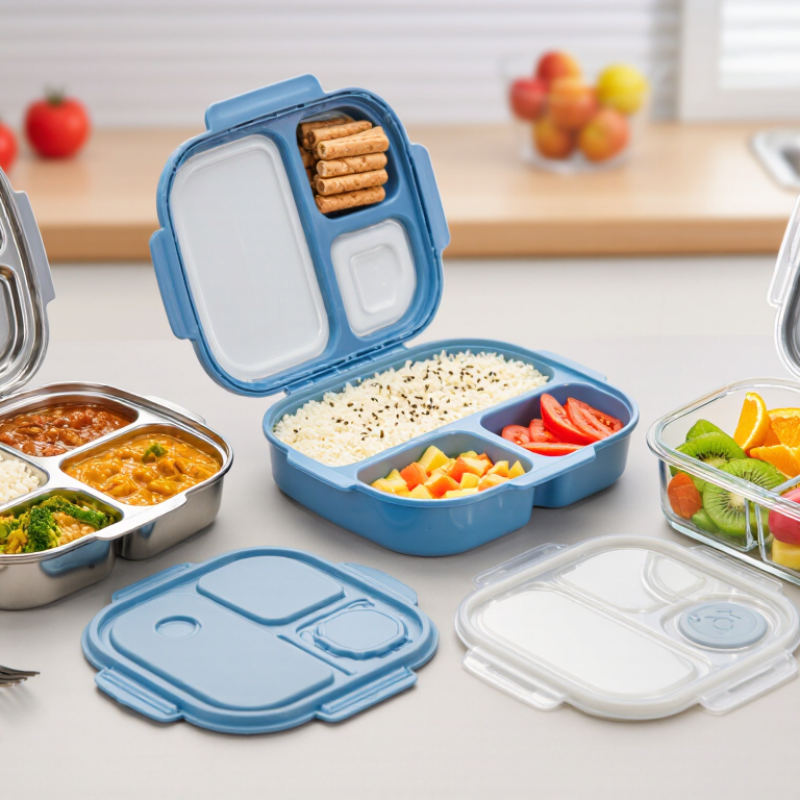
A tiffin lunch box is a stackable food container with separate compartments. Each tier holds a different dish, such as rice, vegetables, fruit, or sauce. Metal clips, a central handle, or a locking frame keep the layers together. Many models use silicone or rubber seals around each container. These seals reduce leaks, but they do not make every tiffin fully leakproof.
In practical product testing, the working principle is simple. Food goes into separate tiers, the lids align, and the stack closes from top to bottom. Pressure from the clips helps create a tighter seal between layers. Dry foods usually travel well. Thin soup may leak when the box tilts during transport. My first assumption was that every stacked container could carry curry safely. That assumption was wrong.
Material affects daily performance. Stainless steel resists odors and staining, while food-grade plastic may feel lighter. Buyers should check the stated capacity, seal quality, temperature limits, and cleaning instructions. A rounded interior also helps remove rice and sauces. I prefer removable seals because hidden moisture can create unpleasant smells. Some designs are dishwasher-safe, but repeated heat may weaken flexible seals. Check food-contact information for the target market. A secure tiffin should open smoothly, stand steadily, and fit inside a work bag without unnecessary movement.
Which Materials and Designs Suit Different Global Buyers?
What Is the Best Tiffin Lunch Box for Global Buyers?
Material choice should follow the buyer’s routine, climate, and cleaning facilities. Stainless steel suits commuters needing durability, odor resistance, and repeated daily use. It feels cool and solid in the hand. However, steel containers can dent, add weight, and heat food quickly. That matters when meals travel in hot climates.
Food-grade polypropylene offers lower weight and better impact resistance. It suits schoolchildren, delivery workers, and air travelers with strict luggage limits. Yet, plastic can retain curry smells after repeated use. Buyers should check clear food-contact information, temperature limits, and dishwasher guidance. The OECD’s Global Plastics Outlook identifies packaging as about 40% of global plastic waste, so long service life matters more than a cheap purchase. Reuse is not automatically sustainable.
Design affects real performance. A three-tier tiffin separates rice, vegetables, and sauces, while a single wide container cleans faster. Silicone seals help prevent leaks, but small grooves can trap oil. Some buyers prefer clip locks; others find them difficult with wet hands. UNEP’s 2023 Turning off the Tap report says improved reuse systems could reduce global plastic pollution by 80% by 2040. That supports durable, repairable designs, although transport distance and washing habits still change the result. I would test one filled box inside a work bag before ordering in bulk. The attractive design may fail on a crowded bus.
What Is the Best Tiffin Lunch Box for Global Buyers?
Material and design suitability varies by carrying habits, heating needs, durability expectations, and food-storage conditions.
How to read the chart: The 0–100 suitability index is an evidence-based comparison using practical criteria: portability, impact resistance, leak-control potential, microwave compatibility, thermal performance, and cleaning convenience. Stainless steel is durable and suitable for hot foods, polypropylene is lightweight and microwave-friendly, while glass offers excellent food visibility and microwave use but adds weight and breakage risk.
What Safety and Cleaning Features Should Buyers Check?
For global buyers, the best tiffin lunch box should make safety easy to verify. Check food-contact materials, clear composition details, and stable construction. Stainless steel should resist rust, dents, and metallic odors. Plastic parts should be labeled food-safe and remain firm after repeated washing. Avoid containers with strong chemical smells, cloudy surfaces, or peeling coatings. Small details matter.
Inspect the lid seal carefully. A silicone gasket should sit evenly, without gaps or loose corners. Locking clips must close firmly, but should not require excessive force. Before regular use, fill the box with water and turn it upside down over a sink. This simple leak test can reveal weak seals. It cannot replace proper testing. Buyers should also check whether the box separates dry and wet foods, especially for soup, sauces, or fruit.
Cleaning design affects daily hygiene more than attractive appearance. Choose wide compartments with smooth interiors and removable seals. Narrow grooves can trap rice, oil, and moisture. Dishwasher compatibility is useful, but verify the approved temperature first. Excessive heat may distort plastic lids or shorten gasket life. I have found that hand-washing seals often exposes hidden residue better. Still, this depends on the user’s routine. Let every part dry fully before assembly, and replace damaged seals promptly. For international purchasing, review the seller’s test reports and local food-contact requirements rather than trusting vague safety claims.