What is the Average Water Softener Cost and How to Choose the Right One?
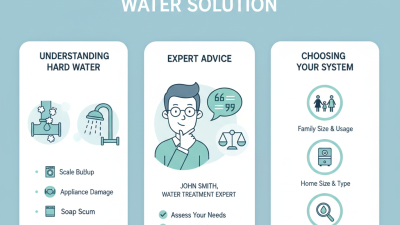
When considering a water softener, understanding the average water softener cost is crucial. Many homeowners face issues like hard water, which affects plumbing and appliances. Investing in a water softener can solve these problems. However, the price can vary significantly.
Factors influencing water softener cost include brand, capacity, and features. Basic models might start at a few hundred dollars. Higher-end systems can exceed a thousand dollars. It's vital to assess the long-term savings on utilities and appliance longevity.
Choosing the right system is not straightforward. Consider your water hardness level, household size, and budget. Research is essential, but so is personal preference. Sometimes, you might wonder if a water softener is worth the expense. Evaluating your specific needs can help clarify your decision.
Average Cost of Water Softeners: A Comprehensive Overview
When considering the average cost of water softeners, a wide range exists. Generally, prices vary between $400 and $2,500. This variation depends on factors like system type and capacity. For instance, salt-based systems often cost more than salt-free systems. Installation costs also add to the total. Expect to spend around $100 to $600 for professional installation.
Selecting the right water softener goes beyond price alone. Home size and water hardness are key factors to consider. Assess your family’s water usage patterns too. Some systems might not handle high usage well. Compare features and warranties. Don’t rush into a purchase. Research can save money and headaches in the long run. Familiarize yourself with your local water quality. Make informed decisions based on your specific needs.
Average Cost of Water Softeners
Factors Influencing Water Softener Prices
When considering the cost of water softeners, several factors influence pricing. The type of system you choose is crucial. Salt-based systems are often more expensive due to their efficiency. Meanwhile, salt-free systems might seem cheaper upfront, but they require more maintenance. You should weigh long-term costs against initial investments.
The capacity of the softener also affects cost. Larger units can handle more water and generally have a higher price tag. Size matters when it comes to your household needs. If you have a big family, opt for larger units. Yet, smaller households can save money with compact models.
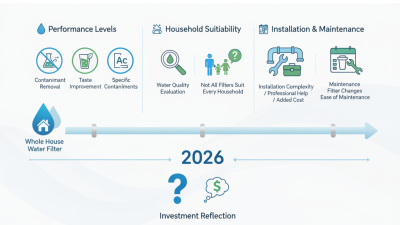
Tips: Research local water hardness before selecting a unit. This can help you avoid overspending on unnecessary features. Also, consider installation costs; some systems are easy to set up, while others need professional help. Reflect on your water needs to choose wisely. The right softener will improve your water quality and save money in the long run.
Types of Water Softeners and Their Price Ranges
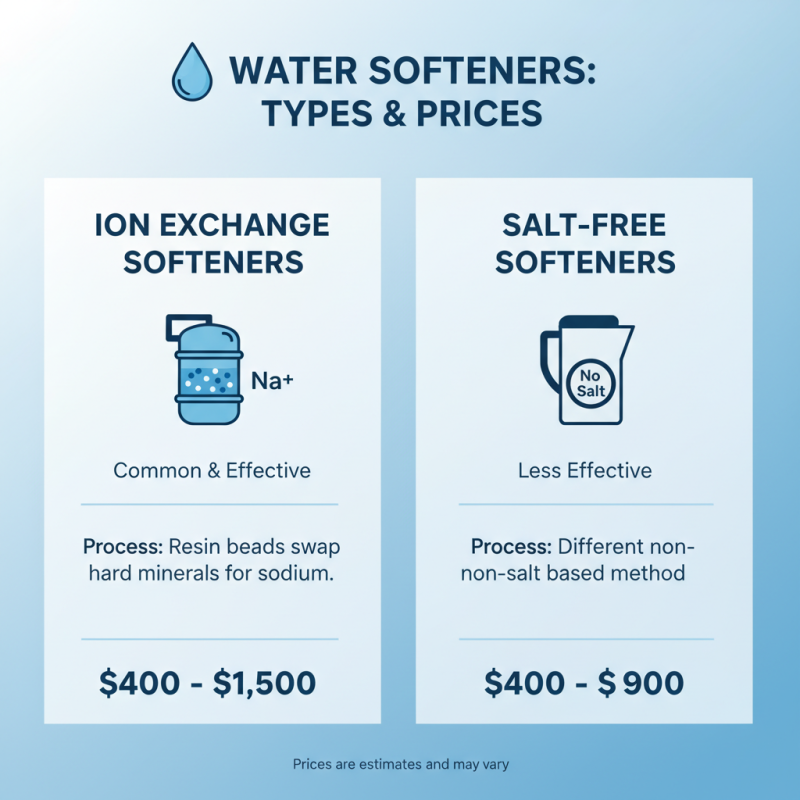
When considering water softeners, it's essential to understand the different types and their price ranges. Ion exchange softeners are common and typically cost between $400 and $1,500. These systems involve resin beads that exchange hard minerals for sodium ions. Conversely, salt-free softeners, which can be less effective, range from $400 to $900. They use a different process that doesn't rely on salt.
Another option is reverse osmosis systems, often used for drinking water. They start around $200 and may exceed $1,000 for advanced models. These systems reduce hardness and contaminants, though they are usually not categorized strictly as softeners. According to industry reports, the ongoing maintenance cost can add up. Regular salt purchases for ion exchange systems can be overlooked during the initial pricing.
Understanding the specific needs of your water supply is crucial. A cheaper model might seem appealing but could lead to dissatisfaction. Remineralization could also be a factor if using salt-free systems. The initial investment should reflect long-term efficiency and performance. Choosing wisely means balancing upfront costs with ongoing maintenance and effectiveness.
How to Choose the Right Water Softener for Your Needs
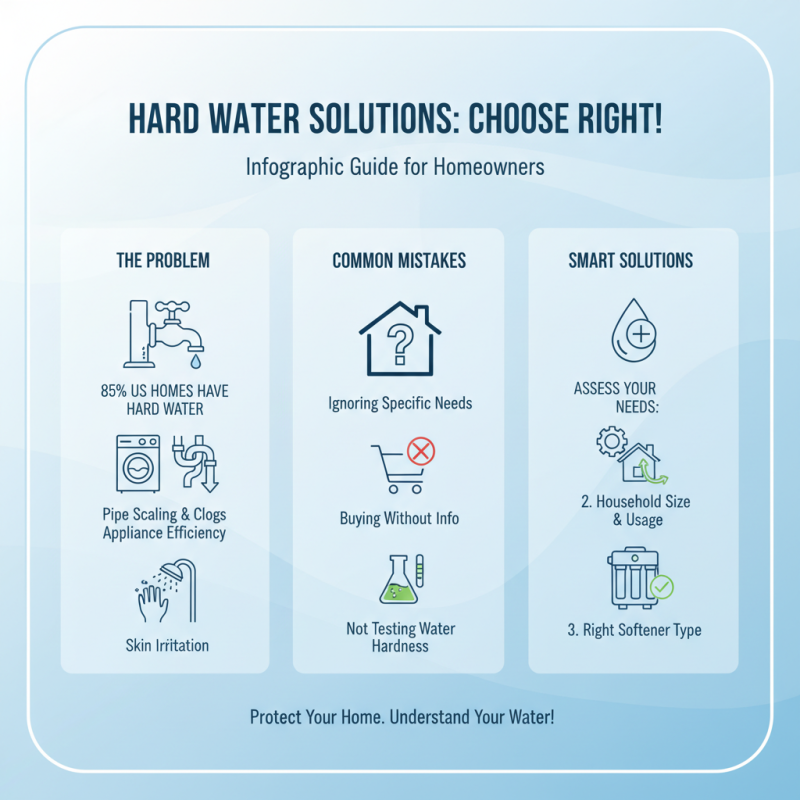
Choosing the right water softener is essential for managing hard water issues. Many homeowners make mistakes by not assessing their specific needs. According to industry reports, about 85% of homes in the U.S. have hard water. This can lead to scaling in pipes, reduced appliance efficiency, and skin irritation. It’s not just about buying a unit; you must understand your water hardness levels first.
Before purchasing, consider how much water your household uses daily. A system that is too small will struggle to keep up. In contrast, a large unit can waste resources. Most professionals recommend a system with a capacity based on your family size. For instance, a household of four may need a softener rated for at least 32,000 grains. Additionally, think about how often you want to recharge the system. Some models require frequent salt refills, while others are more efficient.
Keep in mind, not all softeners handle water the same way. Traditional salt-based systems are common, but alternatives exist. Reverse osmosis and magnetic softeners are options. Research their effectiveness, as they may not reduce hardness adequately. Many users find themselves disappointed when they don’t perform as expected. Ultimately, understanding your water quality and softening needs can save time and money.
Long-term Savings and Benefits of Investing in Water Softeners
Investing in a water softener offers significant long-term savings and benefits. Hard water can cause scaling in your pipes and appliances, leading to costly repairs and replacements. Many homeowners notice a decrease in utility bills after installing a softener. This is because softened water allows appliances to operate more efficiently.
You might save more than just money. Softened water can improve the feel of your skin and hair. It can also enhance the effectiveness of soaps and detergents. However, choosing the right system can be overwhelming. Many factors come into play, including your home’s water usage and hardness level.
In this journey, it’s important to weigh the costs against potential savings. Some options may seem appealing at first glance but could require high maintenance or lead to unexpected expenses. Reflect on your needs and consider both upfront and ongoing costs. Making an informed choice is essential for maximizing the benefits of your investment.
What is the Average Water Softener Cost and How to Choose the Right One? - Long-term Savings and Benefits of Investing in Water Softeners
| Type of Water Softener |
Average Cost ($) |
Installation Cost ($) |
Annual Maintenance Cost ($) |
Expected Lifespan (Years) |
Long-term Savings ($/Year) |
| Ion Exchange |
$500 - $1,500 |
$200 - $500 |
$50 - $100 |
10 - 15 |
$300 |
| Salt-free Water Conditioners |
$800 - $2,000 |
$200 - $600 |
$20 - $50 |
7 - 10 |
$250 |
| Reverse Osmosis Systems |
$150 - $600 |
$100 - $300 |
$25 - $75 |
5 - 10 |
$100 |
| Magnetic Water Softeners |
$100 - $400 |
$50 - $150 |
$10 - $30 |
10+ |
$150 |