
Kinetico Water

7 UVC Sterilization Tips for Global Buyers?

Global buyers need more than a bright lamp and a promising product sheet. Uvc Sterilization decisions involve performance, safety, documentation, and local operating conditions. A device may work well in a clean laboratory, yet perform poorly inside a dusty cabinet or crowded room. Shadows matter. Surface distance matters. So does maintenance.

William F. Kowalski, a recognized UVGI researcher and author of the Ultraviolet Germicidal Irradiation Handbook, states, “UVGI is a line-of-sight technology.” This simple warning deserves serious attention. UVC energy cannot reliably disinfect areas it cannot reach. Buyers should examine irradiance measurements, exposure time, sensor placement, shielding, and verified test methods. Marketing claims alone are not enough.

This guide presents seven practical Uvc Sterilization tips for international purchasing teams. It considers product validation, safety interlocks, material compatibility, replacement parts, technical files, and after-sales support. It also highlights questions that are easy to miss during a fast procurement cycle. For example, can operators confirm lamp output after months of use? Are instructions clear for every intended market? Does the supplier explain limitations honestly?

Small details decide real results.

No guide removes every uncertainty. Some recommendations may require adjustment for air systems, water treatment, or surface applications. That is normal. Reliable buyers compare evidence, request independent test data, and involve qualified safety professionals before deployment. A lower price can become expensive when calibration, training, or compliance records are missing. The strongest purchase is not always the most powerful device. It is the one that delivers measurable performance safely, consistently, and transparently.
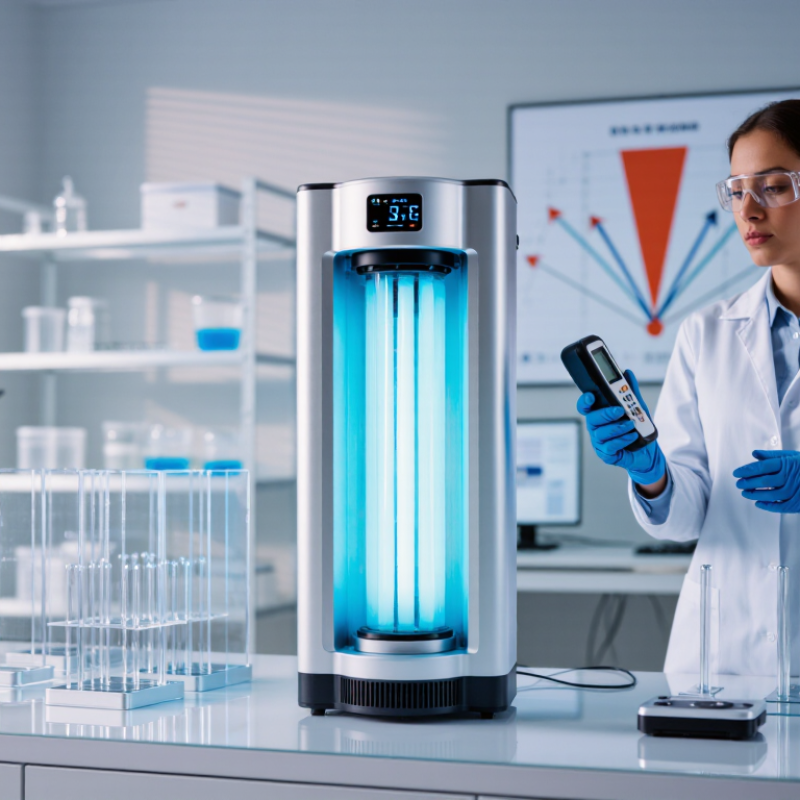
7 UVC Sterilization Tips for Global Buyers?

Define UV-C Scope: 200–280 nm and 254 nm Lamp Performance

For global buyers, “UV-C” is a range, not a performance guarantee. It covers 200–280 nm, where microbial inactivation can occur. However, output at each wavelength matters. A 254 nm low-pressure lamp is a familiar reference in air and surface systems. Many microorganisms respond strongly near this region. Do not treat nominal wavelength as delivered dose. A lamp can say 254 nm and still underperform after aging, fouling, or poor airflow. My practical check is simple: request a measured irradiance map, not only a lamp datasheet. That evidence is more useful.

Tip 1: Confirm the spectrum, lamp type, and test distance. Ask whether measurements were taken through a sleeve, grille, or protective window.

Tip 2: Compare dose, not wattage. Dose equals irradiance multiplied by exposure time, usually expressed in mJ/cm². A compact chamber may need longer exposure than expected. Shadows, dust, and uneven loading reduce the real dose. Place sensors where products actually sit. For 254 nm systems, verify lamp output after warm-up, not immediately after switching on. Temperature changes can affect stability. I have seen attractive specifications fail because testing used an empty chamber. That is a useful warning, although installations can behave differently. Ask for independent test methods, organism data, and uncertainty ranges. “Up to 99.9%” means little without conditions.

Tip 3: Review safety and maintenance details before purchase. UV-C can injure eyes and skin, so interlocks, shielding, warning labels, and leakage checks deserve attention. Confirm replacement intervals and cleaning procedures. If the spectrum approaches shorter wavelengths, ask about ozone generation and ventilation. A 200 nm claim needs extra scrutiny. It may not describe useful treatment output. Keep records of irradiance checks and failed tests. Small records prevent large assumptions.

Match Microbial Targets to Dose: 40 mJ/cm² for Common 3-Log Claims

For global buyers, 40 mJ/cm² is a useful reference for common 3-log UVC claims. A 3-log reduction means removing 99.9% of tested microorganisms under defined conditions. At a validated wavelength, this dose may support disinfection performance. However, it is not a universal promise. Microbial resistance varies. Ask whether the target organism, surface, humidity, and exposure distance match your application. Request test conditions, not only a headline number.

Check irradiance at the actual treatment surface. Measure the farthest point, not just the center. Look for shadowed areas around handles, edges, and internal corners. Confirm exposure time and sensor accuracy. Review lamp aging data and maintenance intervals. Control dust and surface soil, which can shield microorganisms. Require independent laboratory reports when the claim affects safety or product quality. Small details matter.

A credible supplier should provide a dose map, wavelength data, and verification procedures. An engineer should map high-risk zones before selecting equipment. Do not accept “40 mJ/cm² everywhere” without measurement evidence. If surfaces are uneven, add repositioning or multiple exposure angles. One uncomfortable point remains: laboratory results may not reflect a busy facility. Real installations rarely stay perfectly clean or aligned. That gap deserves honest testing, and sometimes a higher validated dose.

Calculate Exposure: Dose Equals Irradiance in mW/cm² × Time in Seconds

7 UVC Sterilization Tips for Global Buyers

Calculate Exposure: Dose Equals Irradiance in mW/cm² × Time in Seconds

UVC performance begins with a simple calculation: dose equals irradiance multiplied by exposure time. For example, 2 mW/cm² applied for 30 seconds delivers 60 mJ/cm². However, this result only reflects the measured point. Distance, lamp angle, surface texture, and shadows can reduce the actual dose. A shiny surface may also redirect energy unevenly.

Tips: Request irradiance data at the working distance, not only at the lamp surface. Check whether the measurement uses a calibrated UVC meter. Ask for test conditions, including temperature, airflow, and lamp age. These details reveal whether the figures match your application.

Use the required microbial reduction target to select a suitable dose. Different organisms respond differently, so one universal number is unreliable. A qualified laboratory can verify performance on representative surfaces. Measure several locations inside the chamber, especially corners and areas behind product edges. Safety interlocks, shielding, warning labels, and operating procedures also deserve careful review.

A neat calculation can still be wrong. I have seen systems pass a bench test but underperform after installation. Recheck irradiance during commissioning and after scheduled maintenance. Keep measurement records, because output can decline over time. Buyers should also compare technical files, calibration evidence, and applicable local safety requirements before purchase.

7 UVC Sterilization Tips for Global Buyers? - Calculate Exposure: Dose Equals Irradiance in mW/cm² × Time in Seconds

No. UVC Purchasing Tip Key Data Dimension Practical Calculation or Requirement Buyer Verification Point
1 Calculate UVC dose correctly Dose, irradiance, and exposure time Dose (mJ/cm²) = Irradiance (mW/cm²) × Time (s).
Example: 1.5 mW/cm² × 20 s = 30 mJ/cm².
Request irradiance measurements at the product surface, not only the lamp’s electrical power or rated output.
2 Confirm the UVC wavelength Wavelength and spectral output Germicidal performance depends on wavelength, dose, organism, and surface conditions. Low-pressure mercury systems commonly emit near 254 nm; UVC LEDs are often specified in the approximate 260–280 nm range. Ask for a spectral report or wavelength tolerance, and verify whether the stated irradiance is measured at the intended wavelength.
3 Design for the lowest-dose area Distance, shadows, and uniformity A surface receiving 0.8 mW/cm² for 60 s receives 48 mJ/cm². The actual treatment dose is determined by the lowest irradiance point, not the brightest point. Request a mapped irradiance or dose distribution at multiple positions, including corners, edges, and shadowed areas.
4 Match dose to the target microorganism Required dose and microbial resistance There is no universal UVC dose for every organism. Required dose varies with species, strain, growth condition, humidity, surface type, wavelength, and the required log reduction. Obtain organism-specific validation data. Do not treat a general “germicidal” claim as proof of a specific 3-log, 4-log, or 5-log reduction.
5 Check optical and environmental losses Material transmittance, cleanliness, and temperature UVC is reduced by distance, contamination, aging, lamp temperature, surface texture, and materials that absorb or block UVC. Transparent materials may transmit UVC poorly even when they appear clear to visible light. Test the actual product, packaging, and operating environment. Specify cleaning intervals and acceptable irradiance loss.
6 Build in dose monitoring and maintenance Sensor accuracy, calibration, and service life A timer alone does not confirm dose. For example, if irradiance falls from 1.5 to 1.0 mW/cm², a 20-second cycle changes from 30 to 20 mJ/cm². Request sensor calibration information, repeatability data, lamp or LED aging specifications, and a replacement or recalibration schedule.
7 Prioritize safety and regulatory suitability UVC exposure, interlocks, shielding, and documentation Direct UVC exposure can injure eyes and skin. Enclosed equipment should prevent access during operation and should include shielding, door interlocks, warning labels, and fault shutdown where appropriate. Check applicable electrical, photobiological, workplace-safety, import, and product-specific requirements in each destination market.
Important note: UVC dose calculations are engineering estimates until verified by calibrated irradiance measurements and microbiological validation. “Sterilization” or a specified log reduction should not be claimed without evidence for the exact wavelength, dose, organism, product geometry, and operating conditions.

Control Coverage and Maintenance: Account for Shadows, Distance, and 9,000-Hour Lamp Life

For global buyers, UVC coverage must be measured where contamination may remain, not where light looks brightest. Shadows are the problem. Shelves, hinges, handles, and stacked items can block direct exposure. A clean chamber can still contain untreated surfaces behind a box. Map the interior with a simple grid, then assess each position at the required distance. Distance changes everything. UVC intensity falls sharply as the source moves away, so a large chamber may need multiple lamps or a revised cycle. Do not treat lamp wattage as proof of coverage. Ask for irradiance data, test conditions, and sensor calibration records.

A stated 9,000-hour lamp life is useful, but it does not remove maintenance duties. UVC lamps gradually lose effective intensity, even while they still appear bright. Record operating hours, clean the quartz surface, and inspect seals, fans, reflectors, and door interlocks. Dust is small. Its effect may not be. Replace lamps according to verified irradiance, not appearance alone. Buyers should request a maintenance schedule that suits local service conditions, voltage standards, and spare-part availability.

One practical weakness deserves attention: many validation plans test an empty chamber. Real loads create shadows and change airflow. Run trials with the heaviest realistic arrangement, then repeat them after cleaning and lamp aging. If a reading looks perfect, question the setup. Reliable control requires repeatable measurements, trained operators, and clear acceptance limits. A lower-cost unit may become expensive when coverage, calibration, or replacement planning is overlooked.

Verify Global Compliance: Check IEC 62471, ISO 15858, RoHS, and CE Records

Global buyers should treat compliance records as a purchasing filter, not a paperwork exercise. IEC 62471 evaluates photobiological risks, including ultraviolet exposure to skin and eyes. ISO 15858 addresses safety information and permissible human exposure from UV-C devices. Ask for complete test reports, not cropped certificates. The report should identify wavelength, irradiance, measuring distance, exposure time, and instrument calibration.

RoHS documentation should confirm restricted substances and test methods. The European Commission states that RoHS limits ten substances, including lead, mercury, and cadmium. Most limits are 0.1% by homogeneous material, while cadmium is limited to 0.01%. CE evidence also needs careful reading. A CE mark is not automatically a third-party safety certificate. Request the EU Declaration of Conformity, applicable directives, technical file references, and product-model traceability.

Check every detail.

A recurring audit mistake is accepting a report for a similar model. It may use a different lamp, enclosure, or control system. The CIE’s 2020 position statement warns that UV-C safety depends on dose, wavelength, and exposure conditions, not marketing language. Ask whether motion sensors, door interlocks, warning labels, and failure testing were verified. Also compare the declared output with independent measurements. Small gaps matter. Records can look professional yet remain incomplete, especially when translations hide technical limits. Keep a written question log and require dated corrections before shipment.