
Kinetico Water

7 Tips to Choose an ODM Ring Joint Gasket Supplier?

Choosing an ODM Ring Joint Gasket Supplier requires more than comparing prices. These gaskets work inside demanding flange connections, where small defects can cause leakage, downtime, or costly inspection failures. A reliable supplier should understand pressure ratings, material selection, hardness requirements, and manufacturing tolerances. The right decision begins with evidence, not attractive product photos.

This guide presents seven practical tips for evaluating potential suppliers. It examines technical capability, customized design support, raw material traceability, dimensional accuracy, testing procedures, certifications, and delivery reliability. Ask for material certificates, inspection records, sample reports, and clear production specifications. If a supplier cannot explain how each ring gasket is measured, treated, and inspected, caution is reasonable. Details matter here. Even groove dimensions can affect sealing performance.

In real sourcing projects, an impressive catalog does not always indicate strong production control. A supplier may claim ODM expertise but outsource critical processes without explaining quality responsibility. That weakness can appear only after an urgent order arrives. Therefore, assess communication, documentation, sampling discipline, and after-sales support together. Confirm whether the supplier can match standards such as ASME B16.20 or applicable project specifications, when required. Certifications help, but they are not the whole answer. Factory audits, witnessed inspections, and small trial orders can reveal practical reliability. Some decisions still involve judgment. No checklist can replace careful technical review. With a structured comparison, buyers can reduce uncertainty and select an ODM partner capable of delivering consistent ring joint gaskets for demanding applications.
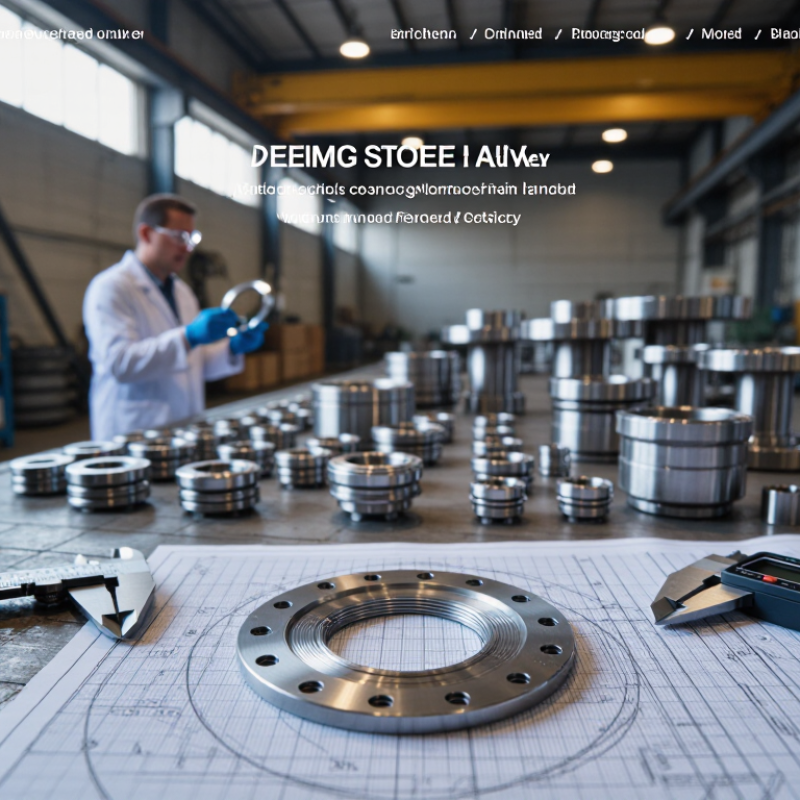
7 Tips to Choose an ODM Ring Joint Gasket Supplier?

Define Your Ring Joint Gasket Requirements and Application Conditions

Before requesting an ODM ring joint gasket quotation, define the service conditions precisely. Record flange size, pressure class, groove dimensions, operating pressure, temperature, and fluid composition. ASME B16.20 provides dimensional requirements for metallic ring gaskets, but field conditions still matter.

Hard details matter.

Specify the required material, hardness range, plating, and surface finish. Sour gas, hydrogen, seawater, and high-temperature steam can demand different alloys and coatings. API Specification 6A also links wellhead equipment performance to pressure, temperature, and product specification levels. Do not select a gasket from flange size alone. That shortcut can create leakage risks.

An IEA Global Methane Tracker report estimated about 120 million tonnes of methane emissions from fossil fuel operations in 2023. This figure reinforces why sealing performance deserves documented controls. Ask the supplier for material certificates, dimensional inspection records, hardness results, and traceability from billet to shipment. Confirm whether the ring meets the latest approved drawing, not merely an old sample. I have seen “equivalent” substitutions create unnecessary uncertainty. A practical specification should include make-up procedures, storage limits, retest needs, and the exact application medium. Leave no critical assumption unwritten.

7 Tips to Choose an ODM Ring Joint Gasket Supplier? - Define Your Ring Joint Gasket Requirements and Application Conditions
Tip Requirement Dimension What to Define Before Ordering Typical Technical Data or Examples Why It Matters Supplier Qualification Evidence
1 Pressure and Temperature Specify the maximum and minimum operating pressure, design pressure, normal temperature, design temperature, and any pressure or temperature cycling.
  • Pressure class: ASME Class 300, 600, 900, 1500, or 2500
  • Operating temperature: 20–400°C for many metallic sealing applications
  • Design conditions should include transient peaks
Ring joint gaskets are selected according to the flange pressure class, metal grade, hardness, and service temperature. Incorrect limits can cause leakage or permanent deformation. Pressure-temperature selection guidance, material certificates, dimensional inspection records, and documented design review.
2 Ring Number and Standard Confirm the exact ring number, nominal pipe size, flange standard, groove profile, and whether the flange is designed for an oval or octagonal ring.
  • Common standards: ASME B16.20 and API 6A
  • Ring numbers must match the mating flange groove
  • Do not substitute an R-type ring for an RX- or BX-type application without engineering approval
A ring joint gasket is not interchangeable solely because the nominal diameter is similar. Profile, pitch diameter, height, and groove geometry must be compatible. Standard-based drawings, traceable ring-number identification, dimensional reports, and compatibility confirmation before production.
3 Material and Corrosion Resistance Identify the process medium, chloride exposure, sour-gas conditions, hydrogen exposure, seawater contact, and compatibility requirements.
  • Carbon steel for suitable non-corrosive services
  • Stainless steel grades such as 316L for improved corrosion resistance
  • Nickel alloys for severe corrosive or high-temperature environments
  • Sour service may require compliance with applicable NACE requirements
The gasket material must resist corrosion, chemical attack, and environmental cracking while maintaining sufficient strength and hardness. Heat or material test certificates, chemical composition reports, hardness results, corrosion-service declarations, and full material traceability.
4 Hardness and Flange Protection Define the allowable gasket hardness in relation to the flange groove hardness and the risk of galling or groove damage.
  • The gasket should generally be softer than the flange groove material
  • Hardness is commonly verified using Rockwell or Brinell methods
  • Exact limits depend on the applicable standard and service design
An excessively hard ring can damage the flange groove, while an unsuitable soft ring may deform excessively under load or pressure. Calibrated hardness test reports, lot-based inspection, surface-condition checks, and documented acceptance criteria.
5 Dimensions and Surface Finish Set the required inside diameter, outside diameter, height, pitch diameter, ovality, dimensional tolerances, and contact surface finish.
  • Dimensions must correspond to the applicable ring-joint standard
  • Sealing surfaces should be smooth, clean, and free from dents, cracks, laps, and corrosion
  • Surface finish requirements should be confirmed against the flange design
Dimensional or surface defects can prevent uniform seating and create leak paths, especially during high-pressure service. Approved drawings, coordinate or gauge inspection, surface-finish measurement, visual inspection, and 100% dimensional verification where required.
6 Installation and Bolt Loading Provide the flange type, bolt material, tightening method, target bolt load or torque, lubrication condition, and whether the joint will be reused.
  • Use a new ring joint gasket for each assembly
  • Tighten bolts in a controlled cross-pattern sequence
  • Use calibrated torque or hydraulic tensioning equipment where specified
  • Never force a ring into a mismatched or damaged groove
Correct installation is essential for uniform compression. Excessive or uneven loading can damage the gasket or flange. Installation instructions, recommended bolt-load data, flange-alignment checks, packaging protection, and technical support for field assembly.
7 Quality, Traceability, and ODM Capability Define inspection scope, batch size, marking, packaging, documentation, sample approval, custom drawing control, and delivery requirements.
  • Permanent or durable marking should identify the ring number, material, and manufacturing lot
  • Records may include dimensional reports, hardness results, material certificates, and conformity statements
  • Custom ODM work should include drawing approval and first-article inspection
Traceability and controlled manufacturing reduce the risk of mixing materials, incorrect dimensions, undocumented substitutions, and inconsistent production quality. Quality management procedures, inspection plans, calibration records, sample approval workflow, nonconformance control, and lot-level traceability.

Verify the Supplier’s ODM Design and Engineering Capabilities

Verify the Supplier’s ODM Design and Engineering Capabilities

An ODM ring joint gasket supplier should do more than copy your drawing. Ask how its engineers convert operating conditions into a reliable sealing design. They should review pressure, temperature, flange type, groove dimensions, and media compatibility. Request sample calculations, tolerance studies, and material recommendations. A capable team can explain why one metal grade suits a hot, corrosive line better than another.

Look for practical engineering evidence. Review anonymized CAD drawings, prototype records, and inspection reports. Ask whether the supplier uses controlled design revisions and documented approval steps. Their engineers should understand machining marks, ovality, hardness, and surface finish. These details can decide whether a gasket seals evenly around a flange. A useful supplier will also suggest design changes when your drawing creates unnecessary manufacturing risk. That honesty matters.

Test the development process before placing a large order. Request a small prototype batch with full dimensional records and material certificates. Compare the measured cross-section, ring diameter, hardness, and surface condition against the agreed specifications. Then discuss how failures are investigated. Weak answers often sound polished but remain vague. I have learned that technical confidence can still hide gaps. A supplier may have excellent equipment but limited ODM judgment. Ask direct questions, document every response, and confirm that engineering support continues after the first sample.

Assess Material Quality, Standards, and Manufacturing Controls

7 Tips to Choose an ODM Ring Joint Gasket Supplier?

An ODM ring joint gasket supplier should prove more than production capacity. Material quality begins with traceability. Request heat numbers, mill certificates, chemical results, and mechanical-test records for every alloy batch. For stainless steel, nickel alloys, and soft iron, verify chemistry against the purchase specification, not a generic catalog. ASME B16.20 provides dimensional requirements for metallic gaskets, while API Spec 6A adds relevant requirements for oilfield wellhead equipment. Ask how the supplier controls hardness, surface finish, ovality, and groove fit. Small deviations can create large leakage risks.

Manufacturing control is visible on the shop floor. Look for calibrated gauges, controlled machining parameters, protected sealing surfaces, and documented final inspection. ISO’s Survey 2022 recorded 1,265,216 ISO 9001 certificates across 189 countries and economies. That figure shows certification is widespread, but it does not prove gasket competence. Read the scope. Confirm it covers design, material purchasing, machining, inspection, and nonconforming-product control. An ODM partner should retain samples and inspection records for field investigations. Ask for a sample inspection report, then compare it with the actual part.

Supplier reliability needs evidence under pressure. Review documented hydrostatic, dimensional, and applicable fire-test capabilities. Request a corrective-action example with root cause, containment, and verification. Experience matters here. A supplier may pass an audit yet miss subtle material substitution. I would add incoming alloy verification, independent testing for critical orders, and witnessed pre-shipment inspection. Not every control is necessary. The mistake is assuming a low quotation compensates for weak records, uncertain tolerances, or repeated rework.

Compare Customization, Testing, Pricing, and Minimum Order Terms

Choosing an ODM ring joint gasket supplier requires more than comparing a unit price.

Tip 1: confirm customization capability. Ask for ring dimensions, groove compatibility, material grades, hardness, and surface finish.

Tip 2: request traceability documents, including heat numbers and material certificates. NACE’s IMPACT Study estimated global corrosion costs at about 3.4% of global GDP. Material control deserves attention.

Tip 3: review testing depth. Ask whether the supplier performs dimensional inspection, hardness testing, surface checks, and pressure validation. ASME B16.20 provides important requirements for metallic ring joint gaskets.

Tip 4: require lot-based reports, not only a reusable certificate template.

Tip 5: examine testing equipment calibration dates. Small gaps matter. I would still challenge my own assumptions here.

Tip 6: compare total pricing, not just the gasket price. Include tooling, inspection, packaging, freight, and replacement costs. The U.S. Department of Energy reports that compressed-air leaks can waste 20–30% of system output. Poor sealing can create measurable operating losses.

Tip 7: negotiate minimum order terms carefully. Ask about prototype quantities, mixed-size orders, lead times, and cancellation rules. A low MOQ may support trials, while a low price may require excessive inventory. Confirm every term in writing.

Review Supplier Reliability, Certifications, and After-Sales Support

Choosing an ODM ring joint gasket supplier requires more than comparing unit prices. Reliability appears in small, repeatable details. Ask for production lead times, lot records, and material certificates for each shipment. A dependable supplier should explain how metal grade, hardness, and surface finish are verified. Request sample inspection reports, not only polished capability statements. During a factory review, check calibration labels, storage conditions, and rejected-part controls. These details reveal working discipline.

Certifications matter only when they match the application. Verify the certificate number, issuing body, scope, and expiry date independently. For oil and gas service, confirm compliance with the required dimensional and material standards. Do not accept a logo pasted into a quotation. Ask for heat numbers, test methods, and traceability from raw material to final packing. An experienced technical contact should explain tolerances clearly and disclose deviations. Still, paperwork can look complete while process control remains weak. An on-site or remote audit adds useful evidence.

After-sales support becomes visible when a gasket does not seat properly or arrives with damaged packaging. Set response times for technical questions and nonconformity claims before ordering. Ask whether the supplier provides root-cause reports, replacement procedures, and corrective-action records. Keep photos, dimensions, batch numbers, and installation conditions in your own file. I once focused too heavily on certification folders and overlooked slow communication. That mistake delayed a shutdown repair. A supplier who admits uncertainty and proposes a measurable fix may prove more dependable than one with impressive documents alone.