
Kinetico Water

7 Tips to Choose a Potassium Chloride Powder Exporter?

Choosing a Potassium Chloride Powder Exporter is not simply a search for the lowest quoted price. Product consistency, documentation, logistics, and supplier transparency can determine whether a shipment performs well in production.

Industry data supports this careful approach. The International Fertilizer Association’s Fertilizer Outlook 2024–2028 identifies potassium fertilizers as an essential part of global crop nutrition. The US Geological Survey’s Mineral Commodity Summaries also tracks potash as a strategically important mineral commodity. These reports show a large, internationally connected market, but they do not remove sourcing risks. Grade differences still matter.

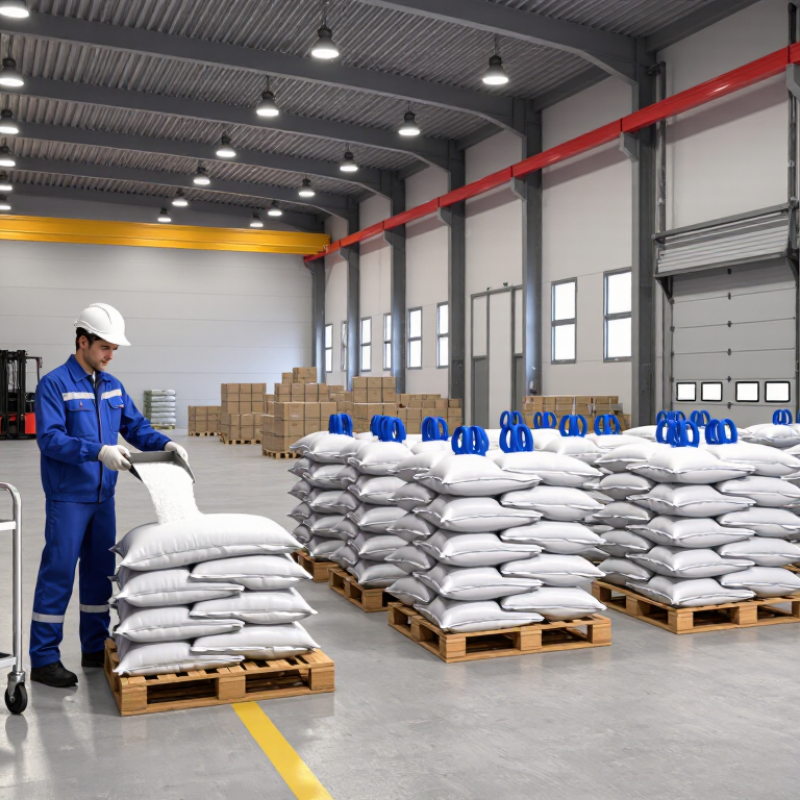
A reliable exporter should provide a current certificate of analysis, showing potassium content, moisture, insoluble matter, and particle-size distribution. Packaging should also match the application. For example, a 25-kilogram bag needs strong stitching, while a one-tonne jumbo bag requires safe lifting loops and dry storage. Batch numbers should connect the product to production records and inspection results.

This guide presents seven practical tips for evaluating a Potassium Chloride Powder Exporter. It considers manufacturing capability, testing procedures, export experience, communication, packaging, delivery performance, and responsible compliance practices. A low quotation may hide weak quality controls or unpredictable freight costs. That is easy to overlook.

No checklist is perfect. Buyer specifications can also be incomplete. Therefore, request samples, compare independent test results, and clarify acceptance criteria before placing an order. A dependable supplier welcomes detailed questions and provides evidence instead of vague promises. That behavior is often more valuable than polished marketing language.
7 Tips to Choose a Potassium Chloride Powder Exporter?

Define Your Potassium Chloride Powder Requirements

Define Your Potassium Chloride Powder Requirements

Before comparing exporters, write a clear technical specification. State the intended application, required purity, and acceptable impurity limits. Agricultural, industrial, and food-grade materials may follow different quality expectations. Small differences matter. Specify particle size, powder flow, color, moisture, and water-solubility requirements. If your process uses automated feeding, inconsistent particle sizes can cause blockages or uneven dosing.

Packaging needs equal attention. Choose the net weight, bag material, pallet format, and moisture protection required for your warehouse. Explain your delivery terms, destination port, estimated annual volume, and preferred shipment schedule. Do not guess. Storage conditions and climate can affect caking, especially during long transport. A practical requirement sheet should also identify sampling procedures and the acceptable batch variation.

Ask each exporter for a recent certificate of analysis, safety data sheet, product specification, and batch traceability information. Check whether testing comes from an equipped laboratory and matches your required parameters. Request sample quantities before placing a large order. In my sourcing experience, buyers often focus on price and overlook documentation gaps. That is a costly weakness. Ask for evidence. Compare the sample with the declared purity, moisture, particle size, and packaging performance. Confirm that export documents meet the destination market’s current requirements. When a supplier gives vague answers, record the uncertainty instead of treating it as compliance. A strong specification makes exporter comparisons fairer and helps prevent disputes after shipment.

Verify Product Quality, Purity, and Testing Standards

7 Tips to Choose a Potassium Chloride Powder Exporter

Verify the product specification before discussing price. Ask for the latest certificate of analysis for the exact production lot. Check potassium chloride assay, moisture, insoluble matter, particle size, and heavy-metal limits. The test date matters. So does the testing method. Reliable exporters identify recognized laboratory procedures and provide clear acceptance limits. Vague phrases such as “high purity” deserve further questions.

Request a retained sample with its lot number and sealed packaging. Compare the sample with the certificate, including color, flow, and powder consistency. Independent laboratory testing can confirm critical results before a large order. Review the exporter’s quality system, calibration records, and traceability process. A credible supplier should explain how raw materials, production batches, and warehouse conditions are controlled. Ask whether testing occurs in-house or through an accredited third party.

Packaging details also reveal practical experience. Confirm moisture protection, labeling, net weight, pallet stability, and recommended storage conditions. Potassium chloride powder may absorb moisture when exposed to unsuitable environments. Inspect transport documents and batch records for matching information. Even experienced buyers can miss small inconsistencies between labels and certificates. That is a useful warning. Do not rely on a polished document alone; verify samples, records, and communication together. A minor testing delay may be acceptable, but unexplained changes in purity or documentation require careful review.

Check Exporter Credentials, Certifications, and Compliance

7 Tips to Choose a Potassium Chloride Powder Exporter?

Choosing a potassium chloride powder exporter starts with evidence, not polished promises. Ask for legal registration, operating address, ownership details, and export history. A serious supplier should provide current certificates, not scanned files with missing dates. Verify ISO 9001 scope and product-specific approvals with issuing bodies. Check whether the certificate covers the actual facility. It sounds basic. It is often missed.

Request a recent certificate of analysis for each production batch. It should show potassium chloride assay, moisture, particle size, and tested impurities. Compare those results with your specification and destination-country requirements. The SDS should match the product, packaging, and transport classification. Ask for lot numbers on bags, seals, invoices, and laboratory reports. This link supports traceability when a shipment differs. Independent laboratory confirmation adds confidence, especially with a new exporter.

Compliance also includes customs accuracy, labeling, language, packaging strength, and environmental documentation. Ask who checks market requirements before container loading. Review corrective-action records, not only successful audit pages. From practical sourcing reviews, delayed answers often reveal more than a low score. Still, one missing document does not always prove poor performance. Systems can improve. Record the gap, set a deadline, and request closure evidence. A site video helps, but an independent audit is stronger. Trust needs paperwork, testing, and consistent behavior.

7 Tips to Choose a Potassium Chloride Powder Exporter

Evidence-based checks for credentials, certifications, product quality, and regulatory compliance

The chart counts the documentary checks recommended for each selection tip. Request current records, confirm that certificates match the exporting legal entity and production site, and verify requirements for the destination country before placing an order. The checklist is not a score for any specific company.

1. Product specification: grade, assay, impurity limits, particle size
2. Exporter credentials: legal identity, registration, export history
3. Certifications: validity, scope, issuing body, production site
4. Compliance documents: SDS, labeling, destination-market requirements
5. Quality consistency: recent CoA, batch traceability, retained sample
6. Logistics readiness: packaging, Incoterms, shipping documentation
7. Audit transparency: references, site-audit access, corrective actions

Evaluate Supply Capacity, Packaging, Shipping, and Delivery

7 Tips to Choose a Potassium Chloride Powder Exporter

Evaluate Supply Capacity, Packaging, Shipping, and Delivery

Supply capacity should be measured with evidence, not confident promises. The USGS Mineral Commodity Summaries 2025 estimates global potash production above 70 million metric tons, measured as K2O equivalent. Ask the exporter for monthly output, warehouse capacity, recent shipment records, and backup production plans. I would also compare the requested grade with the certificate of analysis, including KCl content, moisture, particle size, and insoluble matter. A perfect forecast is impossible. Still, vague answers deserve caution.

Packaging protects both quality and delivery performance. Check whether bags use moisture-resistant layers, strong stitching, clear batch codes, and stable pallet wrapping. For bulk orders, inspect loading procedures and container cleanliness. The International Fertilizer Association’s 2024–2028 outlook expects global fertilizer demand to approach 205 million tonnes of nutrients by 2028. Growing demand may pressure packaging availability and factory schedules. Confirm packaging lead times early, especially before seasonal buying periods.

Shipping details often reveal an exporter’s real capability. Request the planned port, vessel schedule, container limits, insurance terms, and complete customs documents. The World Bank’s Logistics Performance Index 2023 emphasizes reliability, tracking, and delivery timeliness. Therefore, require milestone updates from loading to arrival. Set an agreed delivery window, not merely an estimated date. Keep a small safety stock when ports are congested. I would not trust a polished quotation alone. Past on-time performance matters more.

Compare Pricing, Payment Terms, Communication, and Support

Choosing a potassium chloride powder exporter requires more than comparing the lowest quotation. In procurement work, I have seen low prices hide extra costs. Check purity, particle size, packaging, minimum order quantity, and delivery terms. Request a clear quotation with freight, insurance, and document fees shown separately. A slightly higher price may be safer when it includes stronger packaging and reliable quality control.

Payment terms also deserve careful review. Discuss deposits, balance timing, accepted currencies, and bank charges before placing an order. A staged payment can protect both parties, especially for repeat shipments. Confirm whether payment depends on production, inspection, or shipping documents. Do not accept unclear wording. It causes avoidable disputes.

Communication reveals an exporter’s working habits. Ask how quickly they answer technical questions and handle specification changes. Reliable suppliers should provide a current certificate of analysis, safety data sheet, batch details, and traceable production information. Their support should continue after shipment, including updates on loading, transport, and customs documents. Test this support with specific questions about moisture control and storage conditions. Slow replies are a warning. However, fast replies alone prove little. I once treated quick communication as strong evidence, but delivery performance mattered more. Check references, sample consistency, and export experience before committing.

7 Tips to Choose a Potassium Chloride Powder Exporter? - Compare Pricing, Payment Terms, Communication, and Support

Evaluation Dimension Exporter Profile A Exporter Profile B Exporter Profile C Exporter Profile D
1. Product grade and purity Industrial grade; KCl ≥ 98.0% Fertilizer grade; KCl typically 95.0%–98.0% High-purity grade; KCl ≥ 99.0% Agricultural grade; specification varies by lot
2. Typical particle size 80–200 mesh powder 40–100 mesh powder 100–200 mesh powder; tighter distribution available Custom mesh subject to minimum order quantity
3. Indicative export price USD 280–360 per metric ton, FOB USD 240–320 per metric ton, FOB USD 340–460 per metric ton, FOB USD 250–340 per metric ton, FOB
4. Minimum order quantity 1 metric ton 20 metric tons 500 kg for trial orders; 1 metric ton thereafter 10 metric tons
5. Payment terms 30% deposit; 70% before shipment 20% deposit; 80% against shipping documents Irrevocable letter of credit at sight or bank transfer 30% deposit; balance before dispatch
6. Communication response time Within 1 business day Within 1–2 business days Within 4–8 business hours Within 1–3 business days
7. Technical and after-sales support COA, SDS, packing photos, and loading updates COA and SDS; limited formulation guidance COA, SDS, sample testing, batch traceability, and complaint procedure Basic documentation; replacement review for verified quality issues
Quality documents Certificate of Analysis and Safety Data Sheet Certificate of Analysis and standard export documents Batch-specific Certificate of Analysis, Safety Data Sheet, and inspection support Certificate of Analysis available upon request
Packaging options 25 kg woven bags with inner liner; 1,000 kg big bags 25 kg bags and bulk shipment options 25 kg moisture-resistant bags; customized export labels 25 kg bags or 500–1,000 kg big bags
Estimated lead time 7–14 days after deposit and specification confirmation 14–21 days 10–18 days, depending on testing and packaging 14–28 days
Common trade terms FOB and CIF FOB, CFR, and CIF FOB, CIF, and DAP subject to destination review FOB and CFR
Best fit for Small and medium industrial buyers needing flexible quantities Large-volume fertilizer purchasers focused on price Buyers requiring high purity, traceability, and technical support Routine agricultural applications with less customization

Note: Price ranges are non-binding market-reference estimates for potassium chloride powder and may change with purity, particle size, order quantity, origin, freight costs, packaging, seasonality, and destination. Always request a current quotation, batch-specific Certificate of Analysis, Safety Data Sheet, and agreed Incoterms before placing an order.