7 Best Hydraulic Pressure Comparators for Global Buyers?
Choosing a reliable Hydraulic Pressure Comparator is not simply a matter of comparing prices. Global buyers must examine pressure range, accuracy, hydraulic medium, connection types, and calibration evidence. A polished product page can still hide practical limitations.
This guide reviews seven leading hydraulic pressure comparators for industrial, laboratory, and field applications. Each option is considered through measurable criteria, including pressure stability, fine adjustment, piston quality, sealing performance, portability, and operator safety. Calibration traceability matters, especially when test results support maintenance records, audits, or quality decisions. Certificates linked to recognized laboratories, such as ISO/IEC 17025 facilities, can provide stronger confidence.
Real operating details also deserve attention. A comparator may perform smoothly at room temperature but respond differently in a cold workshop. A small hand pump can feel convenient until repeated testing causes operator fatigue. Some models accept common adapters, while others require expensive accessories. These differences affect ownership costs.
There is no universal winner.
The “best” choice depends on the required pressure range, working environment, measurement uncertainty, and available technical support. Product specifications can also change between regions, so buyers should confirm current documentation before ordering. This review aims to provide a practical comparison, not an unquestionable verdict. Readers should challenge impressive claims, inspect calibration records, and request application guidance when specifications appear incomplete. A careful purchase decision begins with evidence, realistic testing needs, and a clear understanding of long-term service requirements.
What Is a Hydraulic Pressure Comparator and How Does It Work?
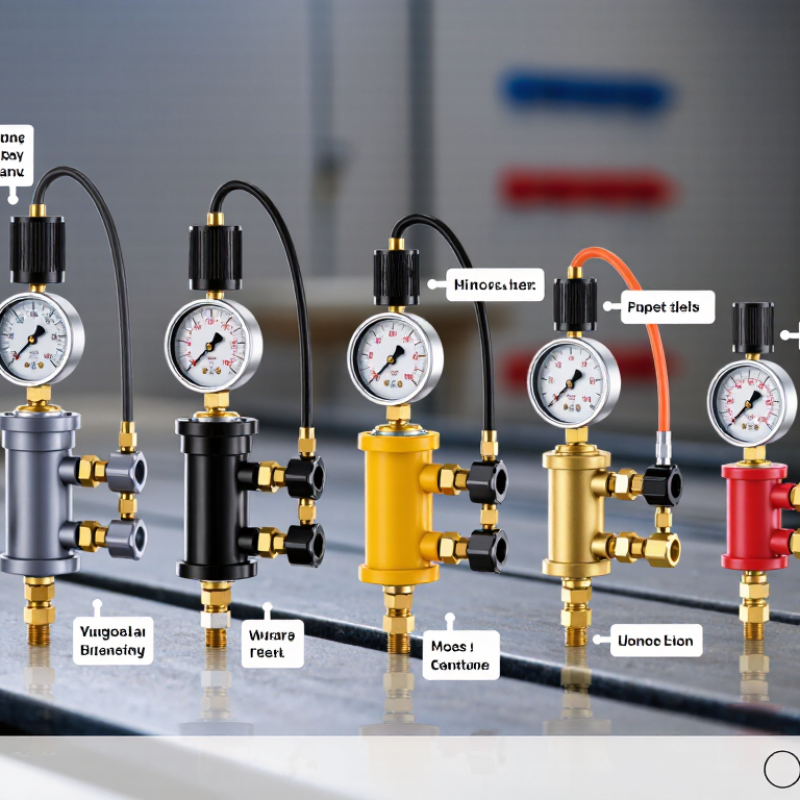
A hydraulic pressure comparator generates a known pressure for testing gauges, transmitters, and sensors. It uses a hydraulic medium, usually oil or water, inside a sealed circuit. A hand pump creates pressure, while a reference device measures the applied value. Pascal’s law transfers that pressure through the fluid.
The operator connects the reference instrument and the test instrument to matching ports. The system is then pressurized gradually. Small volume changes can affect stability, so trapped air must be removed carefully. After reaching a target point, the technician waits for pressure to settle and records both readings. It sounds simple. It is not always simple.
Piston-cylinder designs can provide strong stability and fine control. Screw pumps also help users approach pressure points without sudden spikes. Measurement uncertainty still depends on temperature, fluid cleanliness, leakage, and operator technique. NIST Technical Note 1297 emphasizes that uncertainty should include relevant measurement components, not only the reference instrument. The BIPM KCDB reported more than 25,000 calibration and measurement capabilities globally, showing the scale of modern metrology infrastructure. Meanwhile, the ISO Survey 2022 recorded over 1.2 million ISO 9001 certificates worldwide. These figures support stricter calibration practices, but they do not guarantee every comparator is suitable. A better selection checks pressure range, accuracy class, media compatibility, traceability, and local service access. Some specifications look impressive on paper. Field performance may tell another story.
7 Best Hydraulic Pressure Comparators for Global Buyers
What Is a Hydraulic Pressure Comparator and How Does It Work?
A hydraulic pressure comparator generates and compares pressure by applying force to a known effective piston area. The chart shows the ideal force required to produce seven pressure levels with a 10 cm² piston area.
Calculation: Pressure = Force ÷ Area. With a 10 cm² effective area, every 1 MPa of hydraulic pressure requires approximately 1 kN of force. Actual systems may require slightly more force because of friction, temperature effects, fluid compressibility, and piston-area tolerances.
Which Technical Features Define a High-Quality Pressure Comparator?
A high-quality hydraulic pressure comparator begins with stable pressure generation. Look for a rigid frame, fine-volume adjustment, and smooth hand-pump control. These features help technicians reach target pressure without sudden overshoot. Low internal leakage also matters. A comparator that slowly loses pressure can create misleading calibration results.
Pressure range must match real operating needs, not just catalog claims. Check accuracy, resolution, and repeatability across the full range. A narrow usable range may reduce practical value. The pressure medium should suit the instruments under test, while corrosion-resistant wetted parts improve service life. Temperature compensation is useful when workshop conditions change. However, it cannot correct poor measurement practice.
Tips: Confirm calibration traceability before purchase. Inspect seals, valves, and connection threads. Ask for leak-test data and uncertainty details. Use compatible adapters for different gauge types.
In field work, I prefer clear controls and a readable reference display. Fine adjustment should feel predictable, especially near the final test point. Built-in safety relief can protect equipment from accidental overpressure. Some designs look impressive but lack easy maintenance access. That weakness often appears later. A perfect comparator does not exist, so buyers should balance accuracy, durability, portability, and repair support. Calibration records should remain easy to review. Even small handling errors can affect the final result.
How to Compare the Seven Best Hydraulic Pressure Comparator Types
Comparing the seven best hydraulic pressure comparator types starts with their working principle. A dead-weight hydraulic comparator offers excellent stability for laboratory calibration. A screw-pump comparator gives fine pressure control through slow, steady adjustment. Hand-pump models are practical, but operators may create uneven pressure. Digital hydraulic comparators provide clear readings and data logging. Differential-pressure comparators suit systems where two pressure points must be compared. High-pressure bench comparators support demanding industrial ranges. Portable field comparators reduce transport time, though their compact frames may limit capacity.
Look beyond advertised accuracy. Check pressure range, resolution, stabilization time, fluid compatibility, and piston or sensor repeatability. A comparator reaching 1,000 bar is not automatically better for a 250-bar gauge. During testing, inspect hoses, seals, valves, and fittings before applying pressure. A tiny bubble in the circuit can make the reading drift. Traceable reference instruments also matter. Without current calibration records, impressive specifications become weak evidence. In my experience, a stable hand pump can outperform a complicated unit when maintenance is poor.
Tips: Match the comparator to your real workload. Choose a bench model for repeated laboratory testing and a portable model for field service. Ask whether the supplied fluid matches your instruments. Record ambient temperature, pressure points, and settling time. Do not judge usability from a brochure alone. A crowded control panel may slow technicians. That detail is easy to miss.
Which Industries and Pressure Ranges Suit Each Comparator?
Hydraulic pressure comparators serve different industries because pressure work is rarely one-size-fits-all.
Calibration laboratories often need fine-volume models covering 0–60 MPa, where stable adjustment matters more than speed.
Maintenance teams in water treatment may prefer portable hand-pump comparators for field checks below 40 MPa. Their compact frames fit crowded pump rooms.
Oil, gas, and heavy process plants usually require screw-pump designs from 100–250 MPa. These instruments create steady pressure for transmitters, gauges, and safety devices.
Power-generation workshops may select dual-range comparators, such as 0–100 MPa and 0–250 MPa, to reduce equipment changes. Aerospace maintenance benefits from clean-fluid systems with low leakage and precise valves. Small errors become expensive there.
Automotive test departments often use fast hydraulic comparators around 0–100 MPa for brake and fuel-system components.
High-pressure research facilities may need reinforced models reaching 700 MPa, but only with compatible fittings, seals, and verified procedures.
Corrosion-resistant versions suit marine and chemical environments, especially when water-based fluids are preferred.
One detail is easy to miss: the comparator’s maximum range should not be the normal working point. A 250 MPa unit may perform poorly during repeated tests at 5 MPa.
I would also question advertised accuracy without checking temperature stability, calibration traceability, and local service support.
The right choice depends on the instrument under test, fluid compatibility, operator skill, and the actual pressure range used daily.
How Should Global Buyers Evaluate Suppliers, Standards, and Total Cost?
Global buyers should evaluate hydraulic pressure comparators beyond catalog specifications. A suitable unit must match the required pressure range, medium, resolution, and operating environment. Suppliers should provide calibration records with traceability to recognized national or international standards. Check measurement uncertainty, calibration intervals, and the laboratory’s competence, rather than accepting a certificate at face value.
Supplier evaluation also requires practical evidence. Request dimensional drawings, test procedures, material information, and references from similar industrial applications. Ask how the supplier handles seal replacement, technical training, spare parts, and service delays across borders. Standards matter, but their application matters more. A well-written compliance statement cannot replace a witnessed performance test. No evaluation is perfect. Assumptions can hide expensive problems.
Tips: Compare total landed cost, including shipping, duties, installation, calibration, training, and future maintenance. Check whether local technicians can service the equipment. Confirm power requirements, connector types, packaging strength, and delivery terms before ordering. A cheaper comparator may become costly after repeated recalibration or long downtime. Keep a written scoring sheet, and record why each supplier passed or failed. This simple habit improves consistency, although it may slow the purchasing process slightly.